The profile · Actor and author
Simu Liu
Simu Liu’s memoir gives his parents an origin story alongside his own. The move from accountancy to acting is only one part of a family history shaped by migration, pressure, conflict, and a later effort to understand each other.

- Education
- Ivey Business School, HBA 2011[1]
- Earlier profession
- Accountancy[2]
- Memoir
- We Were Dreamers (2022)[2]
- Long-running television role
- Jung Kim in Kim’s Convenience[3]
The person behind the work
The story starts before the career change
Simu Liu’s parents left China for Canada and worked as engineers. He spent part of his early childhood with grandparents before joining them. In his 2022 Here & Now interview about We Were Dreamers, he explained why the book needed to tell their story as well as his own. Their education and migration had required difficult choices.[2]
The family’s sacrifices also carried expectations. Liu described conflict between his own interests and his parents’ hopes for academic achievement and a secure career. He did not present every painful family moment as harmless. Looking back with more understanding was different from saying that nothing had hurt.[2]
He graduated from Ivey Business School in 2011. Accountancy followed, but losing that job opened the way to try acting. Western’s own alumni coverage traces the uncertain period afterward, including debt and low-paid work. The change looks neat in a headline; living through it involved much more doubt.[1][4]
A career in range
Selected work, at a glance
2021
Shang-Chi and the Legend of the Ten Rings
Shang-Chi
A leading role joining action with a family story.[5]
The person behind the work
A sitcom, an action lead, and room to play
Kim’s Convenience gave Liu a continuing television role as Jung Kim. A series can build familiarity through family disagreements and ordinary work rather than one large heroic event. Shang-Chi and the Legend of the Ten Rings then required him to carry a major film with action, family history, and comic timing in the same performance.[3][5]
His later credits include a Ken in Barbie, a romantic role in One True Loves, the adventure Arthur the King, and the AI villain Harlan in Atlas. Those jobs ask for different relationships with the camera and the audience. An actor’s image can change faster than the habits needed to do the work well.[3][6]
Liu’s memoir is another kind of work. On Here & Now, he said that telling the family story could help people recognize the lives behind immigrant accents. The wish was not simply for readers to admire an actor, but to look more carefully at people they might otherwise dismiss.[2]
A closer look
Three ways into the work
Kim’s Convenience: family friction in everyday life
Jung’s place in the family comedy gives arguments and small choices time to accumulate. The role offers a useful contrast with a film that must establish its main relationships in a few scenes.[3]
We Were Dreamers: share the frame with the parents
The memoir makes space for the parents’ lives before their son’s success. It does not ask understanding to erase every painful memory. That combination is more useful than a simple story of strict parents being proved wrong.[2]
Barbie: join a deliberately heightened world
Playing one Ken within an ensemble asks an actor to fit a comic idea larger than himself. Movement and timing help carry the character. It is a different use of physical skill from an action fight.[3]
The person behind the work
Achievement did not end the need for conversation
In October 2025, Liu returned to Western for a discussion about mental health, identity, and resilience. The university’s report describes his encouragement to seek support rather than carry every struggle alone. He also spoke about the gap between a stable-looking career and a life that felt true to him.[4]
These are public comments about experience, not a complete account of his religion. The sources do not clearly state his present faith. Nor does an immigrant background tell us what a person believes about God. What is clear is his interest in empathy across generations and in making difficult family experiences discussable.
A family can make progress without pretending that every wound has disappeared. Understanding why someone acted as they did may help a conversation, while still leaving the need for truth, responsibility, and forgiveness. Those distinctions matter far beyond a memoir.
Listen to the person
In their own words
May 2022
“I was, by all accounts, a terrible employee.”
Famous Faith’s Christian perspective
Beyond the Spotlight
Family stories often hold both love and things that need to be put right. The Bible takes both seriously. It asks us to honor others without pretending we have never been hurt, and to face our own wrongs without making someone else’s failures our excuse.
The Ten Commandments include honoring parents, telling the truth, and refusing to covet. They address ordinary relationships as well as public wrongdoing. We have all fallen short in love, sometimes in ways we defend because we feel misunderstood. Sin is more than missing our own hopes for ourselves.
Sin is the Bible’s name for breaking God’s law (1 John 3:4). A difficult history can help explain a choice without making every choice right. Jesus’ teaching includes judgment and hell, a serious warning for us all. It should move Christians toward care and humility, never toward treating another family’s pain as proof of their spiritual failure.
God offers reconciliation through Jesus Christ, his Son. Jesus lived without sin, died on the cross for our sins, and rose bodily from the grave. His forgiveness comes by grace through faith. It cannot be earned by fulfilling family expectations, gaining success, or becoming religious enough (Romans 5:8; Ephesians 2:8–9). We are loved before we can repair ourselves.
Repentance turns our mind and heart away from sin and rebellion, bringing us toward God. Rather than keep rejecting him, we learn to trust who he is and the love he has shown through Jesus Christ. It normally brings changes in how we speak, take responsibility, and treat relatives or strangers. Seeking to repair harm matters, but repair does not purchase salvation. We learn a new way because Christ is merciful, while recognizing that difficult relationships may also need time and wise help.
Forgiveness through Jesus is offered to people from every family and culture. Ask him for mercy, turn toward him, and seek wise Christian support as you learn to tell the truth and love with greater care.
Explore the Good Person Test and the promise of forgiveness →
This section shares Famous Faith’s Christian beliefs. It does not speak for Simu Liu.
People connected to the story
Follow the connections

Benedict Wong
Wong brings Shang-Chi into a wider conversation about the Ten Rings after the central adventure.[5]
Read the profile →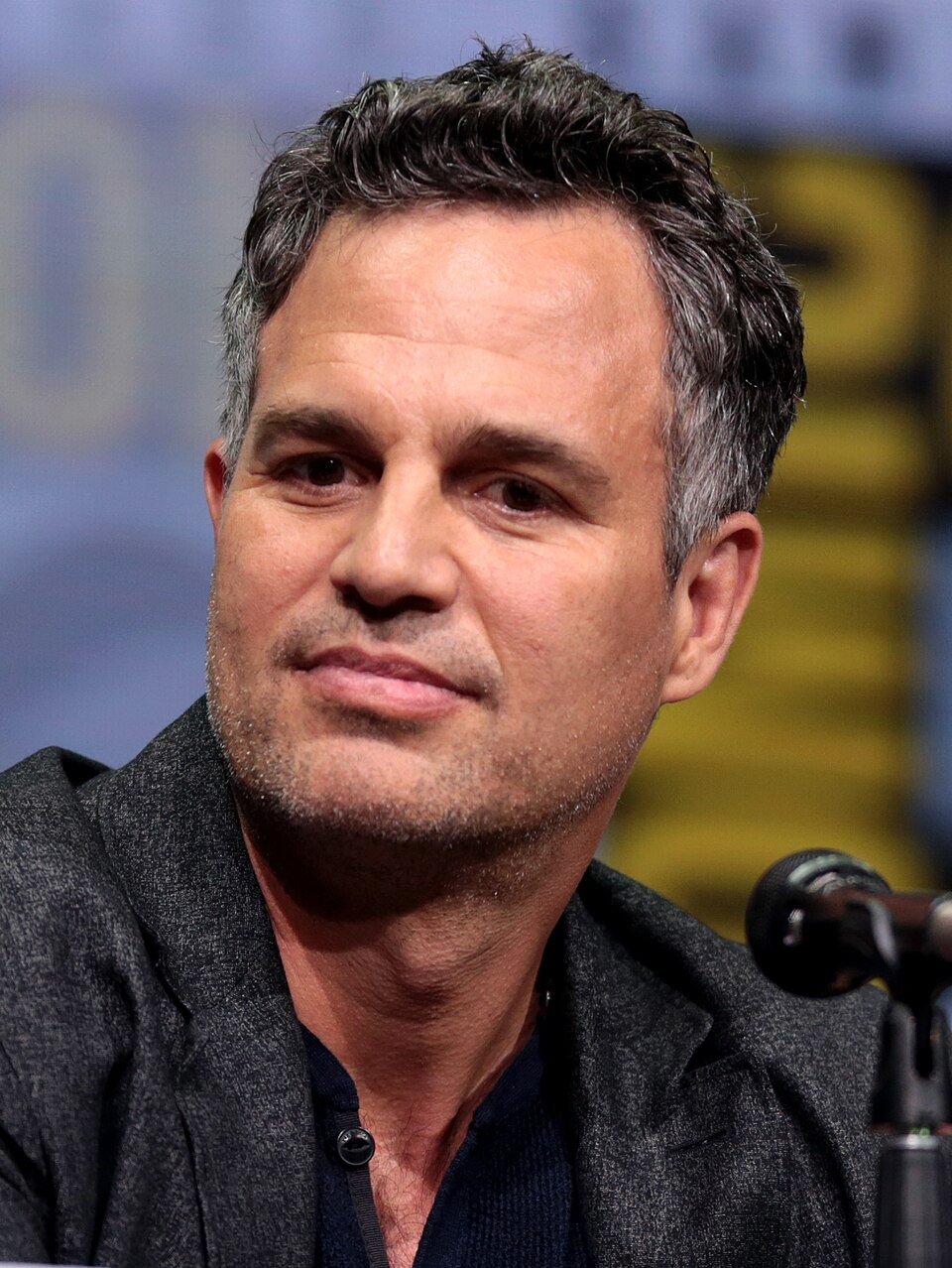
Mark Ruffalo
Ruffalo’s Bruce Banner helps examine the Ten Rings in Shang-Chi’s mid-credits scene.[7]
Read the profile →
Sources and further reading
- Ivey Business School — Alumni and 2019 highlights
- WBUR Here & Now — Simu Liu on We Were Dreamers (2022)
- Simu Liu — Film and television credits
- Western University — Simu Liu campus conversation (2025)
- Marvel — Shang-Chi and the Legend of the Ten Rings
- Netflix Tudum — Atlas cast and ending explained
- TheWrap: Shang-Chi’s mid-credits scene
Artwork: Original AI-generated portrait of Simu Liu, created for Famous Faith; not a photograph. The other AI-generated portraits shown here were also created for Famous Faith. No endorsement is implied.
Photograph: Mark Ruffalo by Gage Skidmore from Peoria, AZ, United States of America, via Wikimedia Commons, CC BY-SA 2.0. Cropped to a square card for display.

Film and book titles identify the works discussed. A career credit is not a recommendation that every reader watch or read that work.