The profile · Film and television producer
Jonathan Schwartz
Jonathan Schwartz moved from assisting Kevin Feige to producing films himself. His interviews reveal a job built around story decisions, from where an origin story should begin to how a new lead can have room inside an established screen world.

- Early studio work
- Assistant to Kevin Feige on Iron Man 2[1]
- 2014 credit
- Co-producer, Guardians of the Galaxy[2]
- 2021 credit
- Producer, Shang-Chi[3]
- 2026 credit
- Producer, Avengers: Doomsday[4]
The person behind the work
A producer’s career can begin with another person’s desk
Jonathan Schwartz is the Marvel Studios film producer, a different person from the radio presenter and technology executive who share his name. A 2019 set interview traces his early work as Kevin Feige’s assistant on Iron Man 2. The more public producing credits came later.[5]
Guardians of the Galaxy credited him as a co-producer in 2014. He was an executive producer on its sequel and on Captain Marvel. The titles show a progression of responsibilities, while the films themselves involve different directors, performers, and storytelling problems. A producing career is not a single task repeated under new posters.[5][6]
Disney lists him with Feige as a producer of Shang-Chi and the Legend of the Ten Rings. The current Doomsday listing then names Schwartz, Feige, and Louis D’Esposito as producers. Those official credits are firmer evidence of his role than a rumor about who may be shaping a film behind the scenes.[3][4]
A career in range
Selected work, at a glance
The person behind the work
Where a story begins changes what the audience must discover
In the Captain Marvel set discussion, Schwartz explained that the film would not begin with a powerless person waiting to become extraordinary. Carol Danvers already has powers and a place in a space conflict. The audience then has to discover how her past connects with the person they first meet.[1]
That structural choice creates a clear writing and producing problem. Viewers need enough information to stay involved, but the story cannot answer every question immediately. A mystery about identity works only if the audience cares about the person doing the discovering.
The 1990s setting also gave the film room before many events viewers already knew. Schwartz discussed the period as a way for Carol’s story to occupy its own space rather than arrive only as an addition to someone else’s adventure. The date was a storytelling decision, not merely a chance to include familiar objects.[1]
Shang-Chi offered another new lead within a shared world. Its official credits distinguish the writers, director Destin Daniel Cretton, and producers. That distinction matters: a producer helps develop and deliver the film, but should not be given sole authorship of every choice audiences see.[3]
A closer look
Three ways into the work
Guardians of the Galaxy: recognize the producing credit
Schwartz’s co-producer role is a milestone in a career that began in a less visible support job. The credit belongs alongside the director’s and writers’ contributions rather than replacing them.[2]
Captain Marvel: begin with a question about the past
The film introduces Carol with powers already in place. The audience’s curiosity shifts from whether she will become powerful toward what happened to her and whom she can trust. Schwartz explained that structure during production.[1]
Shang-Chi: a new lead needs his own center
A shared universe can offer connections, but a film still needs people and relationships worth following on their own. The father-son conflict gives the official synopsis that center.[3]
The person behind the work
The less visible work still deserves clear credit
Marvel’s own premiere interview identifies Schwartz discussing the history of the films, reinforcing which Jonathan Schwartz belongs to this story. It is easy for a name match online to mix two careers. Accurate identification is a basic part of giving a person fair credit.[9]
The sources used here are most informative about his work. They do not clearly describe a present religion, so this profile does not infer one from a surname, a fictional character’s beliefs, or the kinds of films he produces.
His career also offers a useful angle on the finished films: audiences often remember the face on screen, while decisions made by less visible workers shape how that face is introduced. Noticing those people can deepen appreciation without turning a collaborative production into one person’s achievement.
Listen to the person
In their own words
January 2019
“This movie is different structurally from our other origin stories”
Famous Faith’s Christian perspective
Beyond the Spotlight
The people who work outside the spotlight still have lives of full value. The Bible grounds that worth in God, rather than in how often our name is noticed. It also asks us to take responsibility for choices that nobody else sees.
The Ten Commandments speak to those hidden choices: do not steal, lie about another person, covet, or betray faithfulness. A useful career and a respected public credit cannot answer for every wrong. These are common human failures, and the Christian invitation begins with admitting our own need.
God’s law applies when our work is seen and when it is unnoticed. Breaking that law is sin (1 John 3:4). We all have reason to seek forgiveness. Jesus warned about hell and judgment, truths that should be spoken with love rather than accusation. They do not give us a view into a producer’s soul or anyone else’s.
Jesus, the Son of God, came as a human being and lived without sin. He died on a cross for our sins and rose bodily from the dead. God offers a restored relationship through faith in him. This is salvation by grace; usefulness, advancement, and religious effort do not earn it (Romans 3:23–24; Ephesians 2:8–9).
Repentance turns our mind and heart away from sin and from resisting God’s place in our lives. We begin to trust his goodness and the love he has revealed through Jesus Christ. Our behavior normally begins to reflect that direction through truthful speech, a willingness to repair harm, and growing care for others. Those changes are not credits we accumulate toward forgiveness. They are the fruit of receiving Christ’s mercy and learning to trust him.
You do not need a public platform to respond. Speak honestly to God, trust Christ’s forgiveness, and find a faithful church where ordinary acts of love can grow from that new beginning.
Explore the Good Person Test and the promise of forgiveness →
This section shares Famous Faith’s Christian beliefs. It does not speak for Jonathan Schwartz.
People connected to the story
Follow the connections

Kevin Feige
He began as Feige’s assistant and later shared producing credits with him.[1][3]
Read the profile →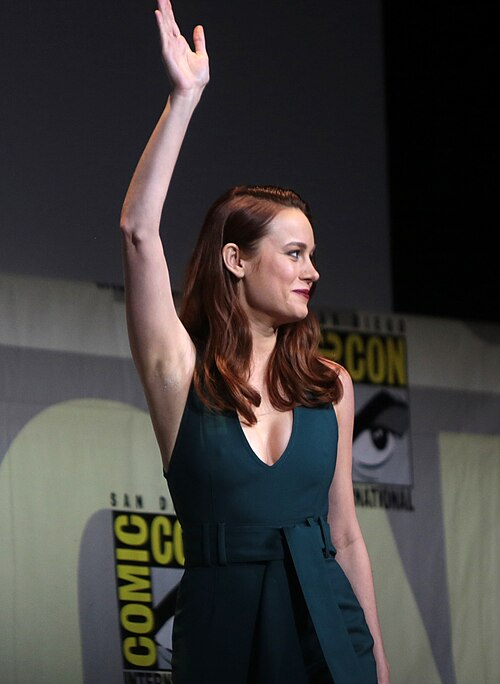
Brie Larson
Larson plays Carol Danvers in Captain Marvel, which Schwartz executive-produced.[7]
Read the profile →
Sources and further reading
- SlashFilm — Jonathan Schwartz set-visit interview (2019)
- Guardians of the Galaxy — Film production credits
- Disney — Shang-Chi and the Legend of the Ten Rings credits
- Disney — Avengers: Doomsday production credits
- SlashFilm — Jonathan Schwartz career and producing interview (2021)
- The Walt Disney Company — Guardians of the Galaxy Vol. 2 credits
- Marvel — Captain Marvel film and production credits
- The Walt Disney Company — Secret Invasion production credits
- Marvel — Jonathan Schwartz at the Captain Marvel premiere
Artwork: Original AI-generated portrait of Jonathan Schwartz, created for Famous Faith; not a photograph. The other AI-generated portraits shown here were also created for Famous Faith. No endorsement is implied.
Photograph: Brie Larson by Gage Skidmore, via Wikimedia Commons, CC BY-SA 2.0. Cropped to a square card for display.

Film and book titles identify the works discussed. A career credit is not a recommendation that every reader watch or read that work.