Elke Sommer had publicly identified herself as Christian. In a German-language interview published on October 22, 2010, she answered a question about Christian belief directly: “Ja, ich bin christlich”—“Yes, I am Christian.” She also spoke about prayer and, in a later interview, about doubt. Her public account included both conviction and questions.
Sommer, known for films including A Shot in the Dark and The Prize, died on October 28, 2026, at 85. The Television Academy recorded her death date and career.
What religious background did Elke Sommer describe?
Sommer told Abendzeitung that her father had been a Protestant pastor and that she had loved and admired him. That family background was part of her story, but her own answer supplied the clearer evidence: she personally described herself as Christian.
It would go beyond that interview to assign her a particular congregation in her final years. A parent’s ministry and an adult child’s personal belief are related questions, but they are not identical. Her stated Christian identity deserves to be reported without adding details the source did not establish.
What place did prayer have in her life?
In the same 2010 conversation, Sommer described enjoying quiet time alone in a church. She also said she prayed outdoors, including while walking through woods or being in a meadow at sunrise. She explained that her prayers had shifted from asking for things toward giving thanks.
Her words portrayed prayer as something she practiced beyond a formal service. They also raised a familiar question: how can gratitude remain part of faith when life brings both welcome gifts and painful experiences?
Did she also speak about doubt?
Yes. In an October 31, 2015 Abendzeitung interview, Sommer again described thanking God in prayer. She also said that age and experience had brought more questions about faith. The conversation included her concern about death and her hope of seeing her husband again after one of them died.
Those statements should remain in their setting. They were her reflections at that point in her life, not a complete explanation of every belief she held. A fair account should neither erase her Christian profession nor hide the questions she openly acknowledged.
What does the Bible teach about thankful prayer?
Gratitude is a strong biblical theme. In Luke 17:11–19, Jesus heals ten men with leprosy, but only one returns to give thanks. The passage draws attention to the Giver, not merely the gift. Thankfulness helps us recognize that we are dependent on God’s kindness.
Yet Scripture does not require us to stop bringing needs to God. Philippians 4:6 joins requests with thanksgiving. Jesus also teaches His followers to ask for daily bread and forgiveness in Matthew 6:9–13. We can thank God while admitting hunger, fear, or sorrow.
Sommer’s emphasis on gratitude offers a useful starting point for that discussion. Biblical prayer makes room for praise and honest need together. It does not demand a cheerful performance.
How does Jesus respond to people with questions?
In Mark 9:24, a father asks Jesus to help him in his struggle to believe. The scene does not praise unbelief, but it shows a person bringing weakness to Christ instead of disguising it. Faith depends on the One being trusted, not on our ability to feel certain every moment.
Questions about death deserve serious attention. In John 11:25–26, Jesus identifies Himself as the resurrection and the life. Christian hope therefore rests on His person and promise, rather than on a vague wish that loss will somehow be reversed.
Where does the gospel place our hope?
The gospel teaches that Jesus Christ is God’s Son, who became human and lived without sin (John 1:14; Hebrews 4:15). We have all sinned and need forgiveness. Jesus died on the cross for our sins and rose from the dead (1 Corinthians 15:3–4).
Salvation is God’s gift of grace, received through faith, not earned through fame, family background, or even sincere gratitude (Ephesians 2:8–9). Jesus calls people to repent—to turn from sin—and believe the good news (Mark 1:15).
We cannot announce Sommer’s eternal fate. We can report her public words respectfully and consider the question they leave with each reader: is our hope resting in Jesus Christ and what He has done?
Sources
- Abendzeitung: Leo Loy’s interview with Elke Sommer, October 22, 2010; German-language source.
- Abendzeitung: “Mein Leben ist ein Glücksfall,” interview, October 31, 2015; German-language source.
- Television Academy: Elke Sommer biography and October 28, 2026 death record.
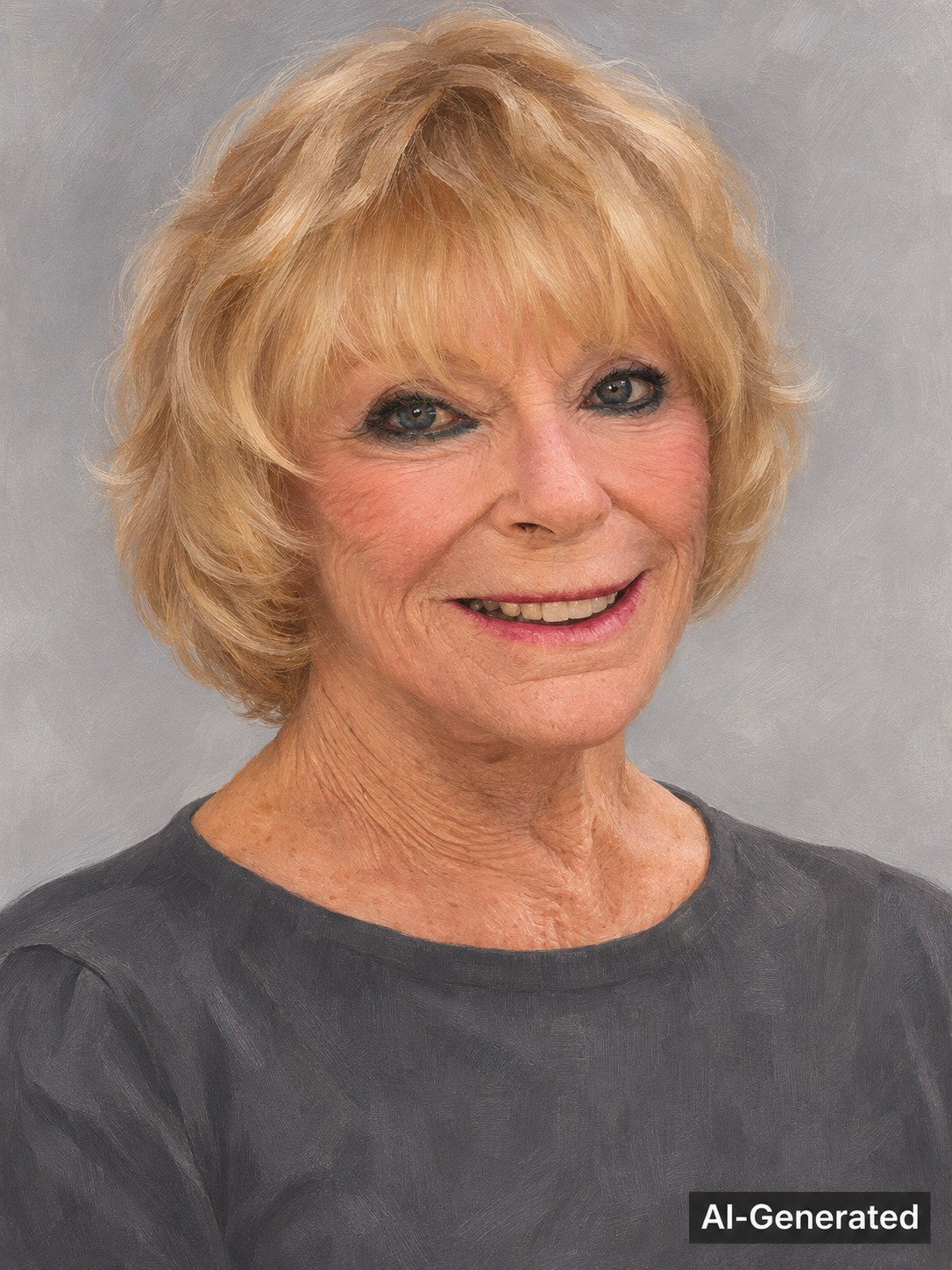
Image: AI-generated illustrative portrait of Elke Sommer. This is not an authentic photograph. The image is visibly labeled AI-Generated.