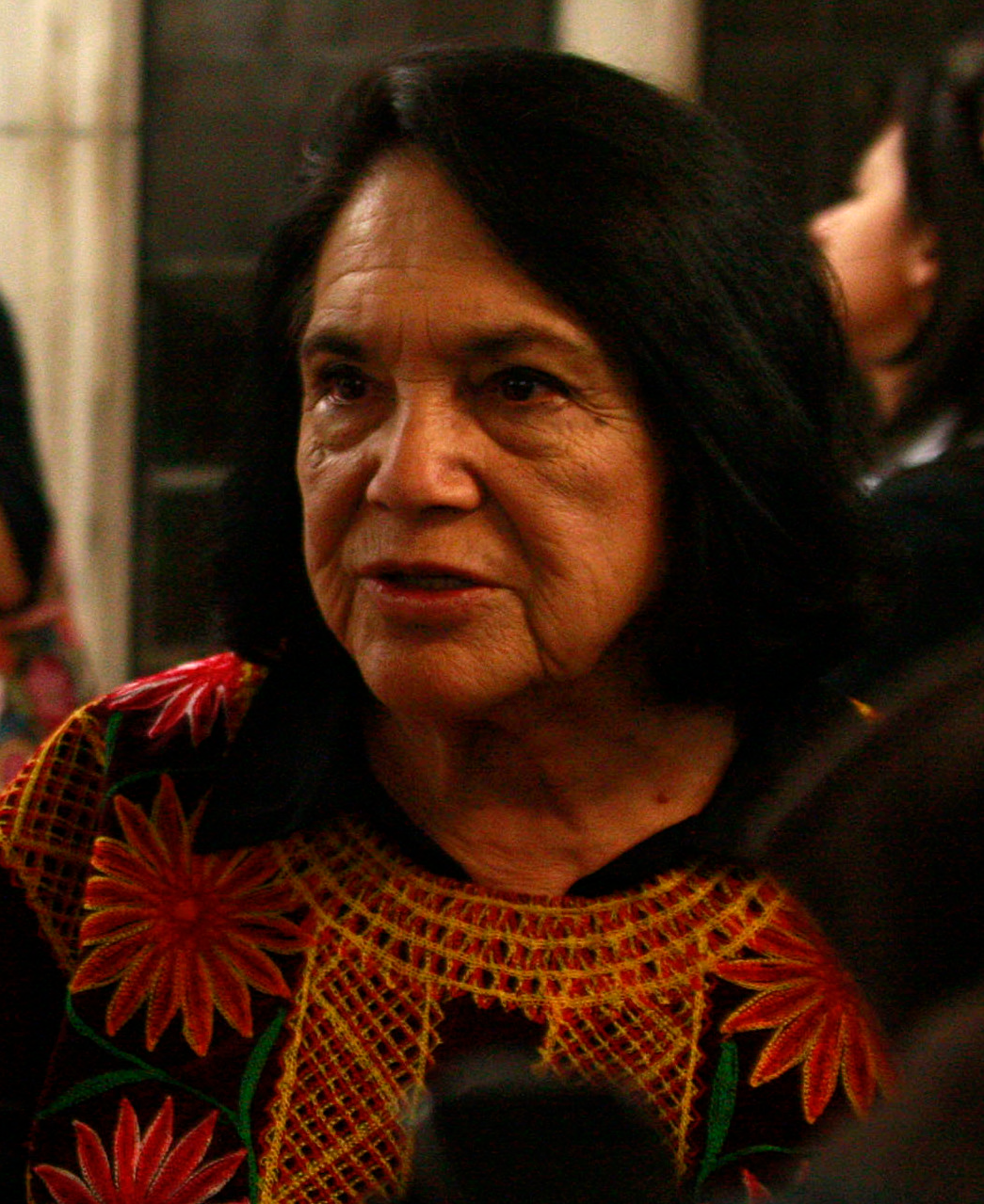
Dolores Huerta’s Public Religious Identity
Dolores Huerta identified herself as Catholic. In her October 26, 2021, interview on PBS’s Tell Me More with Kelly Corrigan, she said plainly, “I’m a Catholic.” That was her own description, not a guess based on her family name or her work with religious leaders.
Huerta helped build the farmworker movement and co-founded the organization that became the United Farm Workers. Her foundation announced that she died on October 28, 2026, at age 96. Her public statements showed that faith remained part of her story, even as she challenged positions taken by church leaders.
Faith, Family, and the Courage to Organize
In a StoryCorps conversation recorded June 8, 2010, Huerta remembered attending Mass, joining church groups, and singing in church choirs. She credited her mother with encouraging both religious participation and care for others.
Asked directly about her beliefs, she described faith in God as a universal power and said that this power could be female. She connected faith with the uncertainty of raising children and building a union when money and support were scarce. Her answer expressed trust that she could continue through hardship. It did not lay out a complete statement about Jesus, salvation, or every Catholic teaching.
Her Catholic Identity Included Disagreement
Huerta’s Catholic identification did not mean that she accepted every church position. In the same 2021 PBS interview, she explained that her views on reproductive rights had changed through conversations with feminist leaders. That difference belonged in an honest account of her beliefs.
In a February 12, 2021, Interfaith America conversation, she also remembered help from Jewish, Protestant, and Catholic organizations during the farmworker struggle. She praised practical support while criticizing religious institutions over women’s rights. These statements showed a faith history with both strong connections and serious disagreements. They should not be flattened into either unquestioning obedience or a claim that she had abandoned all belief.
What the Bible Says About Workers and Dignity
Huerta’s work raised a question Christians should take seriously: How should people with power treat those whose labor serves them? James 5:1–6 warns the rich against withholding workers’ wages. The passage treats exploitation as a moral wrong that God sees, even when the workers themselves have little influence.
Genesis 1:26–27 grounds human worth in being made in God’s image. A person’s value does not rise with a paycheck or fall with a job title. That teaching gives Christians a reason to listen to people who are overlooked and to examine their own conduct as employers, neighbors, and customers.
These passages offer a biblical way to consider labor and dignity. They do not require agreement with every policy Huerta supported, and her political record cannot settle the question of her relationship with God.
Christian Hope Goes Beyond Confidence in a Cause
In the Bible, faith has an object. Christian hope rests on who God is and what Jesus has done. It is more than confidence that a campaign will succeed or that circumstances will improve.
Jesus teaches his followers to address God as Father in Matthew 6:9–13. He also calls them to pray for God’s will, daily needs, forgiveness, and deliverance from evil. Christians therefore understand God through what Scripture reveals, while recognizing that their own wishes do not control him.
Care for neighbors matters deeply. Yet service cannot erase sin or purchase forgiveness. The same Bible that calls people to do good also calls them to receive mercy.
The Gospel and a Careful Answer
The gospel begins with the truth that all people have sinned and need reconciliation with God. Jesus Christ, God’s Son, became human and lived without sin. He died on the cross for our sins and rose bodily from the dead. His resurrection is central to Christian hope, not an optional symbol of human courage (Romans 3:23; Hebrews 4:15; 1 Corinthians 15:3–4).
Salvation is God’s gift of grace, received through faith in Christ. Jesus calls people to repent—to turn from sin—and believe. Good works follow faith; they do not buy salvation (Ephesians 2:8–10; Mark 1:15).
Was Dolores Huerta a Christian? She publicly identified as Catholic, a Christian tradition, while expressing distinctive beliefs and disagreements. That is the supported answer about her public religion. A profile cannot pronounce her eternal destiny.
Sources
- Dolores Huerta Foundation: memorial and death announcement, October 2026.
- StoryCorps: Huerta’s conversation with her daughters, June 8, 2010.
- PBS: Tell Me More with Kelly Corrigan, October 26, 2021.
- Interfaith America: organizing conversation, February 12, 2021.
Photo: Eric Guo. Wikimedia Commons; CC BY 2.0.
