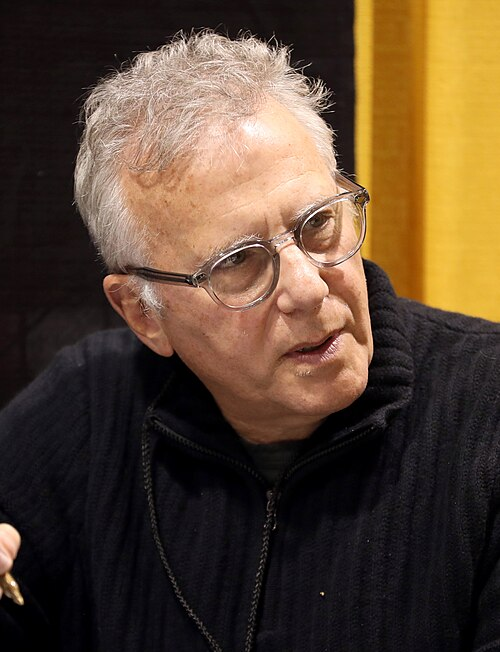
Paul Reiser is Jewish and has spoken about both Jewish culture and family religious traditions. His interviews describe a culturally Jewish upbringing, Hebrew schooling, Passover seders, and Hanukkah celebrations. That public record is more informative than assigning beliefs from his name or the characters he plays.
Viewers of Stranger Things know Reiser as Dr. Sam Owens. Many others know him from Mad About You and his stand-up comedy. Those roles are part of his professional life; his own comments provide the basis for discussing his religion.
What has Paul Reiser said about being Jewish?
In a 2011 interview with The Forward, Reiser described his parents as culturally Jewish rather than religious. He said they sent him to the East Side Hebrew Institute, and he reflected on the humor and music of his childhood. That combination documents a Jewish background without establishing that every aspect of his upbringing was strictly observant.
In another 2011 interview, with the Jewish Journal, he described family seders and Hanukkah gatherings and discussed a meaningful bar mitzvah in the family. His account connects Jewish identity with practice and family memory, not simply ancestry.
In a 2014 Moment interview, Reiser also described being Jewish as an important part of being himself on stage. These are dated public descriptions. They support calling him Jewish while leaving the details of his current observance and every private theological conviction to what he has actually disclosed.
Is Paul Reiser a Christian?
The sources reviewed here identify Reiser with Jewish culture and traditions. They do not establish a public conversion to Christianity or a profession of trusting Jesus Christ as Savior and Lord. It would be inaccurate to describe him as a confirmed Christian on this evidence.
Christians should answer that question without pretending to know his heart. A respectful account can explain real theological differences while recognizing a person’s dignity and the limits of a brief biography. Truth and love are not competing responsibilities.
Family memory and religious tradition
Religious traditions can connect generations through shared meals, stories, and responsibilities. Scripture takes teaching within the family seriously. Deuteronomy 6:4–9 calls for God’s words to be discussed in the ordinary rhythms of life, and Psalm 78 emphasizes passing knowledge of His works to the next generation.
That teaching is more than preserving a warm family atmosphere. It calls people to remember who God is and respond faithfully. Christian families face the same challenge: a familiar holiday, a Bible on a shelf, or a remembered church service cannot replace personal trust in God.
Family traditions can be valuable gifts. They should not become grounds for spiritual pride or an assumption that God owes us acceptance because of our background. The Bible repeatedly directs people from outward identity toward the condition of the heart.
Humor and the way we treat people
Reiser’s connection between Jewish identity and comedy raises a broader question about humor. Scripture recognizes joy and the goodness of a cheerful heart (Proverbs 17:22). A shared laugh can express affection, expose human vanity, and help people feel less alone.
Yet laughter does not make every joke wise or kind. Ephesians 4:29 asks whether our speech builds others up. James 3 warns that the tongue can harm people made in God’s likeness. Christians should examine what they enjoy and how their own humor treats neighbors, rather than merely judging performers from a distance.
The Jewish roots and central claim of Christianity
Jesus was Jewish, as were His first disciples. The Christian message is rooted in the Scriptures of Israel and the promises of God. Romans 11 warns Gentile believers against arrogance toward Jewish people. Christian disagreement about Jesus must never become an excuse for antisemitism or ethnic contempt.
The central distinction concerns who Jesus is. Historic Christianity confesses Him as the promised Messiah and the eternal Son of God who became truly human (John 1:1–14). He is not merely a wise teacher whose lessons can be added to an otherwise complete moral life. He claims to be the way to the Father (John 14:6).
Christians should explain that claim honestly and invite careful consideration. Respect does not require saying that all religious traditions teach the same thing. It requires truthful speech, patience, and concern for the person who disagrees.
The gospel of Jesus Christ
The Bible teaches that Jews and Gentiles alike need God’s mercy. All have sinned and fall short of His glory (Romans 3:9–24). Sin brings death and judgment (Romans 6:23; Hebrews 9:27). Ancestry, religious ceremonies, public achievement, and good deeds cannot earn forgiveness.
Jesus Christ, fully God and fully man, lived without sin and willingly died on the cross as a substitute for sinners, bearing the judgment we deserve. He was buried and rose bodily from the dead on the third day (1 Peter 2:22–24; 1 Corinthians 15:3–4).
Salvation is God’s gift of grace received through faith, not earned by works (Ephesians 2:8–9). God calls us to repent, turning from sin and self-rule, and trust the crucified and risen Savior. This invitation places every reader on the same ground: we need the forgiveness and new life Christ provides, with no room for boasting in ourselves.
Sources
- The Forward: Paul Reiser interview, April 18, 2011.
- Jewish Journal: Reiser on Jewish identity and family traditions, 2011.
- Moment: Reiser on Jewish identity and comedy, 2014.
Portrait: Gage Skidmore, CC BY-SA 3.0, via Wikimedia Commons. Cropped or resized where needed.
