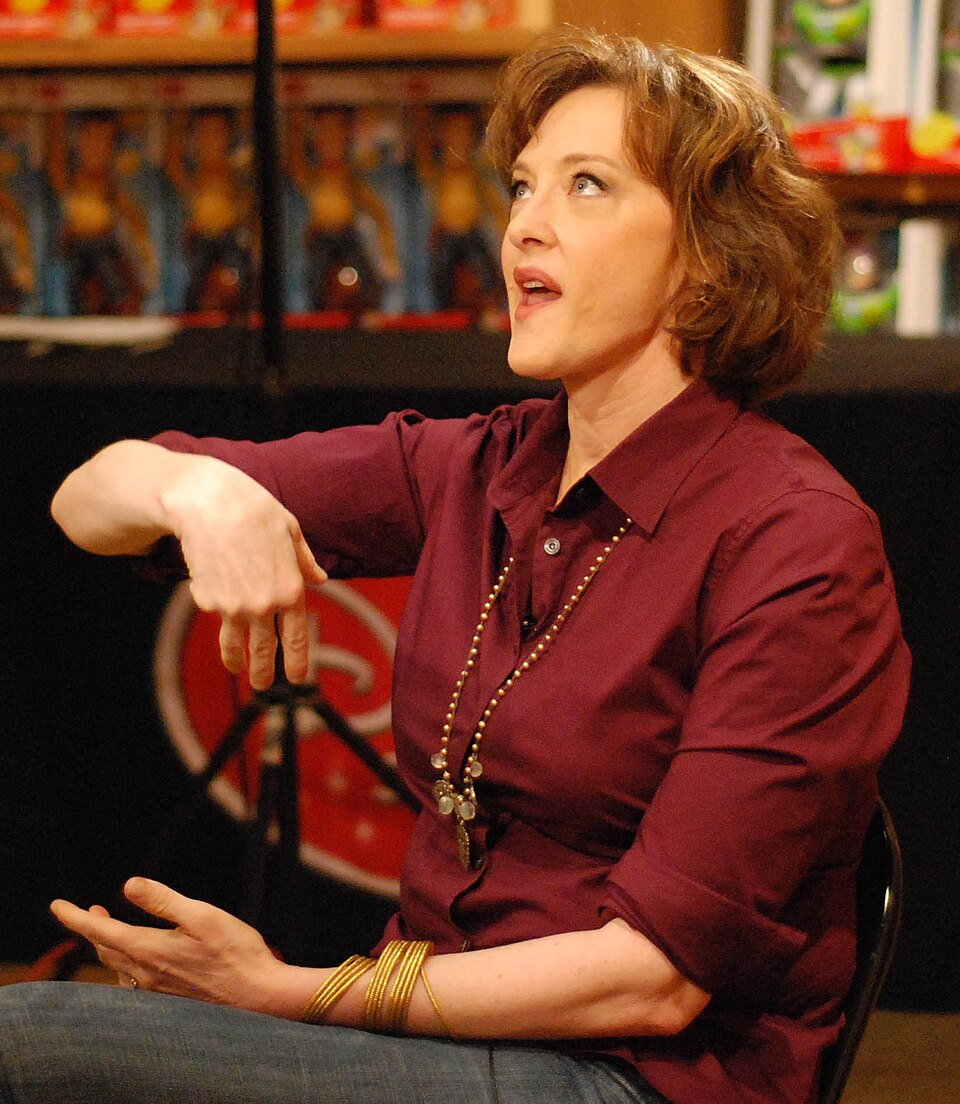
Joan Cusack’s religious background includes Catholicism, but her present beliefs are not explained in detail in the interviews reviewed for this article. More of her public comments concern family, work, creativity, and the challenges of living an ordinary life within an unusual profession.
That does not make the question about faith unimportant. It means an accurate answer needs to distinguish what she has actually shared from what a reader, fan, or celebrity profile might assume.
What has Joan Cusack said about her religious background?
In a 1993 Washington Post interview, Cusack referred to “Growing up Irish Catholic.”
That is a direct description of her background, with an important date attached. It is not a recent statement about her worship habits or a full account of her view of God. The sources reviewed here do not establish those details. We should not add them simply because a familiar label seems convenient.
What do her interviews reveal about her values?
Speaking about Raising Helen in a 2004 interview with Christian Spotlight, Cusack discussed the difficulty of combining acting with family life. She described the long hours, uncertainty, and uneven structure of the profession. She also explained the importance of being available for her children.
That conversation offers a concrete example of what she values. She did not treat professional success as the only important part of life. Her comments recognized that a job can be enjoyable while still creating pressures that need to be handled carefully.
In a 2000 Fresh Air interview with Terry Gross, she talked about the challenge of moving beyond fantasy toward real commitment in relationships. She also described enjoying opportunities to support her brother John’s work. These are public statements about relationships and responsibility, even though they do not amount to a religious creed.
Why has she remained such a familiar screen presence?
Cusack’s career includes memorable work in Broadcast News, Working Girl, In & Out, and High Fidelity. The Fresh Air discussion explored her early theatre experiences in Evanston and the creative training she shared with her siblings. She developed a distinctive comic presence through much more than a single famous role.
She has also reached generations of children through Jessie in the Toy Story films. Disney’s official page for Toy Story 5 includes her in the 2026 cast. Voice acting asks a performer to communicate character through sound, timing, and emotion rather than through an on-screen face.
These roles explain why people want to know more about her. They cannot tell us what she privately believes. A story may explore loyalty, fear, love, or loss without giving us the performer’s own theology. The distinction keeps this article focused on the real person.
How do her comments about family compare with Scripture?
The Bible gives family responsibility real weight. First Timothy 5:8 warns against neglecting the needs of one’s household. Ephesians 6:4 calls parents to bring up children with care and instruction rather than provoking them. The people closest to us should not become an afterthought in the pursuit of recognition.
Cusack’s concern about work and availability for her children connects with that principle. Christians can appreciate a parent taking those demands seriously. There is no need to turn that appreciation into a claim that we know every part of her spiritual life.
The Bible also treats faithfulness as more than a feeling. First Corinthians 13:4–7 describes patient, kind, enduring love. Real relationships involve learning, sacrifice, and attention to another person. That is a helpful comparison with her comments about moving beyond an idealized picture of life.
What makes someone a Christian?
Christianity centers on a person’s response to Jesus Christ. A family tradition, a school, a career, or a caring personality cannot answer that question on someone’s behalf. John 1:12–13 connects becoming a child of God with receiving Christ and believing in His name.
This standard applies to all of us. The point of looking at public beliefs is not to pass a verdict on another person’s heart. It is to report fairly, compare ideas with Scripture, and invite readers to consider the gospel for themselves.
What is that gospel?
God made us to know Him and love our neighbors. He is holy, good, and just. Yet all of us have sinned and fallen short of His glory (Romans 3:23). Our guilt is deeper than a feeling of shame, and we cannot remove it by being talented, helpful, or religious.
God acted in love by sending His Son, Jesus Christ. Jesus became human and lived without sin. He willingly died on the cross for our sins, bearing the judgment we deserve. He was buried and rose bodily from the dead. First Corinthians 15:3–4 places His death and resurrection at the center of the good news.
Salvation is a gift of grace received through faith, not earned through good works (Ephesians 2:8–9). God calls you to repent of sin and trust in Jesus as Savior and Lord. If you want to explore these questions, read the Gospel of John. Joan Cusack’s public statements provide only a limited picture of her personal faith. The gospel offers every reader a clear invitation to forgiveness and new life in Christ.
Photo credit: I Should Be Folding Laundry; crop by RanZag and Adrian J. Hunter, Wikimedia Commons, CC BY 2.0. Cropped portrait, resized.
