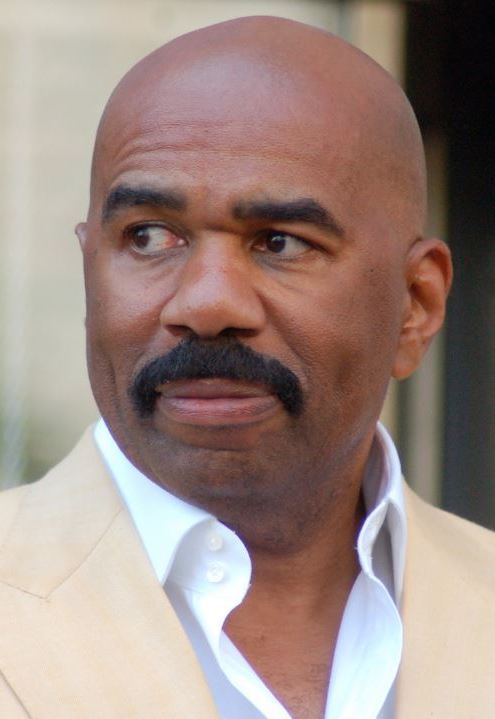
Steve Harvey publicly identifies as a Christian and often speaks about prayer, God’s help, and faith. He has also expressed a broad acceptance of other God-centered religions. Both parts belong in an honest account of his beliefs. His own words give readers a fuller picture than either a flattering label or a short clip chosen only to criticize him.
Has Steve Harvey said he is a Christian?
Yes. In an interview with Kam Williams about Still Trippin’, Harvey said, “I’m still very much a Christian and have a great relationship with God.” He was answering questions about faith and the language in his comedy. He acknowledged personal flaws while describing his love for God.
His official website also carries a message called Prayer Changes Things. In it, he credits God with rescuing and changing him and encourages people not to be too proud or ashamed to pray. This is direct evidence of how he presents his faith publicly, rather than a conclusion drawn from a television role.
In a 2012 Time Out interview, Harvey recalled that his mother taught Sunday school for 40 years. He described a period when making decisions without seeking God left him unhappy. His account connects faith with both his upbringing and his desire for a different way of living.
His broader views about other religions
Harvey’s Christian identity is not the whole story. A 2021 video about prayer included his view that there is more than one route to heaven. The Christian Post documented those remarks in 2022. The video was filmed during a visit to the United Arab Emirates and included discussion of religious harmony.
A more recent example appears in the February 16, 2026 closing remarks of The Steve Harvey Morning Show. The program’s published transcript records him describing God-based faiths as valid across religious lines. The page notes that its transcript is automatically generated, so readers should use the linked recording when checking exact wording.
During the same discussion, he described morning prayer, referred to Psalm 5:3, and spoke about leaving room for God’s will when making plans. His public outlook joins Bible-based encouragement with a broad view of religious acceptance.
We should report that combination clearly. Respect for people of other religions and agreement with all their teachings are different things. It is also important not to turn one statement into a claim that we know everything about Harvey’s current beliefs.
Why his faith reaches so many people
Harvey built his career through stand-up comedy, Showtime at the Apollo, and The Steve Harvey Show. He was part of The Original Kings of Comedy and later became familiar to a wider audience through Family Feud, radio, books, and other television work.
His style often blends humor, advice, and personal stories. Many people hear his thoughts about faith in an everyday setting rather than at a church service. That can make the conversation accessible, especially to someone who is discouraged or feels that religious people would reject them.
Still, a host’s confidence and a message’s popularity cannot settle whether an idea is true. Each claim deserves to be considered on its own. That applies to every public speaker, including Christian writers and teachers.
Prayer and humility in light of the Bible
The Bible encourages prayer and dependence on God. Psalm 5:3 describes bringing requests to him in the morning and watching expectantly. Philippians 4:6–7 teaches believers to bring concerns to God with thanksgiving. Harvey’s encouragement to pray has a clear point of contact with these passages.
Scripture also calls us to submit our plans to God’s will. In Luke 22:42, Jesus prays in submission to the Father even while facing the cross. Prayer is not a way to control God or guarantee an easy life. Faithful people can still face illness, loss, and hardship.
Acknowledging our failures is another valuable starting point. First John 1:8–9 warns against denying sin and points toward confession and forgiveness. Grace does not mean pretending that wrong behavior no longer matters. It gives sinners a reason to turn honestly to God and seek change.
Are there many ways to God?
This is where Harvey’s broad religious statements differ from the New Testament. In John 14:6, Jesus identifies himself as the way to the Father. Acts 4:12 teaches that salvation is found in him. Biblical Christianity does not present Jesus as one interchangeable option among many paths.
That teaching does not excuse hostility toward people who disagree. Christians are called to love their neighbors and explain their hope with gentleness and respect (1 Peter 3:15). Peaceful relationships do not require pretending that conflicting beliefs say the same thing.
We can appreciate a desire for harmony while disagreeing about salvation. This comparison concerns public ideas. It is not a verdict on Harvey’s heart or eternal destiny, which we are not in a position to judge.
The gospel for the interested reader
The Bible says our deepest problem is sin. God made us and is holy, but every one of us has failed to love and obey him. Our wrongs bring real guilt and just judgment. Neither career success, good intentions, nor a religious label can make us right with God.
God has acted in mercy through Jesus Christ, his Son. Jesus lived without sin and willingly died on the cross in the place of sinners. He was buried and rose bodily from the dead. The Christian hope rests on his finished work, not on our ability to become good enough.
God calls us to repent of sin and trust Jesus as Lord and Savior. Salvation is by grace through faith, not earned by works (Ephesians 2:8–9). Good works follow as the fruit of a changed life; they are not its purchase price.
If you came with questions about Steve Harvey, consider the larger question his words raise: What do you believe about God and Jesus? Read the Gospels and examine Christ’s claims. His invitation is to receive forgiveness and new life through him.
Sources
- AALBC: Steve Harvey interview with Kam Williams
- Steve Harvey’s official website: Prayer Changes Things
- Time Out: Steve Harvey interview (2012)
- The Christian Post: reporting on Harvey’s gifts and heaven comments (2022)
- The Steve Harvey Morning Show: February 16, 2026 recording and transcript
- Steve Harvey: career overview
Photo: Angela George, Wikimedia Commons, CC BY-SA 3.0. Commons crop from the 2013 Hollywood Walk of Fame ceremony; displayed at reduced size.
