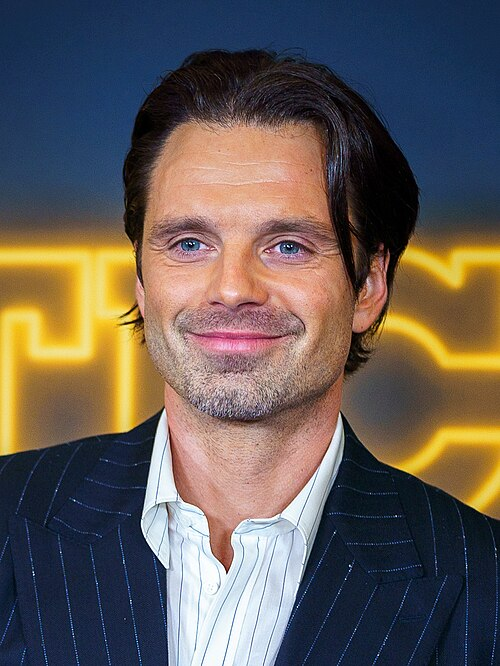
Sebastian Stan has Romanian Orthodox roots and continuing religious ties. A 2025 Vanity Fair profile described him as not especially religious.
What Sebastian Stan has shared about faith
He lit a candle for his late father at an Orthodox church. He recalled childhood churchgoing under Romania’s Communist government and described crossing himself before flights.
They leave room for questions about his beliefs today. A public visit to a chapel is a meaningful event, but it is not a full explanation of someone’s theology. The available account does not settle what he believes about every Christian teaching or how he would describe his current church membership.
The evidence supports a connection with Orthodox Christianity, while leaving his current level of religious commitment unclear. We should let those limits stand.
Why audiences know Sebastian Stan
Many viewers first came to know Stan as Bucky Barnes in Marvel’s Captain America films. The role grew into the Winter Soldier and became part of a much larger story. In Thunderbolts*, Bucky joins a team of troubled people facing difficult choices about their past and future.
Stan has also taken on very different roles outside that series. A Different Man explores appearance and identity, while The Apprentice required him to portray a young Donald Trump. These projects show how far his work stretches beyond one familiar screen character.
An actor’s work can lead audiences to ask serious questions. What makes a person who they are? Can someone change after doing wrong? What does forgiveness involve? Those are useful subjects to discuss. But a script is evidence about a story, not direct evidence about the actor’s religion.
Heritage, habits, and personal conviction
Many readers will recognize the difference between growing up around religion and explaining their own beliefs as adults. A family custom can carry memories of home, loved ones, safety, or loss. People may keep a practice while their understanding of it changes.
This does not make those practices empty. It means that good research should ask what the person actually says about them. There is a difference between reporting a public act and claiming to know all the reasons behind it. It is also possible to respect someone’s privacy while honestly describing what is known.
Orthodox Christianity itself should not be confused with a vague spiritual interest. It has historic teachings about the Trinity, Jesus Christ, his death and resurrection, and the life of the church. Describing Stan’s background does not establish how fully he personally affirms each of those teachings.
What the Bible says about prayer and trust
The Bible gives people a reason to pray when life feels beyond their control. Psalm 62:8 calls God’s people to pour out their hearts before him. Prayer can include grief, fear, thanks, and questions. It does not require impressive language.
Jesus also taught that prayer is more than repeating words or performing an outward act. In Matthew 6:7–8, he warns against thinking that many words will make God listen. The point is not that a familiar prayer or gesture is always wrong. The point is that God is a Father to be trusted, not a power to be managed through a formula.
That distinction matters for any reader who treats a religious habit as a guarantee of safety. Scripture does not promise that a gesture will prevent every accident or painful event. It invites us to know God and trust his character even when life is uncertain.
Grief also has a place in Christian faith. Jesus wept at Lazarus’s tomb in John 11. The same chapter points beyond sorrow to his authority over death. Christian hope can face loss honestly because it rests on a Savior who rose from the grave.
The gospel is more than a family tradition
A Christian upbringing can introduce someone to important truths. Still, each of us needs reconciliation with God. Scripture says we have all sinned (Romans 3:23). Sin includes our actions and the pride, selfishness, and unbelief of our hearts. A holy God judges sin justly. Neither a religious family nor public success can erase our guilt.
The good news is that God came to rescue sinners through Jesus Christ, his eternal Son. Jesus lived the sinless life we have failed to live. He died on the cross in the place of sinners, was buried, and rose bodily from the dead. His victory is the foundation of the Christian message.
God calls us to turn from sin and place our trust in Jesus as Lord and Savior. Salvation is a gift of grace received through faith, not a reward for collecting enough good deeds or religious experiences (Ephesians 2:8–9).
For the reader, the question goes deeper than a celebrity’s background. Who is Jesus, and will you trust him? Reading the Gospel of John is a good place to examine his claims. The Christian invitation is to receive forgiveness and new life in Christ, with a hope that reaches beyond our habits, fears, and family history.
Sources
- Vanity Fair: Sebastian Stan interview (April 2025)
- Marvel: Thunderbolts* official film page
- Sebastian Stan: career overview and filmography
Photo: Jay Dixit, Wikimedia Commons, CC BY-SA 4.0. Cropped by Filmgoer; displayed at reduced size.
