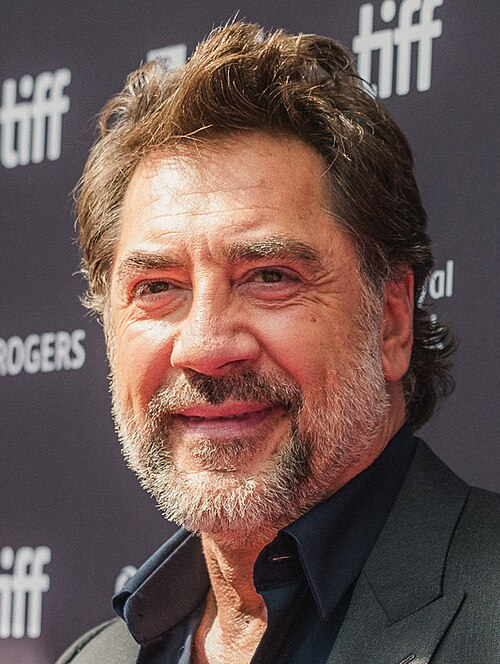
Javier Bardem has publicly described himself as an atheist. His interviews also reveal questions about death, hope, and spiritual experience. His background includes Catholicism, but his own comments show that he moved away from that faith. The clearest answer comes from those comments rather than from the powerful religious characters he has played.
What Javier Bardem has said about God
In a 2008 TIME interview, Bardem said, “I don’t believe in God, I believe in Al Pacino.” He was answering a question about actors he wanted to work with. The humor matters: this was praise for a fellow actor, not a claim that Pacino was divine. Still, Bardem plainly expressed disbelief in God.
He gave a more thoughtful account in Wonderland in 2009. Looking back on his father’s death, he said he had not been a very committed Catholic even before that loss. He came to see religion as a human effort to find explanations and feel protected. He described hope as something that comes from within, while admitting that difficult times could make him wish he had someone to pray to.
That account gives readers more than a label. It shows the personal questions behind his views: Where can hope come from? What can we know about death? Is faith an answer to reality, or a way of coping with fear?
Atheism and a surprising spiritual openness
Bardem’s views have not always fit a simple box. In a 2011 Independent interview about Biutiful, he discussed meeting mediums while preparing to play a man who communicates with the dead. Although described as an atheist, he spoke positively about the abilities he believed he had witnessed.
We should keep the context clear. Research for a film does not establish membership in a spiritual movement. Yet his comments are relevant because they concern his own response to those meetings. Disbelief in God does not always mean disbelief in every kind of spiritual claim.
The sources considered here do not document a later public conversion to Christianity. They support an account of Catholic roots, stated atheism, and some openness to unusual spiritual experiences. They do not give us permission to fill in the rest of his private life.
A career built on very different lives
Bardem has played people whose lives and beliefs differ greatly. His roles include the frightening Anton Chigurh in No Country for Old Men, a grieving father in Biutiful, the villain Silva in Skyfall, and Stilgar in the Dune films. His Oscar for No Country for Old Men helped bring his work to an even wider audience.
Those performances explain why readers may connect him with questions about evil, death, or religious devotion. But an actor’s ability to portray a believer is not a statement of personal faith. Stilgar’s convictions belong to a fictional story. Bardem’s convictions must be researched through his own public words.
How these questions compare with the Bible
The Bible takes grief and the search for answers seriously. In John 11, Jesus weeps at the tomb of his friend Lazarus. Christian faith does not require people to pretend that death is easy or that every painful question has a quick explanation.
Christianity does differ from the view that hope must finally come from ourselves. Scripture presents God as real and active, not as an idea people invented for comfort. First Peter 1:3 connects lasting hope with the resurrection of Jesus. That hope rests on what God has done, rather than on a person’s strength of mind.
The Bible also warns against seeking guidance from the dead through mediums (Deuteronomy 18:10–12). This is a real difference between biblical teaching and openness to those practices. It does not justify mocking someone who is curious or grieving. It calls readers to seek truth from God and to test spiritual claims carefully.
Questions should be treated honestly. A respectful comparison can name a disagreement without acting as though we know everything about another person’s heart.
The gospel offers hope beyond ourselves
For the reader asking what Christianity actually promises, the answer begins with God. He made us, is holy, and deserves our love. All of us have sinned against him in thought, word, and action. We cannot remove that guilt by success, kindness, or a strong personal outlook. Sin brings judgment and separates us from God.
God’s answer is Jesus Christ, his Son. Jesus lived without sin, willingly died on the cross for sinners, was buried, and rose bodily from the dead. His resurrection is central to the Christian message, not an optional symbol of positive thinking (1 Corinthians 15:3–4).
God calls us to repent—to turn from sin—and trust Jesus as Lord and Savior. Forgiveness is received by grace through faith, not earned by religious performance (Ephesians 2:8–9). Good works follow as the fruit of a changed life; they do not purchase salvation.
This invitation is for the interested reader, whether confident, doubtful, grieving, or simply curious. You can bring real questions to the words of Jesus in the Gospels. Christian hope points beyond our limited strength to a living Savior who offers forgiveness and eternal life.
Sources
- TIME: 10 Questions for Javier Bardem (2008)
- Wonderland: Javier Bardem (2009)
- The Independent: Javier Bardem interview (2011)
- Dune: official movie website
Photo: Marlene Landu / WikiPortraits, Wikimedia Commons, CC BY-SA 4.0. Cropped by Up and Go; displayed at reduced size.
