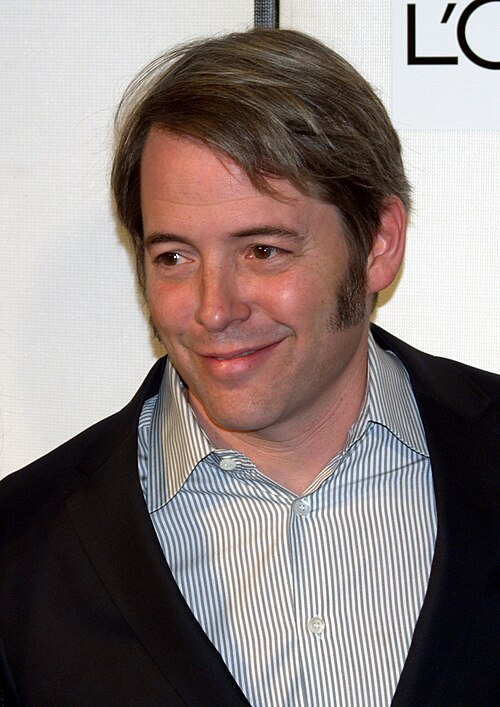
Matthew Broderick has publicly been associated with a Jewish identity, while older comments attributed to him distinguish that identity from an attraction to organized religion. The available evidence supports a careful answer: Jewish identity is part of his public story, but a detailed account of his current religious beliefs is harder to establish.
That distinction matters. Being Jewish can describe peoplehood, culture, family history, religious practice, or several of these together. A profile should explain what the evidence actually says instead of treating a family background as a complete statement about God, worship, and salvation.
What has Matthew Broderick said about religion?
NNDB cites a June–July 1996 Detour interview by Rachelle Unreich in which Broderick identified himself as Jewish while saying he had never been attracted to religion and felt uncertain about what to make of it.
This is an older statement preserved by a secondary source, rather than a newly verified interview with Broderick. It should be presented with that limit intact. It gives a useful glimpse of his outlook at the time, but it does not establish a complete present-day position on every spiritual question.
There is also a public description from his wife, Sarah Jessica Parker. In her interview for Abigail Pogrebin’s Stars of David, excerpted by ABC News in 2005, she described his strong Jewish identification and knowledge of biblical and Jewish history. That is her account of him, rather than a direct statement from him.
The most accurate summary keeps those kinds of evidence separate. His reported words concern identity and uncertainty about religion. His wife’s description adds another perspective. Neither should be stretched into an unsupported claim about conversion, current synagogue membership, or private spiritual practices.
Family background is context, not a complete creed
The Jewish Virtual Library records that Broderick was born in New York City in 1962 to a Jewish mother, Patricia, and a Catholic father, James. Both parents worked in the arts. That background helps explain the different cultural and religious connections readers may see in accounts of his life.
It does not resolve every question of personal faith. Children can share, change, question, or leave their parents’ beliefs. A religious relative or a ceremony also cannot speak for everything a person believes. Those facts deserve their proper place without being made to carry more meaning than they can support.
From Ferris Bueller to Broadway
Broderick’s career includes both screen comedy and major stage work. Early attention came through Torch Song Trilogy. His film work included WarGames before Ferris Bueller’s Day Off made him especially familiar to movie audiences.
He later became a major musical-theater presence, with How to Succeed in Business Without Really Trying and The Producers. He played Leo Bloom in the Broadway production and its film adaptation. These roles show the range of his work across different kinds of performance.
They also show why an actor’s beliefs require their own research. A character may be skeptical, devout, careless, kind, or confused because a writer created that part. The performer’s skill in making it convincing is not evidence that he holds the same worldview.
Identity and personal faith in the Bible
The distinction between inherited identity and personal belief is meaningful for Christian readers too. Someone may grow up around churches, learn familiar prayers, and feel attached to family traditions while still asking basic questions about God. Another person may have little religious background and be seriously seeking truth.
The Bible does not dismiss heritage. Its story is rooted in God’s dealings with real people across generations. Christians receive the Hebrew Scriptures as God’s Word and recognize that Jesus and his first followers were Jewish. Respect for those roots should leave no room for contempt toward Jewish people.
At the same time, Scripture calls each person to respond to God. In John 3, Jesus tells Nicodemus that he needs new birth. Nicodemus already has religious knowledge and standing. The conversation makes clear that spiritual life is more than holding an honored place in a tradition.
Honest uncertainty can also become the beginning of a serious search. In John 20, Thomas asks for evidence concerning Jesus’ resurrection. The chapter moves toward a question for every reader: who is Jesus, and what response does his life require? Christianity invites examination of his claims, rather than confidence built only on a family label.
The gospel’s answer to our deepest need
The Bible says our central need is reconciliation with God. Romans 3:23 teaches that all have sinned and fall short of his glory. That includes religious people, skeptics, and people who are unsure what they believe. We have failed to love God fully and have wronged others through pride, selfishness, dishonesty, and more.
God is holy and just. A good reputation, a successful career, or a meaningful heritage cannot erase guilt. Yet God has acted in love: he sent his Son, Jesus Christ, to save sinners. Jesus lived without sin, died on the cross for our sins, and bore the judgment we deserve. He was buried and rose bodily from the dead.
Because of Christ, forgiveness is offered as a gift. Ephesians 2:8–9 says salvation comes by grace through faith, not through works. Jesus calls us to repent—to turn from sin and self-rule—and trust him as Lord and Savior. Good works follow as the fruit of new life; they do not purchase it.
Broderick’s public record gives a limited picture of Jewish identity and questions about religion. For the reader exploring those questions personally, the Bible points beyond a label to Christ himself. You can read the Gospels, ask honestly, acknowledge your need, and consider the forgiveness and life he offers.
Photo credit: David Shankbone, Wikimedia Commons, CC BY 3.0. Image resized.
