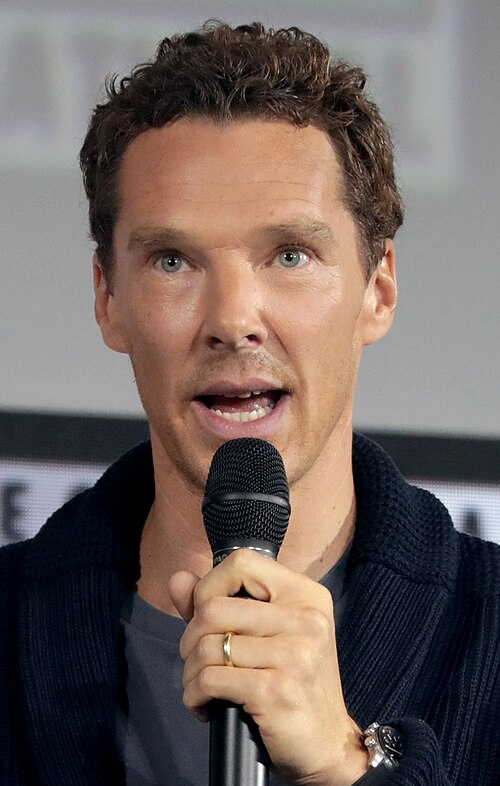
Benedict Cumberbatch has described himself as Buddhist “at least philosophically.” In interviews, he has spoken about meditation, stillness, compassion, and the influence of Tibetan monks he met before becoming a well-known actor. Those public statements provide a clear starting point for understanding his spiritual outlook.
His interest is more than something suggested by playing Doctor Strange. He has explained parts of it directly, including how meditation affects his attention and the way he approaches work. At the same time, his careful wording leaves room for a distinction between drawing on Buddhist philosophy and making a detailed statement about every religious teaching.
How Benedict Cumberbatch encountered Buddhism
In an interview published by Lion’s Roar in 2016, Cumberbatch recalled teaching English to Tibetan Buddhist monks near Darjeeling, India, during a gap year. He also described taking part in a retreat that deepened his interest in meditation.
He remembered the monks as warm and humorous. Their example helped him connect serious spiritual practice with ordinary humanity rather than constant solemnity. He also linked contemplative stillness with the concentration needed for acting.
That account explains an important influence on his life. It does not require readers to assume that his fictional characters share his beliefs, or that every mystical idea in a movie represents his personal view. The relevant evidence is his description of learning from people and practices he encountered himself.
What has he said about meditation and suffering?
In a 2018 interview with The Talks, Cumberbatch connected his outlook with Buddhist meditation. He spoke about constant change, the fact that everyone suffers, and the value of recognizing what people share rather than focusing only on what divides them.
He also described meditation as a way to quiet the mind and create some distance from distracting thoughts. Asked about his routine, he acknowledged that he did not practice every day, even though he tried. That detail makes the account more practical: he described a discipline he valued, rather than claiming perfect mastery.
He connected being present with his work as an actor. The point was attention—being able to respond to the moment rather than being carried away by the surrounding noise. These comments show how his spiritual interests enter everyday habits and professional life.
Taken together, the interviews support describing a public affinity with Buddhist philosophy and meditation. They provide less detail about his position on every question of worship, God, or life after death. A responsible profile can give the available answer without inventing a complete creed.
The person behind familiar performances
Many viewers know Cumberbatch through Sherlock, The Imitation Game, and the Marvel films in which he plays Doctor Strange. His work also includes theater, including Shakespeare’s Hamlet. These different performances require him to imagine minds and lives unlike his own.
That range helps explain the interest in his personal beliefs. A convincing performance can make a character seem inseparable from the person playing it. Yet fiction remains fiction. Looking at interviews, including the dates and the exact scope of what he says, keeps that distinction intact.
Stillness, suffering, and the Bible
The desire for stillness has a point of contact with biblical faith. Our lives can become crowded with fear, ambition, distraction, and noise. The Bible often calls people to stop, listen, pray, and remember that they are not in control of everything.
Biblical meditation has a particular focus. Psalm 1 describes delighting in God’s instruction and reflecting on it. Philippians 4:6–9 connects prayer, thanksgiving, and disciplined thought with trust in God. The goal is more than becoming mentally quiet. It is learning to know and obey the Lord who speaks.
Christianity also takes suffering seriously. The Psalms include anguish, and the book of Job refuses to reduce every painful experience to a simple explanation. Romans 12:15 calls believers to weep with those who weep. Shared suffering should lead to compassion rather than to pride about our own answers.
The Christian account, however, places suffering within the story of creation, humanity’s fall, and God’s promised restoration. It points to a personal Creator and to Jesus Christ entering human pain. At Lazarus’s tomb, Jesus wept. He also spoke of resurrection and life. The hope is that God will defeat death, rather than that we can only learn to manage our response to it.
A hope that rests on Christ
The gospel addresses another problem alongside suffering: our sin. Romans 3:23 says all have sinned and fall short of God’s glory. We have failed to love God and our neighbors as we should. Better focus, greater awareness, and kinder habits cannot remove our guilt before a holy God.
God’s answer is his Son, Jesus Christ. Jesus lived without sin, died on the cross for our sins, and bore the judgment we deserve. He was buried and rose bodily from the dead. His resurrection is the foundation of Christian hope, including the promise that death does not have the final word for those who belong to him.
According to Ephesians 2:8–9, salvation comes by grace through faith, not by works. It is not the reward for reaching a certain level of spiritual skill. Jesus calls us to repent—to turn from sin and self-rule—and trust him as Lord and Savior.
Cumberbatch’s comments encourage serious thought about attention, suffering, and the kind of people we become. For readers considering the Bible’s answer, the next step is to examine Jesus himself. He offers forgiveness and new life to people who come with empty hands, admitting their need and receiving his mercy.
Photo credit: Gage Skidmore, Wikimedia Commons, CC BY-SA 2.0. Existing cropped portrait, resized.
