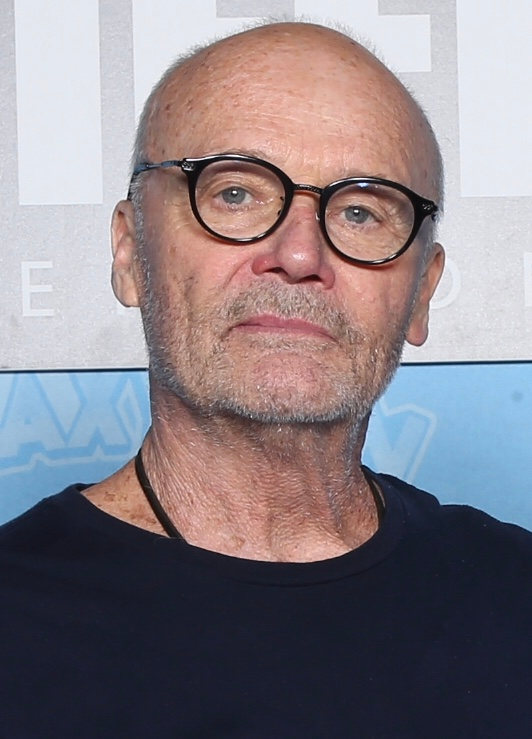
What has Creed Bratton publicly said about religion?
Creed Bratton has spoken publicly about meditation, spiritual inspiration, and the possibility of connections beyond this life. Those comments are worth examining on their own terms. They do not establish that he is a Christian, nor do they justify assigning him a Buddhist or Taoist identity. In the interviews reviewed for this article, he discusses spiritual experiences more readily than membership in a particular religion. The honest answer is that his public statements reveal spiritual exploration, but not a clearly documented Christian profession.
That distinction matters especially because Bratton plays a fictional version of himself on The Office. The character’s bizarre comments and mysterious history are comedy, not reliable evidence about the actor’s beliefs. Neither a television script nor an evocative album title can substitute for what a person actually says about faith.
Meditation, inspiration, and questions about another life
In a 2024 interview with American Songwriter, Bratton described a morning routine involving green tea, meditation, and yoga. He also described songwriting in language of receiving inspiration rather than forcing it, and discussed creative visualization. These comments suggest that spiritual language is part of how he understands creativity. They do not provide a complete doctrine of God, salvation, or the afterlife.
In an earlier TIDAL interview, he described finding personal spiritual meaning in his songs after writing them. He also raised the possibility that a connection with someone might involve another life. His wording was tentative; it would be unfair to turn that possibility into a detailed system of reincarnation that he did not explain. Likewise, describing music as healing need not be read as a medical claim or a formal religious teaching.
It is possible to acknowledge the sincerity of these reflections while keeping the evidence limited. Meditation can have different meanings for different people. An artist’s description of a muse does not tell us everything about his worship or convictions. This article therefore reports the specific comments rather than pretending to know his private spiritual life.
A musician before he was an Office favorite
Long before television audiences knew Creed at Dunder Mifflin, Bratton was building a musical career. His official biography describes a childhood in a small California community between Fresno and Yosemite, with music in his family. His subsequent travels included performing abroad, and he became a member of the 1960s band the Grass Roots. His later solo work makes clear that music was not merely a colorful backstory added to his television persona.
His 2024 album Tao Pop continued that career with collaborators including producer Dave Way. The title is an artistic choice; it is not, by itself, a declaration that Bratton practices Taoism. His career connects several creative worlds: touring musician, songwriter, actor, and a familiar member of one of television’s most enduring ensembles.
On The Office, his understated delivery made strange lines memorable. The character often contributed a brief interruption rather than a long speech, demonstrating how timing and restraint can shape comedy. In the TIDAL interview, Bratton also discussed the significance of having his song “All the Faces” used in the series finale. That moment allowed his musical identity to meet the television role many viewers associated with him.
How do these ideas compare with the Bible?
Christianity does not teach that every powerful inward impression is a message from God. Scripture calls people to test spiritual claims rather than accept them simply because they feel meaningful (1 John 4:1). Proverbs 3:5–6 directs trust toward the Lord rather than making personal understanding the final authority. This does not mean Christians must dismiss imagination or musical inspiration. It means inspiration and revelation are different categories.
The Bible also presents human life, death, and judgment differently from reincarnation. Hebrews 9:27 speaks of death followed by judgment. Christian hope is resurrection, grounded in Jesus Christ’s bodily resurrection, not repeated earthly lives in which a person gradually works toward redemption. This is a contrast with the possibility Bratton mentioned, not a claim that he has endorsed every teaching associated with reincarnation.
Music can nevertheless express longing, gratitude, grief, and love in ways that listeners recognize. Christians can appreciate artistic skill and human connection as gifts within God’s creation without equating a moving song with saving faith. Appreciation and discernment belong together: enjoying Bratton’s work does not require making unsupported claims about his relationship with Christ.
The gospel: more than spiritual inspiration
The Christian gospel is not a technique for accessing creativity or feeling connected to the universe. It begins with the holy God who created us and deserves our love and obedience. All of us have sinned, falling short of His glory (Romans 3:23). Our problem is not merely confusion or unrealized potential; sin separates us from God and brings judgment. We cannot repair that separation through artistic achievement, meditation, moral improvement, or repeated lives.
God’s answer is Jesus Christ, fully God and fully man. Jesus lived without sin and willingly died on the cross, bearing the punishment sinners deserve. He rose bodily from the dead, defeating death. His resurrection is central to the message, not simply a metaphor for finding new inspiration (1 Corinthians 15:3–4).
God calls us to repent—to turn from sin—and trust in Jesus Christ as Lord and Savior. Salvation is God’s gift of grace, received through faith, not earned by works (Ephesians 2:8–9). The invitation is personal: stop relying on yourself to become acceptable to God and rely on Christ’s finished work. Forgiveness and reconciliation are found in Him. This gospel is offered to the interested reader; it is not a declaration about Creed Bratton’s private spiritual standing.
Sources
- TIDAL: interview with Creed Bratton
- American Songwriter: Creed Bratton on The Office and Tao Pop (2024)
- Creed Bratton: official biography
Photo: Super Festivals, via Wikimedia Commons, CC BY 2.0. Cropped version supplied by Commons; displayed at reduced size. No endorsement implied.
_CROPPED.jpg)