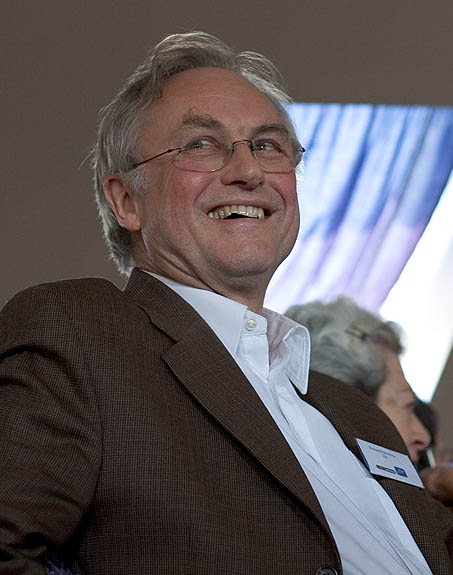
Richard Dawkins is one of the best-known public voices for atheism. He is an evolutionary biologist, author, and longtime critic of religious belief. Because he has written so directly about God, Christianity, and science, people often ask a simple question: What does Richard Dawkins believe?
The careful answer should begin with his own public words. This article is not a claim to know Richard Dawkins’s heart or final standing before God. Only God knows the heart. It is a summary of his documented public position and a reminder of what the Christian gospel actually says.
Richard Dawkins publicly identifies as an atheist
Dawkins has identified himself publicly as an atheist for many years. His 2006 book The God Delusion made his argument against belief in God widely known. In interviews, he has said that he does not see God as necessary to explain the world and that he believes the existence of gods is overwhelmingly unlikely.
In a Scientific American interview, Dawkins explained that he sometimes uses the word “agnostic” in a narrow sense: no person can claim absolute certainty about every possible idea. But he immediately made clear that this did not mean he thought belief in God and unbelief were equally likely. He compared his uncertainty about God to uncertainty about fairies or leprechauns. That is a strong public statement of atheism, not a Christian confession.
Older interviews tell the same story. In a PBS conversation about faith and reason, Dawkins criticized religion as a way of understanding the world. He has argued that science is the better path for investigating life and the universe. Christians should represent that position honestly, even when they disagree with it deeply.
What about “cultural Christianity”?
More recently, media reports have discussed Dawkins using the phrase “cultural Christian.” That phrase can be confusing. It does not mean that he has publicly said he trusts Jesus Christ as Lord and Savior. Rather, it refers to his appreciation for parts of Britain’s Christian cultural history, such as church music, buildings, holidays, literature, and social customs.
A person can value Christian art or traditions without believing the central claims of Christianity. The New Testament does not define a Christian as someone who enjoys a cathedral, knows Bible stories, or grew up around Christian customs. Biblical Christian faith is trust in the real Jesus Christ: the Son of God who died for sinners and rose again.
Is Richard Dawkins a Christian?
Based on his public statements, Richard Dawkins is not a Christian in the biblical sense. He has identified as an atheist and has openly rejected belief in God as taught by Christianity. It would be misleading to call him a Christian because of his cultural comments.
Still, Christians should not speak of him with pride or hatred. He is a human being made in God’s image, with intelligence, gifts, and a life that matters to God. Christians are not called to mock people who disagree with them. We are called to tell the truth with gentleness and respect.
Science and the Christian faith
Some people assume that following science means rejecting Christianity. That is not a conclusion the Bible requires. Christianity makes claims about history, morality, the meaning of life, and most importantly, Jesus Christ. The Christian message does not rest on refusing to ask questions. It rests on the person and work of Jesus.
Christians believe that God created the world and that human beings are accountable to Him. We also believe that every person, religious or not, has sinned and needs mercy. Our problem is not simply that we lack information. Our problem is that we have turned from God and tried to live as our own rulers.
Why Jesus matters
The gospel is not a demand that people pretend to be certain or never ask hard questions. It is good news about what God has done. Jesus lived without sin, died on the cross for sinners, and rose from the dead. He offers forgiveness and new life to those who come to Him.
Richard Dawkins’s public arguments raise serious questions, and Christians should be ready to listen, think, and answer carefully. But the final question is personal for every one of us: Will we trust ourselves, or will we trust Christ?
A word to the reader
You may identify as an atheist, an agnostic, religious, spiritual, or unsure. God knows your questions. Do not assume that being skeptical puts you beyond His reach. Jesus welcomed people who came honestly, and He calls us to turn from sin and believe the good news. If you have never done so, repent—turn from sin and self-rule—and trust in Jesus Christ. He alone can forgive sin and give you eternal life.
Sources
- Scientific American: Richard Dawkins interview
- PBS: Richard Dawkins on faith and reason
- Royal Society of Biology: Richard Dawkins interview

