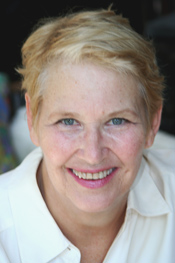
Annie Dillard, the Pulitzer Prize-winning writer best known for Pilgrim at Tinker Creek, died in September 2026 at age 81. Her writing often paid close attention to nature, wonder, silence, and the difficult questions people ask about God. Because faith mattered to her work, many readers may ask whether Annie Dillard was a Christian.
The honest answer needs some care. Famous Faith does not claim to know the final condition of Annie Dillard’s heart before God. Only God knows that. But Dillard herself wrote and spoke publicly about religion, so we can describe her own words without making them simpler than they were.
How did Annie Dillard describe her background?
Dillard said that she was raised Presbyterian. In a 1978 interview with Christianity Today, she described an early season of rebellion and then a return to Christianity. That part of her story helps explain why the Bible, prayer, nature, and spiritual questions appeared so often in her books.
However, a person’s childhood church background does not settle every question about what he or she believed later in life. Dillard’s later public comments showed a more complicated relationship with historic Christian teaching.
Did Annie Dillard call herself a Christian?
Yes, in a 2020 essay for The Christian Century, Dillard wrote that she considered herself Christian. Yet she also made clear that she did not give intellectual agreement to several core teachings that many Christians have historically affirmed. She wrote about serious doubts concerning a personal God and said she was comfortable with a range of other religious and nonreligious views.
Those statements matter. It would be fair to report that Dillard continued to use the word “Christian” for herself in a broad and personal sense. It would not be fair to treat that label alone as proof that she held to historic, biblical Christian faith. Words such as Christian, spiritual, and religious can mean very different things depending on the person using them.
Was Annie Dillard a Christian in the biblical sense?
Based on her public writing, the answer cannot be reduced to a quick yes or no. Dillard’s connection to Christianity was real and lasting in her life and writing. At the same time, her own later words showed that she questioned or did not affirm important Christian doctrines. We should let her words stand as they are, rather than turning her into a simple example for either side.
Christians also should not claim to know the final verdict over a person’s soul. The Lord knows what no article can see. Our responsibility is to be truthful about public evidence and faithful about the gospel.
Why the gospel is more than a label
Christianity is not only a family background, an interest in nature, or an appreciation for religious language. The Bible says that Jesus Christ is the Son of God, that He died for our sins, and that He rose from the dead. Salvation is God’s gift of grace to those who trust in Him, not something we earn through intelligence, art, good deeds, or a religious label.
Annie Dillard’s books invited many people to look closely at the world around them. The gospel invites us to look to Jesus Himself. He is not merely a subject for reflection. He is the Savior who offers forgiveness, mercy, and eternal life.
A respectful takeaway
Annie Dillard’s public story included Presbyterian roots, a return to Christianity when she was young, and later theological doubts she described in her own words. We can appreciate her writing, report her beliefs with care, and remember that every person—famous or unknown—needs the grace of Jesus Christ.
Sources
- Associated Press: Annie Dillard obituary
- Annie Dillard in The Christian Century: “Do I consider myself Christian?”
- Christianity Today: 1978 interview with Annie Dillard
Image credit: Annie Dillard, photo by Phyllis Rose, used with permission via Wikimedia Commons (GFDL).