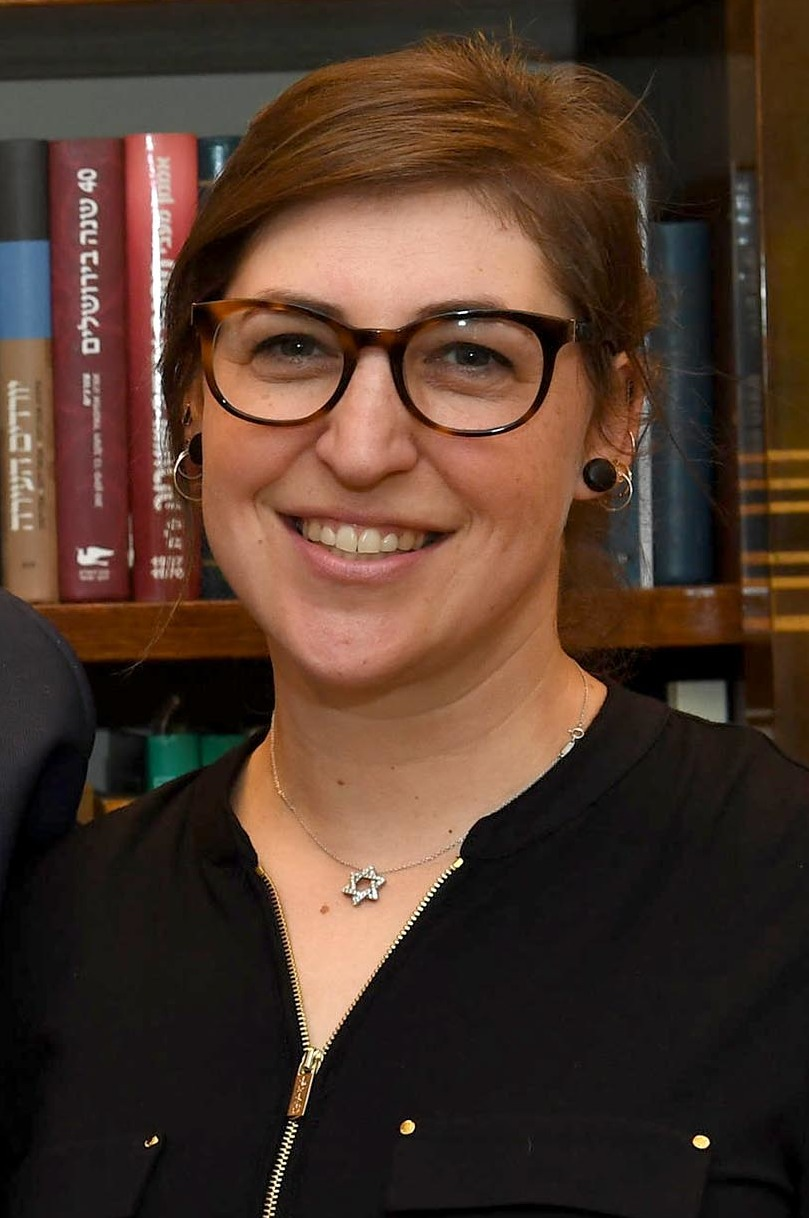
Mayim Bialik publicly identifies with Judaism and has spoken openly about religious observance, belief in God, and Jewish family life. Her interviews describe a faith that is part of her daily thinking, rather than simply a family label. The sources reviewed here describe Jewish belief and practice, not a profession of Christian faith.
Bialik played Amy Farrah Fowler on The Big Bang Theory. She also trained as a neuroscientist. That combination has made her a frequent participant in discussions about whether scientific knowledge and religious faith can exist together.
How Mayim Bialik describes her faith
In a 2017 interview with Hadassah Magazine, Bialik discussed the relationship between scientific study and her awareness of God. She described the natural world as a source of wonder and connected that experience with her faith. She also discussed Passover as a setting for remembering Jewish history, welcoming people in need, and reflecting on freedom.
The same interview described her wish to pass Jewish values to her children through the way she parents. These are concrete expressions of a Jewish religious identity. They are more informative than a label assigned because of a role or appearance.
Bialik has also written in her own voice about science and faith for Kveller. Her account treats scientific explanations of the world as compatible with religious meaning and prayer. A Television Academy profile describes her approach to Jewish practice as sincere and personally considered. Taken together, these sources support calling her Jewish and religiously engaged, while recognizing that individual Jewish believers do not all practice or describe God in the same way.
Where Judaism and biblical Christianity meet and differ
Christians should approach Judaism with respect for the Jewish people and an awareness of the Bible’s Jewish setting. Jesus, His apostles, and the earliest Christian community were Jewish. The Old Testament is essential to understanding the New Testament, and Romans 11 warns Gentile believers against pride toward Jewish people.
There are shared concerns: the reality of God, the importance of Scripture, human responsibility, and the call to care for others. Those points matter. Yet shared language does not remove the central disagreement about Jesus. Christians believe He is Israel’s Messiah, the eternal Son of God who became human, died for sins, and rose again.
In Luke 24:27, Jesus explains the Scriptures in relation to Himself. In John 20:30–31, the Gospel’s writer states his purpose: that readers would believe Jesus is the Messiah and Son of God and receive life in His name. This is the distinctive claim readers need to examine, rather than reducing Christianity to a generic belief in a higher power.
Wonder is an invitation to seek the Creator
Scientific curiosity and religious questions need not be treated as signs of stupidity or dishonesty. Psalm 19 presents the heavens as declaring God’s glory. For Christians, the order and beauty of creation invite gratitude to its Maker. Still, an experience of wonder cannot by itself deal with our guilt or tell us how to be reconciled to God.
That is why this comparison moves from broad spiritual awareness to the gospel’s specific message. It is a statement of the Christian teaching Famous Faith presents, rather than an assumption about Bialik’s private thoughts or a claim that she has accepted it.
The gospel: why every one of us needs Jesus
The Bible begins with a good God who created us to know Him and reflect His character. Our problem is that we have turned away from Him. Romans 3:23 says everyone has sinned and fallen short of God’s glory. That includes religious people, people with no religion, celebrities, and the person writing this article.
God’s commandments make the problem personal. Have you ever lied, taken something that did not belong to you, dishonored your parents, or treated something as more important than God? Jesus teaches in Matthew 5 that God also sees the anger and lust in our hearts. Comparing ourselves with someone worse cannot make us innocent before a holy Judge.
Scripture says that death follows sin and that judgment is real (Romans 6:23; Hebrews 9:27). We cannot buy forgiveness with donations, good intentions, church attendance, or a record of professional success. Good deeds matter, but they cannot undo guilt. The Christian message therefore begins with an honest admission of our need for mercy.
The good news is that God has acted in love. Jesus Christ, God’s Son, became truly human and lived without sin. He willingly died on the cross for sinners, taking the judgment we deserve, and rose bodily from the dead. His resurrection is central to the message announced in 1 Corinthians 15:3–4. Christianity rests on who He is and what He accomplished, rather than our ability to improve ourselves enough to earn acceptance.
Ephesians 2:8–10 explains that salvation is a gift of God’s grace, received through faith rather than earned by works. Changed behavior follows as the fruit of new life. Acts 20:21 calls us to repentance toward God and faith in Jesus Christ. Repentance means turning from sin and self-rule; faith means relying on the risen Savior for forgiveness and reconciliation with God.
You can respond to that message wherever you are. Confess your sin to God, ask for His mercy, and place your trust in Jesus rather than your reputation or religious history. A prayer is not a magic formula; the issue is a real turning of the heart toward Christ. Read the Gospel of John, consider Jesus’ claims for yourself, and seek a church that faithfully teaches the Bible. The invitation is for ordinary readers as surely as it is for famous people.
Sources
- Hadassah Magazine: Q&A with Mayim Bialik (March 9, 2017).
- Mayim Bialik: How I Teach My Kids About Both Science and Faith.
- Television Academy: A Modest Success.
Featured photo: Mark Neyman / Government Press Office of Israel, Wikimedia Commons, CC BY-SA 3.0. Existing Commons crop, resized.
