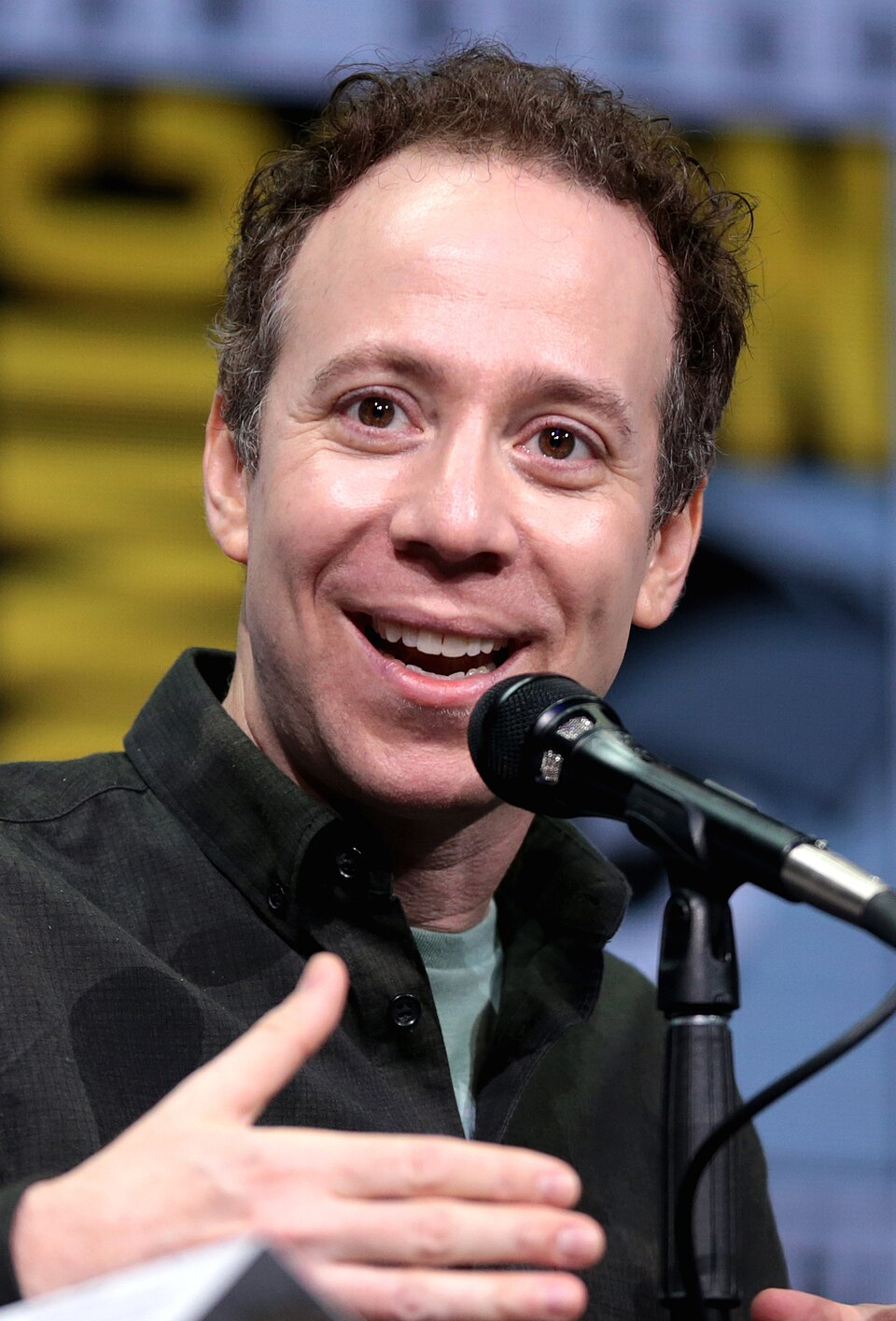
Kevin Sussman’s public comments show an interest in evidence and a cautious approach to spiritual explanations. Biographical sources describe Jewish family roots, but the interviews reviewed here do not establish his current religious practice or a personal profession of Christian faith. His own careful wording is more useful than assigning him a stronger label.
Sussman played comic-book shop owner Stuart Bloom on The Big Bang Theory. A familiar character can make viewers feel that they know the actor personally. The real person, however, has experiences and convictions that cannot be read directly from a script.
What he has said about spirituality
In a July 2021 appearance on Mayim Bialik’s Breakdown, Sussman discussed performing, physical tension, and how people experience emotions. During the conversation, he said he did not want to describe himself as entirely unspiritual, while explaining his preference for evidence-based approaches. The available transcript records that nuance rather than a firm atheist or religious label.
The official episode description focuses on acting and ways of managing performance-related pressures. It does not present the conversation as a conversion testimony or a systematic account of Sussman’s beliefs. This article likewise does not treat a discussion of the Alexander Technique as a declaration about salvation or the existence of God.
The best supported answer is limited: Sussman has publicly shown a preference for explanations he can examine, but the material reviewed does not clearly confirm a current religious affiliation. That is a statement about what the sources establish, not a claim that he has no private faith.
Does faith mean ignoring evidence?
Christianity is sometimes described as believing something without any reason. The New Testament presents a different picture. Luke begins his Gospel by explaining his careful investigation of what had been handed down by eyewitnesses (Luke 1:1–4). First Corinthians 15:3–8 identifies the resurrection message and names witnesses.
Those passages do not remove every question or replace careful thought with a slogan. They show that Christianity makes claims about events, people, and history. Readers are invited to examine those claims. Acts 17:11 commends people who searched Scripture to test the teaching they received.
There is also a distinction between explaining how something works and explaining the meaning of a whole life. A physical account of breathing or muscle tension can address a bodily process. It cannot, by itself, answer whether we owe our existence to God or how we can be forgiven for wrongdoing. Different questions require attention to the kind of answer being offered.
The Bible takes the whole person seriously
Human beings are embodied people, not minds floating apart from ordinary life. Scripture describes people eating, sleeping, grieving, working, and asking for help. Elijah’s story in 1 Kings 19 includes rest and food as well as a renewed encounter with God. Christians should not turn every human difficulty into a simplistic accusation of weak faith.
At the same time, the Bible identifies a moral and spiritual need deeper than improved performance. Each of us answers to the God who made us. Our guilt cannot be solved merely by feeling better or understanding ourselves more clearly. We need reconciliation with Him.
That is the point where the gospel moves beyond a general conversation about spirituality. It gives a definite message about Jesus Christ and a definite invitation to the reader. This comparison describes Christian teaching without pretending that Sussman has endorsed it.
The gospel: why every one of us needs Jesus
The Bible begins with a good God who created us to know Him and reflect His character. Our problem is that we have turned away from Him. Romans 3:23 says everyone has sinned and fallen short of God’s glory. That includes religious people, people with no religion, celebrities, and the person writing this article.
God’s commandments make the problem personal. Have you ever lied, taken something that did not belong to you, dishonored your parents, or treated something as more important than God? Jesus teaches in Matthew 5 that God also sees the anger and lust in our hearts. Comparing ourselves with someone worse cannot make us innocent before a holy Judge.
Scripture says that death follows sin and that judgment is real (Romans 6:23; Hebrews 9:27). We cannot buy forgiveness with donations, good intentions, church attendance, or a record of professional success. Good deeds matter, but they cannot undo guilt. The Christian message therefore begins with an honest admission of our need for mercy.
The good news is that God has acted in love. Jesus Christ, God’s Son, became truly human and lived without sin. He willingly died on the cross for sinners, taking the judgment we deserve, and rose bodily from the dead. His resurrection is central to the message announced in 1 Corinthians 15:3–4. Christianity rests on who He is and what He accomplished, rather than our ability to improve ourselves enough to earn acceptance.
Ephesians 2:8–10 explains that salvation is a gift of God’s grace, received through faith rather than earned by works. Changed behavior follows as the fruit of new life. Acts 20:21 calls us to repentance toward God and faith in Jesus Christ. Repentance means turning from sin and self-rule; faith means relying on the risen Savior for forgiveness and reconciliation with God.
You can respond to that message wherever you are. Confess your sin to God, ask for His mercy, and place your trust in Jesus rather than your reputation or religious history. A prayer is not a magic formula; the issue is a real turning of the heart toward Christ. Read the Gospel of John, consider Jesus’ claims for yourself, and seek a church that faithfully teaches the Bible. The invitation is for ordinary readers as surely as it is for famous people.
Sources
- Mayim Bialik’s Breakdown: Kevin Sussman episode (July 27, 2021).
- Transcript of Sussman’s conversation, including his comments on evidence and spirituality.
Featured photo: Gage Skidmore, Wikimedia Commons, CC BY-SA 3.0. Resized.
