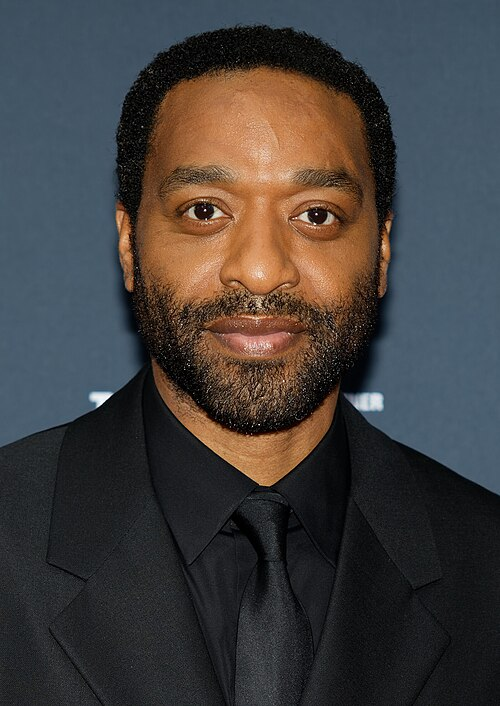
Chiwetel Ejiofor was raised Roman Catholic, but a 2018 Associated Press interview reported that he drifted from church during his teens. He has also described a renewed engagement with questions of Christian faith through his acting work. That is the supported public picture, rather than a clear declaration of his present church membership.
His performances in religious stories make the question especially interesting. Yet portraying an apostle or a pastor does not prove personal Christian belief. An actor can take a faith seriously while researching a role without accepting all of its teachings.
What did he say while making Come Sunday?
The Associated Press interviewed Ejiofor as he played Carlton Pearson in Come Sunday and Peter in Mary Magdalene. He described the experience as a powerful opportunity to reconnect with religious questions and to see faith differently.
His account supports renewed interest, not a claim that he had returned to Catholic practice or adopted a new denomination. We should keep those distinctions clear. Curiosity, respect, and religious identification can overlap, but they do not mean exactly the same thing.
How do his earlier reflections add context?
In a 2003 Fresh Air interview, Ejiofor discussed the car accident in which his father died. Asked whether that experience led him toward religion, he instead connected his response with the stage. Art offered a way to express emotions and questions that were difficult to contain in ordinary life.
This earlier reflection does not cancel his later interest in faith. It shows why a person’s story should be read over time. An interview is a statement made at a particular moment, not a permanent limit on what someone may later believe.
Why do his stories often invite moral questions?
Ejiofor’s work includes 12 Years a Slave and Half of a Yellow Sun. In a BFI interview, he discussed how the latter connected with his family’s Nigerian history. These films bring human dignity, injustice, and the cost of conflict into view.
They also remind viewers that moral choices happen within complicated circumstances. Understanding those circumstances is valuable. It does not mean every decision becomes morally equal or that suffering removes the difference between right and wrong. A story can deepen empathy while leaving room for judgment about ideas.
What question does Come Sunday raise?
The film follows Pearson’s challenge to traditional teaching about hell and salvation. That is a subject within the story, not proof that Ejiofor shares Pearson’s conclusions. Separating performer and character lets us examine the issue without misrepresenting either person.
The Christian question is not settled by which conclusion feels most comforting. Jesus speaks of judgment in Matthew 25:46, and John 3:16–18 connects salvation with faith in God’s Son. Those passages deserve serious attention when discussing the hope that everyone is automatically saved.
Can compassion and conviction belong together?
Christians should not take pleasure in the idea of anyone facing judgment. Scripture calls people to pray for others and share the good news. First Timothy 2:1–6 joins that concern with the claim that Jesus is the mediator between God and humanity.
Compassion also requires honesty. If we believe a warning is true, concealing it is not necessarily kindness. At the same time, truth should be spoken with humility. We are not morally superior spectators looking down on people who need mercy. We need the same mercy ourselves.
Why do we need a Savior?
God’s law gives that question a personal answer. He commands us not to steal, lie, commit adultery, or misuse His name. Jesus teaches that hateful anger and lust reveal sin in our hearts too. Have we kept God’s standard in every thought, word, and action?
Romans 3:23 says all have sinned. Talent, a thoughtful outlook, and good intentions cannot erase guilt. Nor can religious background. The law brings knowledge of sin, according to Romans 3:20. It shows why we need rescue rather than merely a more flattering account of ourselves.
What has Jesus done for sinners?
Jesus Christ, God’s Son, lived without sin. He died on the cross for our sins, bearing the judgment we deserve. He was buried and rose bodily from the dead. First Corinthians 15:3–4 identifies His death and resurrection as central to the Gospel.
God offers forgiveness and eternal life by grace through faith in Jesus, not as a reward for moral effort or religious achievement. Ephesians 2:8–9 makes this distinction clear. You can rest your trust in Christ and His finished work instead of trying to become your own savior.
Ejiofor’s public comments reveal a thoughtful engagement with faith and storytelling. They also leave room for uncertainty about his personal convictions. For readers, the deeper question remains open and personal: what do you believe about Jesus, and why?
Sources and photo credit
Associated Press interview, 2018, via Gulf News; Fresh Air interview, 2003; BFI interview, 2014.
Photo: Kevin Payravi / WikiPortraits, Wikimedia Commons, CC BY-SA 4.0. Cropped source, resized; image remains under the same license.
