The profile · Actor
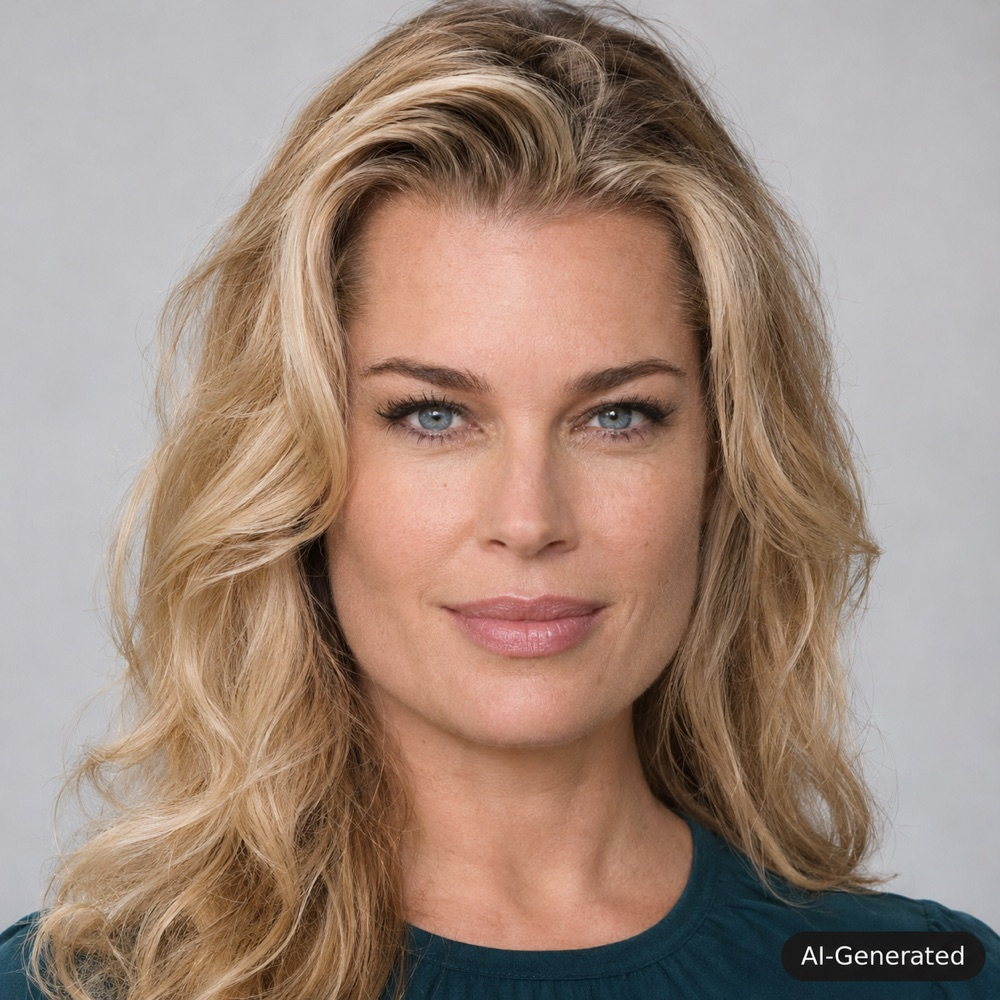
Rebecca Romijn
Rebecca Romijn’s screen career connects a shape-shifter, a protective soldier, a magazine executive, and the Enterprise’s first officer. The roles have changed, but each asks her to do more than provide a memorable image.
- Earlier career
- Professional model[1]
- Television lead
- Eve Baird in The Librarians[1]
- Star Trek role
- Una Chin-Riley / Number One[2]
- X-Men role
- Raven / Mystique[3]
The person behind the work
A face became a working screen career
Rebecca Romijn worked as a model before building a substantial acting career. She was born in Berkeley, California. Her early public profile can make the transition sound simple, but a familiar face still has to learn a different job when a camera begins recording dialogue, action, and relationships.[1]
Mystique in the original X-Men films made her recognizable in a strikingly altered form. Television later gave her a series of roles with more ordinary surfaces: a reporter in Pepper Dennis, a private investigator in King & Maxwell, and a magazine executive in Ugly Betty. Each offers a different kind of authority.[3]
The Librarians cast her as Eve Baird, a protector working with a team whose knowledge could put them in danger. Her 2015 Sidewalks appearance with Christian Kane discussed the series’ second season. By that point, the role was part of an ongoing ensemble life rather than simply an introduction to a new character.[1]
A career in range
Selected work, at a glance
2022 onward
Star Trek: Strange New Worlds
Una Chin-Riley / Number One
A legacy character receives a much fuller screen life.[2]
The person behind the work
Taking care of a character with a long history
Star Trek: Strange New Worlds gave Romijn a role with an unusual past. The Enterprise’s Number One existed in the original Star Trek pilot, but later generations had seen relatively little of her. Romijn’s Una Chin-Riley belongs to a familiar world while receiving more of her own story.[2][3]
The second season faced Una’s concealed Illyrian background and her arrest under Starfleet’s rule against genetic modification. Romijn described the character’s relief at no longer hiding. That is a specific discussion of a fictional person’s burden, not a claim that every element of the story maps directly onto its performer’s life.[2]
The range across Romijn’s television work is easy to miss if Mystique remains the only point of reference. Eve Baird guards a team. Michelle Maxwell investigates. Alexis Meade has power within a fashion magazine. Una helps a ship and its captain function. All involve authority, yet the setting changes how that authority is tested.[3]
A useful way to compare them is to notice whom the character must persuade. A commander may rely on procedure; a detective may need a stranger’s trust; a family member may find that rank offers little help. Acting those differences is a more demanding task than simply appearing confident.
A closer look
Three ways into the work
The Librarians: expertise needs protection
Eve Baird’s role asks how a practical person works with people whose knowledge is unusual and sometimes dangerous. The ensemble depends on different skills being useful rather than one person doing every job.[1]
King & Maxwell: authority after an official career
Michelle Maxwell’s professional past shapes her work as a private investigator. The change in setting is an acting opportunity: a person can retain habits of command while having to earn cooperation in a new way.[3]
Strange New Worlds: let a familiar world make room
Una’s story shows why a returning franchise can still develop a character. Viewers already know the ship and its larger history; the performance helps them care about the person standing at her station.[2]
The person behind the work
The person and the part deserve their own space
Romijn’s interviews here focus on work and the care involved in joining a much-loved series. They do not clearly describe her current religion. The ethical questions in Star Trek can start a thoughtful conversation without serving as a substitute for her own statement of belief.
Stories about hiding and acceptance can also reach viewers who have never watched a space adventure. Most people know something about wanting to belong while fearing that the fuller truth will cost them. The Christian message speaks to that fear with both moral seriousness and an invitation to mercy.
Listen to the person
In their own words
June 2023
“You’ll see a freer Una.”
Famous Faith’s Christian perspective
Beyond the Spotlight
Belonging is a powerful hope, especially when we fear being fully known. The Bible says that God already sees the whole person. That can be unsettling, but it also means that his offer of love is not based on a carefully managed appearance.
The Ten Commandments ask us to face what we have actually done: lying about a neighbor, stealing, coveting, or being unfaithful. We can understand the wish to hide without calling every hidden thing harmless. God’s law gives us a truthful reason to seek forgiveness, not a reason to despise another person.
Scripture calls the breaking of God’s law sin (1 John 3:4). Being fully known therefore involves more than finding acceptance for an image. We need forgiveness for real wrongs. Jesus taught about final judgment and hell. Those are solemn truths to share with concern, not a script for declaring what will happen to a particular celebrity.
The good news is that God sent his Son, Jesus Christ. He lived without sin, died for sinners on the cross, and rose bodily from death. Through faith in him we receive forgiveness and life with God. Salvation is grace, freely given rather than earned by fitting in, appearing strong, or doing enough religious work (Ephesians 2:8–10).
Repentance is a changed heart and mind that turns from sin and rebellion toward God. We begin to trust him as he has made himself known, rather than dismiss the love he has shown us through Jesus. The change normally affects behavior: honesty replaces hiding, apology replaces excuses, and love grows in practical ways. None of that buys a place with God. It is how a forgiven life begins to move in a new direction.
We can come to Christ without hiding behind an image or waiting until we feel worthy. Honest prayer, trust in him, and patient life with a faithful church are a place to begin.
Explore the Good Person Test and the promise of forgiveness →
This section shares Famous Faith’s Christian beliefs. It does not speak for Rebecca Romijn.
People connected to the story
Follow the connections
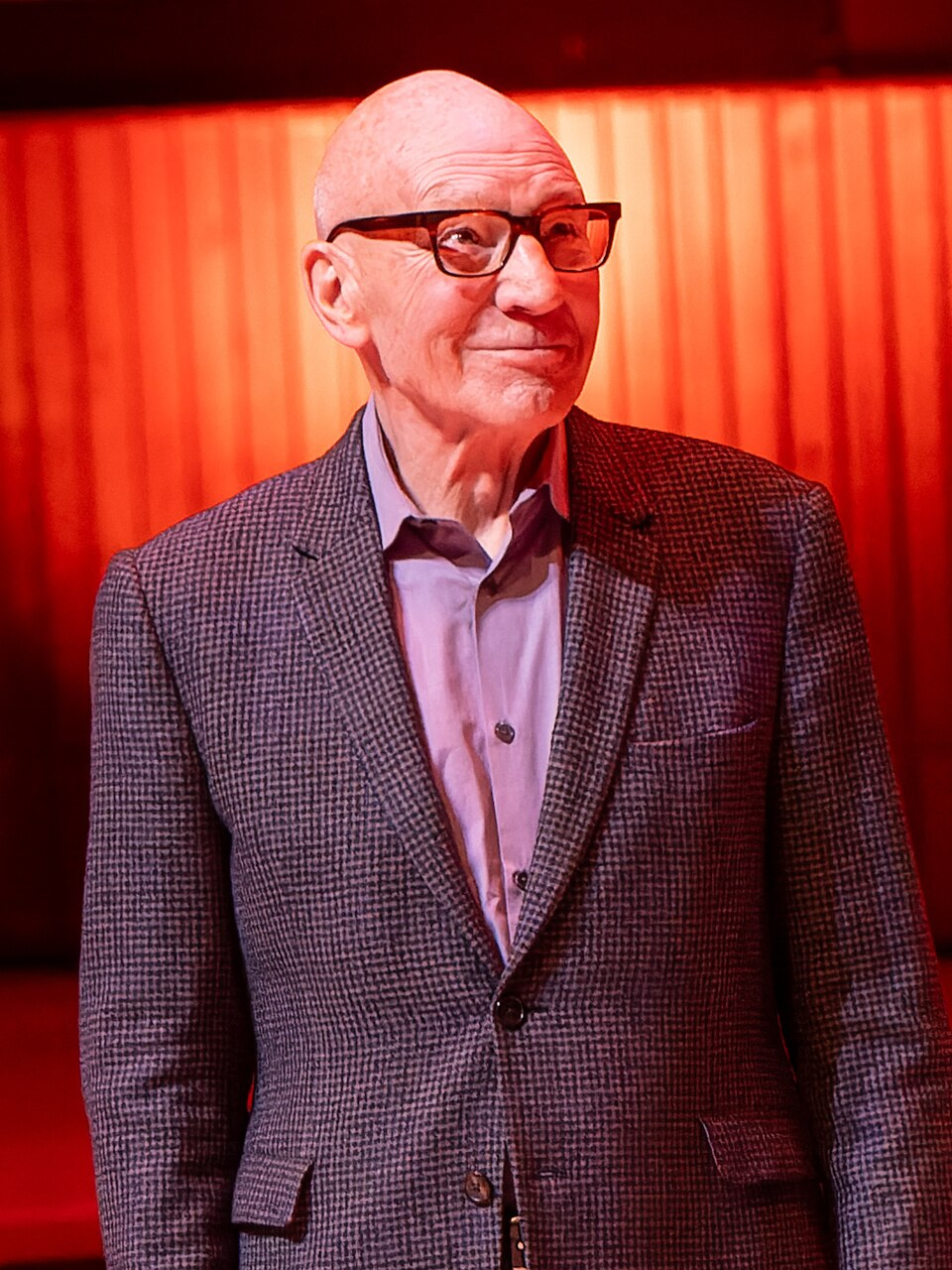
Patrick Stewart
Both have worked in the X-Men films and in the wider Star Trek screen universe.[3]
Read the profile →

Sources and further reading
- Sidewalks Entertainment — Rebecca Romijn and Christian Kane interview
- StarTrek.com — Cast interview on season two (2023)
- Rebecca Romijn — Film and television credits
Artwork: Original AI-generated portrait of Rebecca Romijn, created for Famous Faith; not a photograph. The other AI-generated portraits shown here were also created for Famous Faith. No endorsement is implied.
Photograph: Patrick Stewart by Raph_PH, via Wikimedia Commons, CC BY 2.0. Cropped to a square card for display.

Film and book titles identify the works discussed. A career credit is not a recommendation that every reader watch or read that work.