The profile · Actor
Ian McKellen
Long before Gandalf and Magneto, Ian McKellen built a life onstage. His own website preserves an unusually rich record of that work, along with direct answers about acting, equality, and his atheist outlook.
- Training
- English literature at Cambridge; no drama school[1]
- Professional start
- 1961[1]
- Known screen roles
- Gandalf and Magneto[2]
- Public belief statement
- Atheist, in a July 2008 essay[3]
The person behind the work
A screen star with a much longer stage story
Ian McKellen studied English literature at Cambridge and became a professional actor in 1961. He did not go to drama school. His early working life took him around British theaters, and his Broadway debut followed in The Promise in 1967. The route matters because his film fame arrived after he already had a substantial career.[1]
His stage work included Richard II, Macbeth, and a long connection with the Royal Shakespeare Company. He also helped form the Actors’ Company, a group organized to give performers a voice in the work they made together. These were years of rehearsals, touring, and repeated performances rather than a sudden arrival in a film franchise.[1]
As Salieri in Amadeus, he won major Broadway recognition. His solo show Acting Shakespeare offered something quite different: language, an actor, and an audience without elaborate scenery. The same performer could lead a large company or ask a room to imagine a whole world with very few physical objects.[2]
A career in range
Selected work, at a glance
1980–1981
Amadeus
Antonio Salieri on Broadway
A major stage success before his best-known film roles.[1]
The person behind the work
Why the famous roles are only part of the picture
McKellen brought Richard III from the stage to a film adaptation and helped write its screenplay. Gandalf in The Lord of the Rings and Magneto in X-Men later introduced him to enormous new audiences. His Academy Award nominations came for Gods and Monsters and The Fellowship of the Ring, two very different kinds of performance.[2]
His official career archive also includes Mr. Holmes, television comedy, and theater tours with Patrick Stewart. That range helps explain why age has not become the central subject of his work. A detective looking back over a life, a commanding Shakespeare ruler, and a fantastical guide each require a different relationship with the audience.[2]
In an answer to a young reader, McKellen explained that most of his work before the 1990s was onstage. Another answer described character work continuing during a theater run. Repetition need not mean simply repeating the same choices; it can reveal a better way to make a thought clear to the people watching.[4]
A closer look
Three ways into the work
Acting Shakespeare: imagination without machinery
McKellen’s solo work used Shakespeare’s language with little stage equipment. The useful lesson is how much an audience can supply when speech and intention are clear. It offers a different measure of scale from a film filled with visual effects.[4]
Richard III: a performer helps shape the film
The role connects stage acting with screenwriting. A familiar play must make sense through a camera, with its own settings and cuts. McKellen’s contribution extended beyond speaking the lines.[2]
Mr. Holmes: authority meets uncertainty
The detective’s difficulty with memory changes the usual balance of a Sherlock Holmes story. Knowing a great deal does not make a person immune to regret or dependence on others. That tension gives the performance its human weight.
The person behind the work
A clear statement in his own words
McKellen’s July 2008 activism essay identifies his religious outlook as atheist. He also names opposition to nuclear weapons and capital punishment, support for AIDS fundraising, and a particular commitment to legal and social equality for gay people. He publicly came out in 1988 and helped found Stonewall in the United Kingdom.[3]
These are his stated positions, rather than beliefs inferred from Gandalf, a film about religion, or a family background. Christians can disagree with atheism while still hearing a person accurately and treating him with care. Respect does not require pretending that the disagreement is small, and disagreement does not remove the duty to love.
Listen to the person
In their own words
August 2002
“I didn’t go to drama school.”
Famous Faith’s Christian perspective
Beyond the Spotlight
A long life in the arts can make room for a serious discussion about meaning. Christianity’s answer differs from atheism: people are made and loved by God, and we are responsible to him. That claim is offered here with respect, not as a verdict on McKellen’s eternal future.
The Ten Commandments turn a broad word like morality into everyday questions. Have we told the truth about another person, honored our parents, or wanted what belongs to someone else? A comparison with a worse person cannot undo our own dishonesty or selfishness.
The Bible’s word sin names a breach of God’s law, not merely a disagreement with our own preferences (1 John 3:4). This diagnosis includes Christians too. Jesus warned that judgment and hell are real. Taking those words seriously should make us compassionate, not eager to assign an actor or any other person a final destiny.
Christian hope centers on Jesus Christ, God’s Son. He became human, lived without sin, died for our sins on a cross, and rose bodily from the dead. God offers forgiveness through faith in him. Salvation comes by grace; it cannot be secured by an artistic legacy, activism, church attendance, or a favorable comparison with others (Romans 3:23–24; Ephesians 2:8–9).
To repent is to turn from sin and rebellion toward God with a changed mind and heart. This includes learning to trust the God whose love has been shown in Jesus Christ. It usually bears practical results: honesty, a willingness to put wrongs right, and growing love. Those changes are not an entrance fee. They are the beginning of a life responding to mercy already offered in Christ.
An honest response can begin with questions and a simple prayer. Read a Gospel, consider Jesus’ claims, and speak with a patient Christian who will listen as well as answer.
Explore the Good Person Test and the promise of forgiveness →
This section shares Famous Faith’s Christian beliefs. It does not speak for Ian McKellen.
People connected to the story
Follow the connections
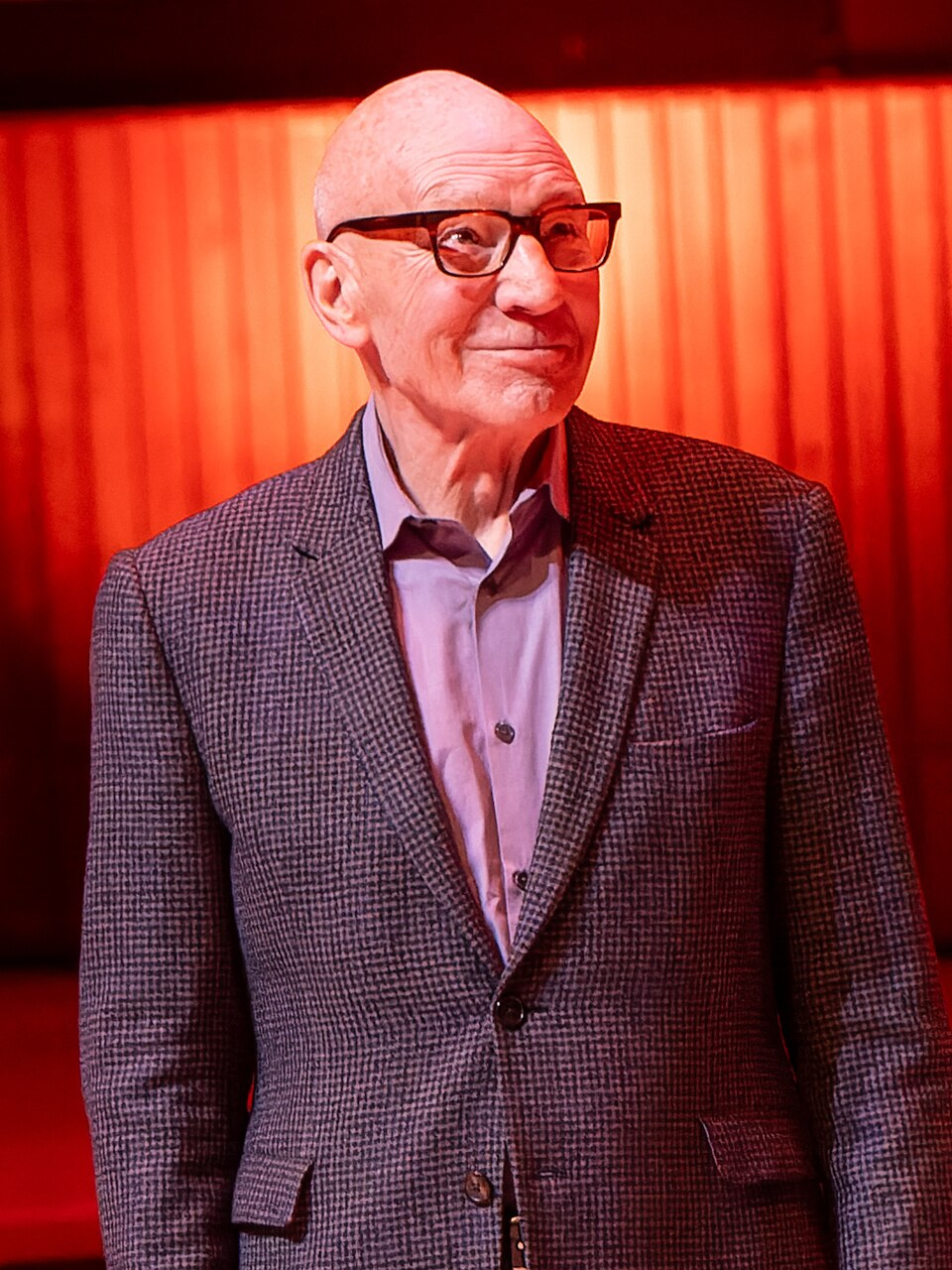
Patrick Stewart
They share the X-Men films and have toured together in major stage productions.[5]
Read the profile →From the directory
Hugh Jackman
Their X-Men roles brought them into the same long-running film ensemble.[5]
Read the profile →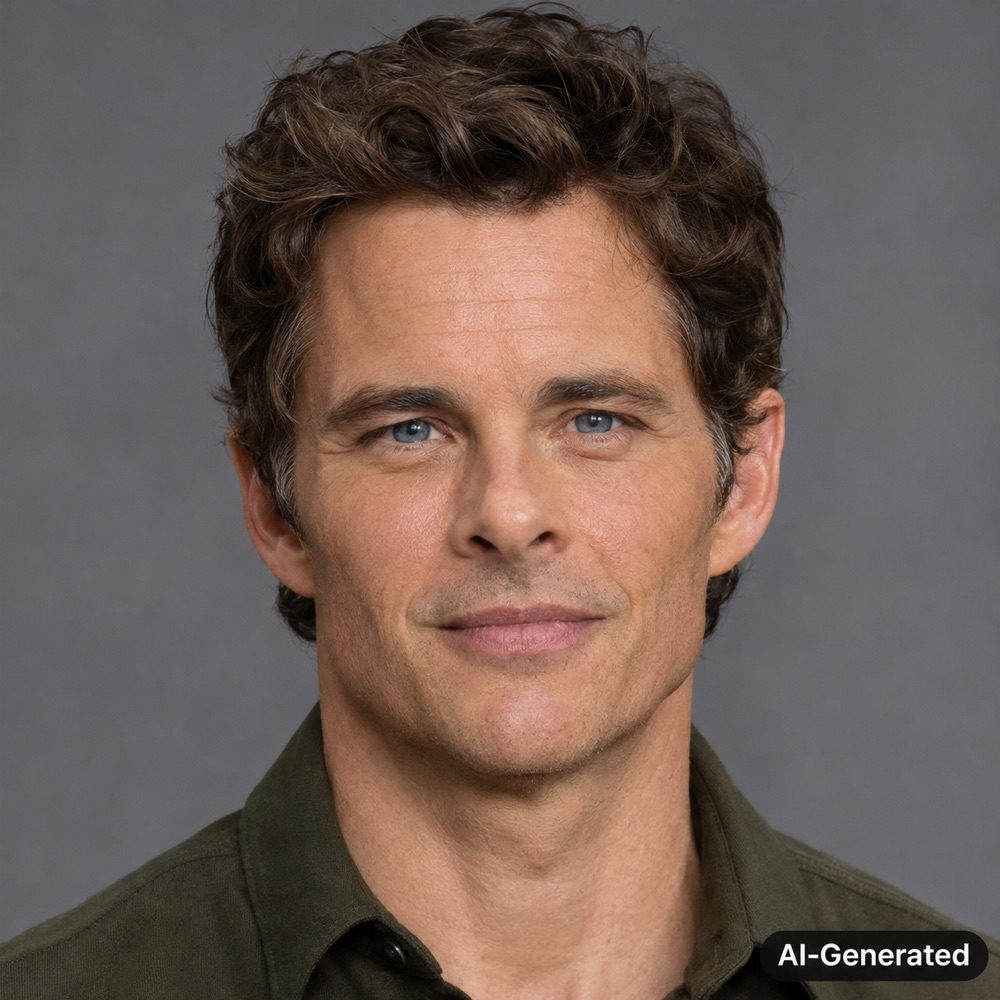
Sources and further reading
- Ian McKellen — Official early-career biography
- Ian McKellen — Official professional biography
- Ian McKellen — Activism and belief statement, July 2008
- Ian McKellen — Answers to readers, August 2002
- Disney+ — X-Men (2000) cast
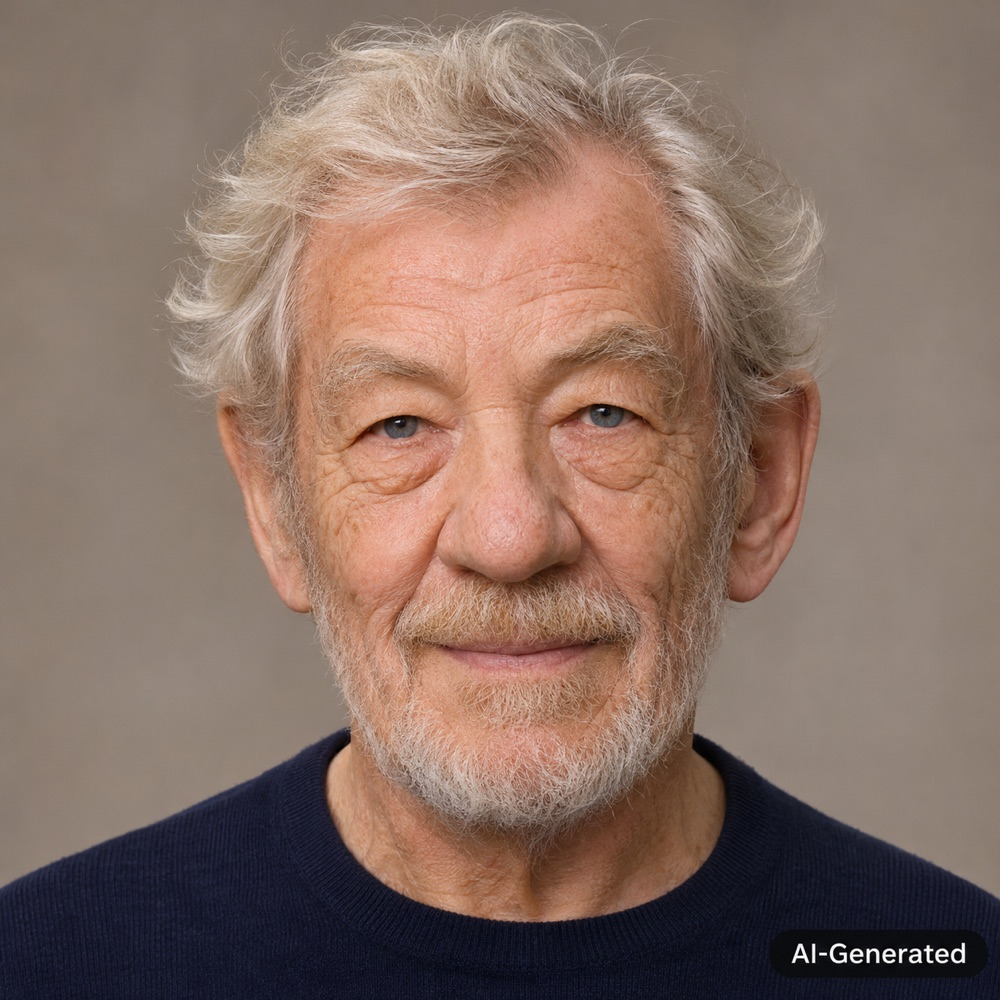
Artwork: Original AI-generated portrait of Ian McKellen, created for Famous Faith; not a photograph. The other AI-generated portraits shown here were also created for Famous Faith. No endorsement is implied.
Photograph: Patrick Stewart by Raph_PH, via Wikimedia Commons, CC BY 2.0. Cropped to a square card for display.

Film and book titles identify the works discussed. A career credit is not a recommendation that every reader watch or read that work.