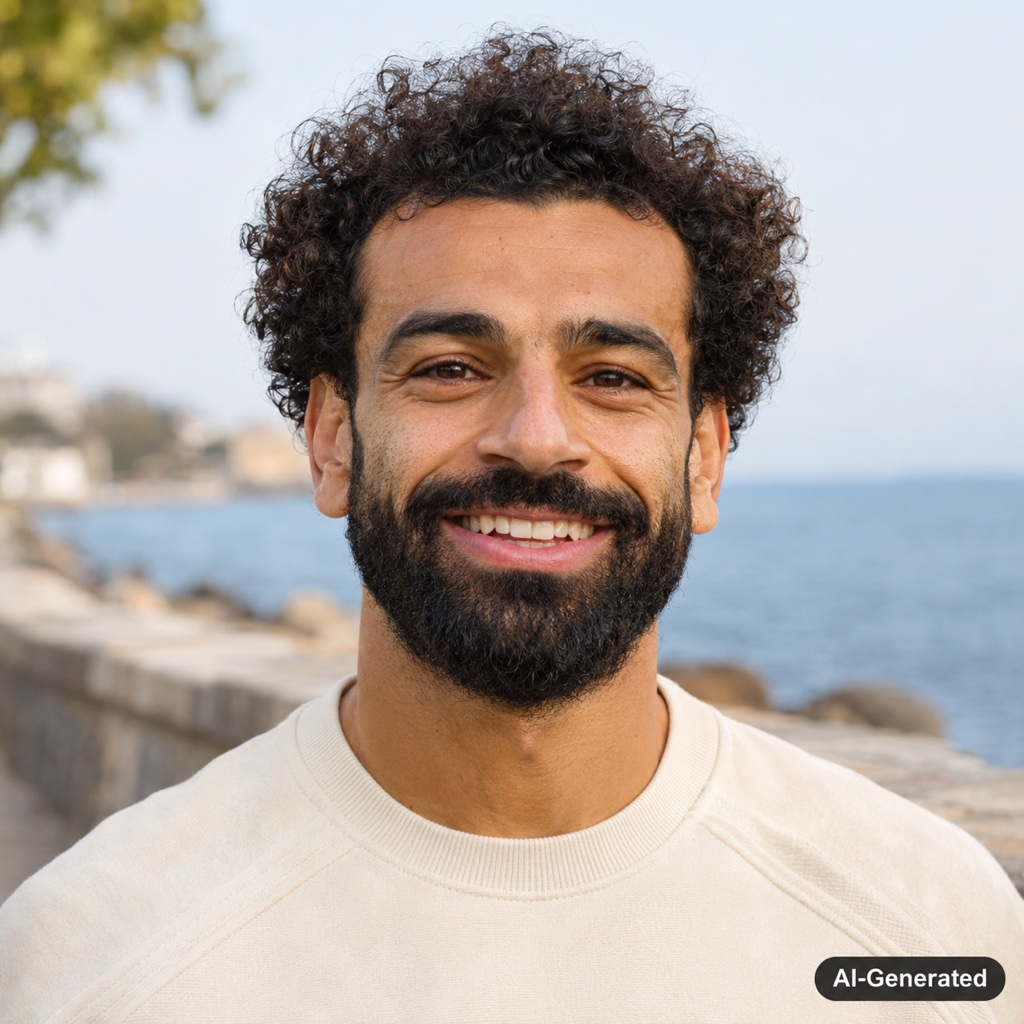
Mohamed Salah is publicly identified with Islam. His religious practice is documented through reliable reporting and his own explanation of praying in gratitude to God. That evidence should be distinguished from assumptions based only on his name, nationality, or the way he looks.
A footballer whose faith is visible
Salah became internationally familiar through the Egyptian national team and his achievements with Liverpool. His work on the field brought an audience that reaches well beyond supporters of a single club. Some viewers first noticed his religious practice through the way he celebrated goals, turning a familiar sporting moment into a question about prayer.
That visibility does not mean every viewer interprets the action correctly. A gesture can be described loosely or separated from its context when a clip travels online. A faith profile should therefore prefer a player’s own explanation where one exists. Salah has supplied that explanation, giving readers something firmer than speculation about what a celebration might mean.
How Salah explained his goal celebration
GOAL’s profile records remarks from his 2018 CNN interview. Salah explained that lowering himself to the ground was prayer and thanksgiving for what he had received. The account identifies the gesture as sujood, the Islamic act of prostration. Its meaning should be described in that religious context, rather than reduced to a superstition about scoring.
His explanation connects faith with gratitude in public life. It does not mean that every match result can be read as a statement of God’s approval or disapproval. Athletes who pray still experience defeats, injuries, and difficult seasons. A responsible article can explain the practice without turning a sporting outcome into a verdict about anyone’s relationship with God.
Reporting beyond a single gesture
The New Yorker’s reported profile described Salah’s Muslim practice and spoke with people who knew his community presence. Its discussion placed public prayer alongside ordinary religious life, rather than treating the football pitch as the only available evidence. The article also explored how a recognizable athlete affected conversations about Muslims in Britain.
Such reporting supports a clear answer about religious identification. It does not authorize strangers to assess the sincerity of every private prayer or to speak as if one footballer represents every Muslim. A person may become highly visible without choosing to become a spokesman for every theological or political question associated with a religion.
A later BBC Sport account also considered his community life. The broader point remains the same: careful reporting connects a public identity with specific evidence. It should not become a reason to invent unreported details about his convictions or to interpret every personal decision through a religious stereotype.
A Christian response begins with truth and respect
Famous Faith approaches spiritual questions from a Christian perspective. That makes truthful description of another person’s beliefs essential. Calling Salah Muslim is an account of his public religious life, not a claim that he professes Christianity. Respect does not require pretending that Islam and Christianity make identical claims about Jesus.
Christians confess Jesus as the Son of God and the risen Savior. They should explain that conviction with humility, recognizing their own need for mercy. First Peter 3:15 calls believers to speak with gentleness and respect. Mockery, prejudice, or a false story about a public figure is inconsistent with that responsibility.
Sport can also remind people how much they share in ordinary experience: joy after hard work, disappointment after a failure, and gratitude for help received. Those points of contact can make conversation more humane. They do not settle the truth of a religious claim, but they can keep a disagreement from turning a person into a caricature.
The hope Christianity offers
The Christian gospel begins with the reality that all have sinned and need reconciliation with God (Romans 3:23). Jesus Christ lived without sin, died for sinners, and rose bodily from the dead (1 Corinthians 15:3–4). Salvation is received by grace through faith in Him, not earned through good works, public prayer, sporting achievement, or religious reputation (Ephesians 2:8–9).
These are Famous Faith’s Christian convictions, not words being attributed to Salah. His public religion can be described plainly and respectfully as Islam. For readers, learning that fact can become an opportunity to consider their own beliefs about Jesus, examine the biblical claims, and respond to the Savior with repentance and trust.
Sources
- GOAL: Salah’s explanation to CNN of his prayer celebration
- The New Yorker: Salah’s Muslim faith and community visibility
- BBC Sport: Salah’s character and community life
Image disclosure: AI-generated editorial portrait representing Mohamed Salah, created for Famous Faith; not a photograph. The setting is illustrative and does not document an actual event. No endorsement implied.