The profile · Actor, retired competitive bodybuilder, and hearing-loss advocate
Lou Ferrigno
Lou Ferrigno’s strength was visible long before many viewers knew about his hearing loss. His story joins competitive bodybuilding, physical screen performance, and a willingness to discuss communication difficulties that a famous image can hide.
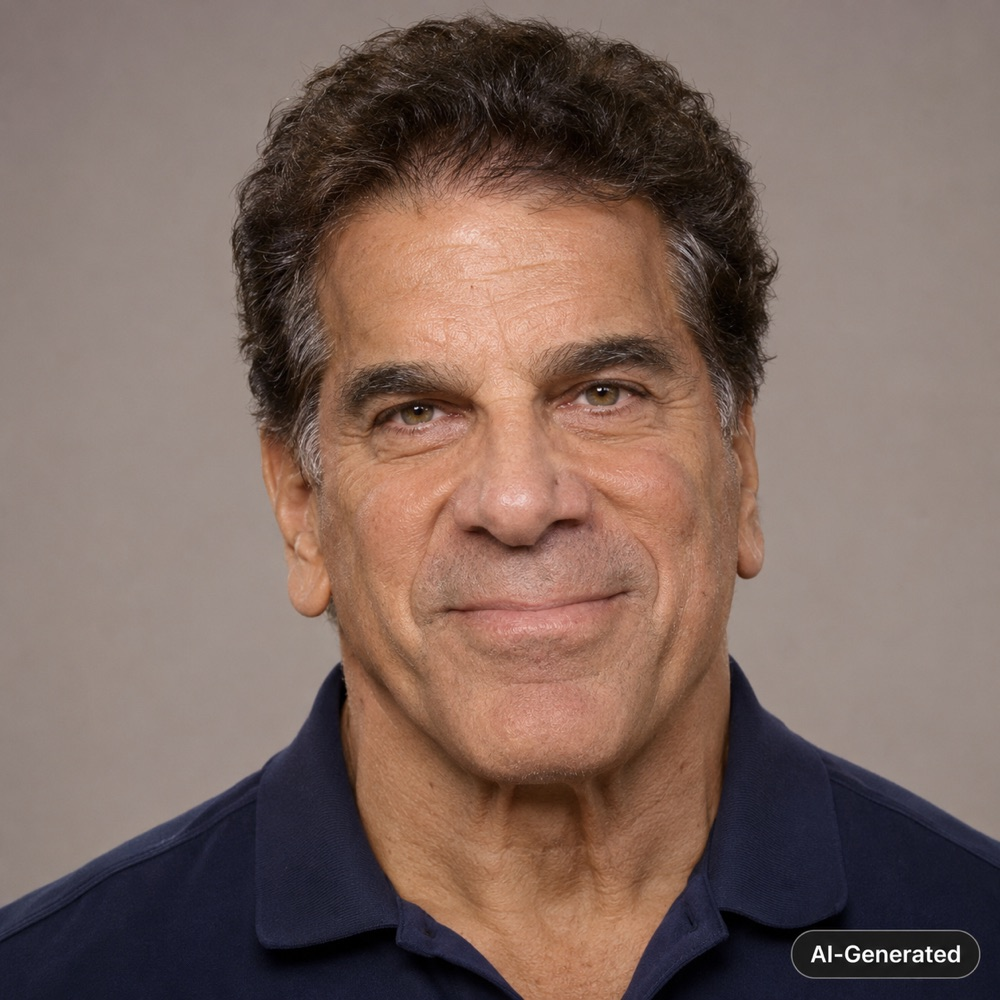
- Birth name
- Louis Jude Ferrigno[1]
- Competition
- IFBB Mr. Universe, 1973 and 1974[1]
- Television
- The Incredible Hulk, 1977–1982[1]
- Public advocacy
- Speaking about lifelong hearing loss[2]
The person behind the work
Strength and the difficulty other people missed
Lou Ferrigno grew up with significant hearing loss. In a 2023 Arizona’s Family interview, he linked his early interest in bodybuilding with the difficulty of taking part in team sports and with being bullied. Exercise offered a way to work toward a goal on his own terms. It did not mean that other people could see everything he was dealing with.[3]
He won the IFBB Mr. Universe title in 1973 and again in 1974. Pumping Iron later showed his preparation for Mr. Olympia.[1]
Those are different contests: describing him as a Mr. Universe winner is accurate; making him a Mr. Olympia champion would not be. The distinction is small in wording but important to the history.
The Incredible Hulk brought him to television as the physical form of a character whose ordinary human life was played by Bill Bixby. The series depended on a human performer’s body and expression before the later films built the figure mainly through digital effects.[2]
A career in range
Selected work, at a glance
1977–1982
The Incredible Hulk (TV series)
The Hulk
Physical performance gave the television character its familiar form.[1]
2000–2007
The King of Queens
Himself
A recurring comedy role built around a recognizable public identity.[1]
2008
The Incredible Hulk (film)
Security guard; Hulk voice
A brief on-screen part alongside voice work.[1]
The person beyond the image
A public voice about hearing
In an interview published by the American Academy of Audiology, Ferrigno discussed receiving a cochlear implant and the learning involved afterward. He stressed that people’s experiences differ. His account is one person describing his own transition, rather than a promise about what another person’s treatment will be like.[2]
That distinction matters beyond a medical decision. A recognizable public figure can help people feel less isolated while still leaving room for individual needs. Listening carefully includes asking what helps someone communicate instead of assuming that visible strength means help is unnecessary.
Ferrigno also played himself in The King of Queens. In a 2019 WXYZ interview, he confirmed supplying Hulk vocals for the first two Avengers films, while clarifying that he did not voice the character in Infinity War or Endgame. Several performers’ contributions are easy to confuse.[1][4]
A closer look
Three ways into the work
Look beyond a competition result
Pumping Iron shows preparation, pressure, and the presence of rivals. It is useful to separate what a documentary records from the simple success story a later career can suggest. The film contains adult material.
Notice performance without dialogue
The television Hulk often has to communicate through posture, movement, and expression. A scene still needs an emotional direction when ordinary conversation is limited. Compare the moments of distress with the moments that call for power.
Compare the famous image with a comedy role
The King of Queens lets Ferrigno play with the audience’s knowledge of him. A guest known for extraordinary strength becomes part of neighborhood life. Recognizing the joke should not make the person’s other experiences disappear.
Belief and public statements
What these interviews tell us
The interviews used here focus on hearing, competition, and performance. They do not provide a clear account of Ferrigno’s personal religious practice. His advocacy can be discussed on its own terms, without attaching a faith label he has not supplied in these sources.
Listen to the person
In their own words
2021
“everyone’s experience during the transition is a little different.”
Famous Faith’s Christian perspective
Beyond the Spotlight
Being strong in one area does not remove our need for understanding in another. Ferrigno’s account of hearing loss makes that plain without taking anything away from his achievements. The Bible asks us to treat people with dignity, including when a difficulty is not immediately visible.
It also invites an honesty that strength alone cannot supply. First John 3:4 describes sin as breaking God’s law. The Ten Commandments forbid stealing, lying about others, adultery, and coveting. Jesus warns about anger and lust inside the heart. We may have worked hard, overcome real obstacles, and still know that we have hurt people or dishonored God. Naming that need is not the same as denying the good in a person’s life.
Jesus warned about judgment and hell because sin has a seriousness that applause cannot change. Christians should speak of that with compassion, remembering their own need for mercy. God’s love meets us in Jesus Christ, his Son. Jesus lived a sinless life, died on the cross for our sins, and rose bodily from death. We receive forgiveness by grace through faith in him, rather than by becoming impressive enough to deserve it.
Repentance turns the mind and heart from sin and from the urge to resist God. We begin trusting his goodness and the love he has shown us through Jesus Christ. It normally produces changes in behavior: we stop defending a lie, turn away from betrayal, and learn to care for a neighbor. Those are the results of grace, not a contest we must win before Christ will receive us. A reader can come to him honestly, ask for forgiveness, and trust the Savior whose love does not depend on appearing invulnerable.
Explore the Good Person Test and the promise of forgiveness →
This section shares Famous Faith’s Christian beliefs. It does not speak for Lou Ferrigno.
People connected to the story
Follow the connections
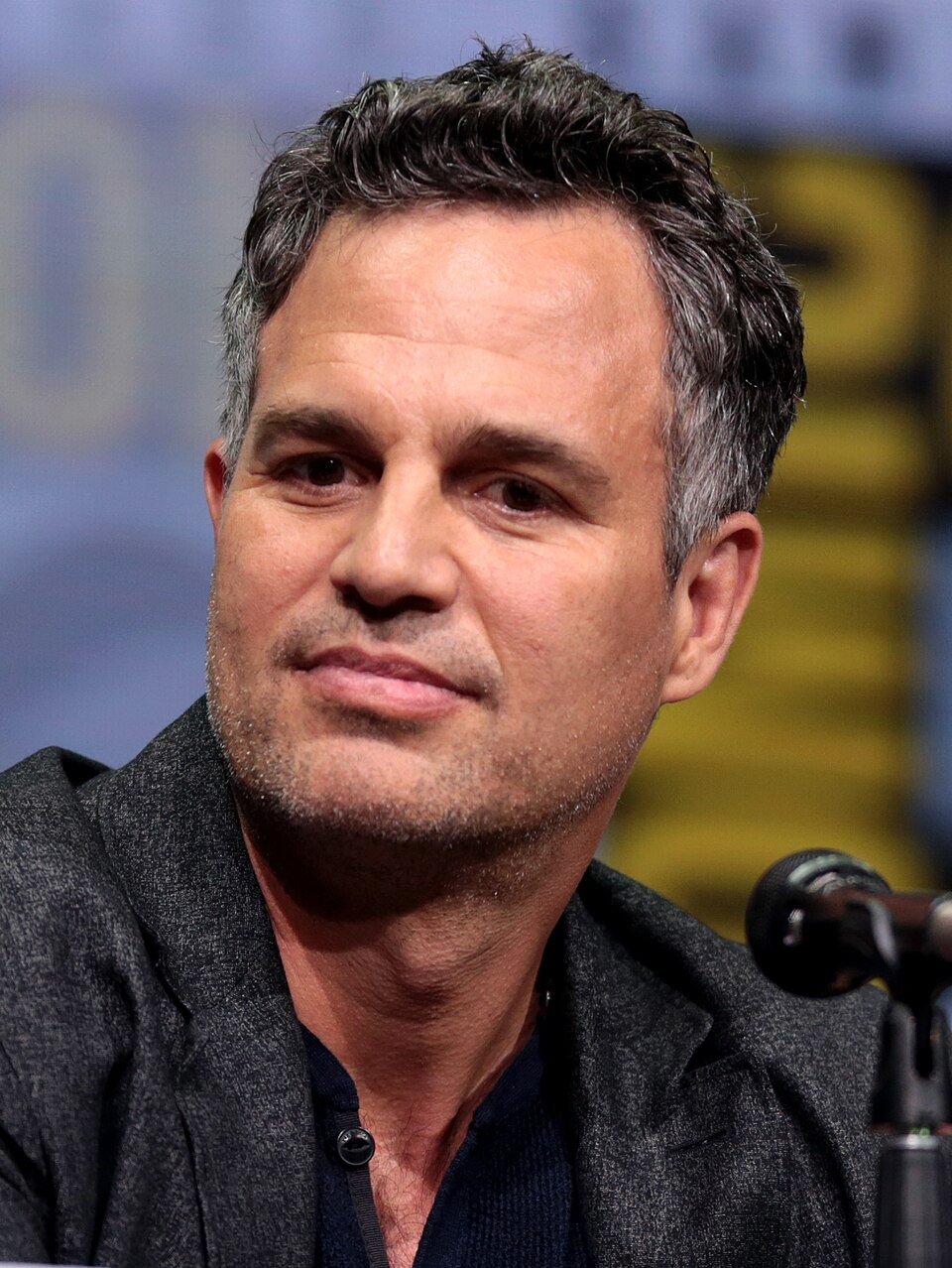
Mark Ruffalo
Ferrigno supplied Hulk vocals in the first two Avengers films while Ruffalo played Bruce Banner and performed the Hulk.[4]
Read the profile →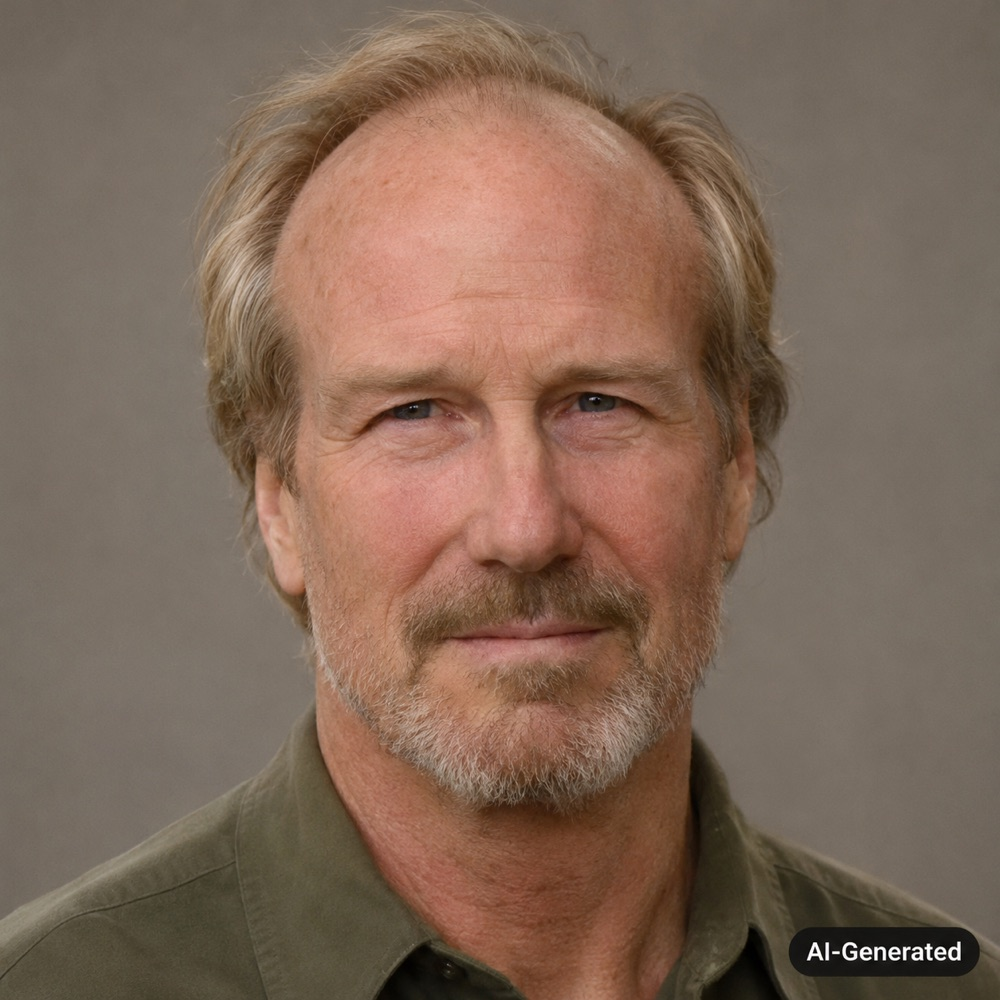
William Hurt
Both appear in The Incredible Hulk (2008), with Hurt playing General Thaddeus Ross.[1]
Read the profile →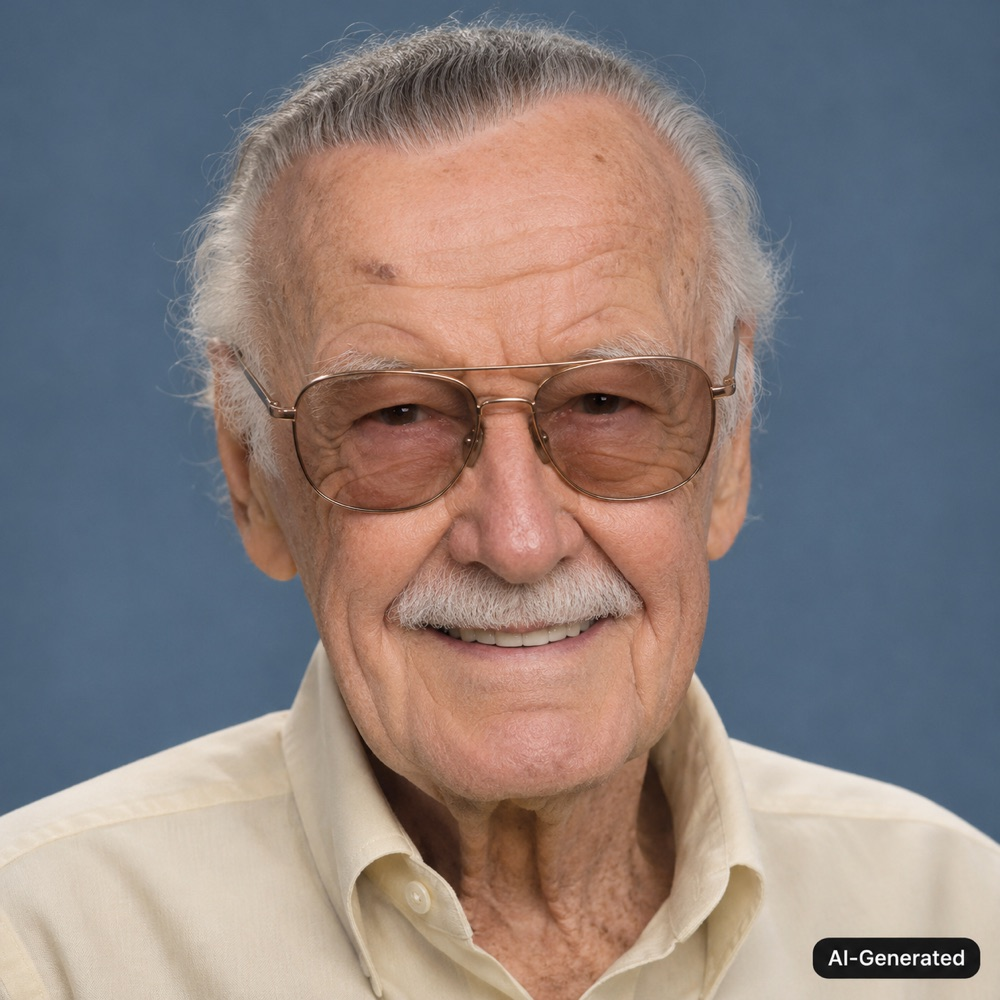
Stan Lee
Ferrigno and Lee appear as security guards in Hulk (2003), a small on-screen meeting of the performer and co-creator.[1]
Read the profile →Sources and further reading
- Lou Ferrigno — Biography and screen credits
- American Academy of Audiology — Lou Ferrigno interview (2021)
- Arizona’s Family — Ferrigno on hearing loss (2023)
- WXYZ — Ferrigno on the Hulk’s changing performers (2019)
Artwork: Original AI-generated portrait of Lou Ferrigno, created for Famous Faith; not a photograph. The other AI-generated portraits shown here were also created for Famous Faith. No endorsement is implied.
Photograph: Mark Ruffalo by Gage Skidmore from Peoria, AZ, United States of America, via Wikimedia Commons, CC BY-SA 2.0. Cropped to a square card for display.

Film and book titles identify the works discussed. A career credit is not a recommendation that every reader watch or read that work.