The profile · Comics writer, editor, publisher, and co-creator
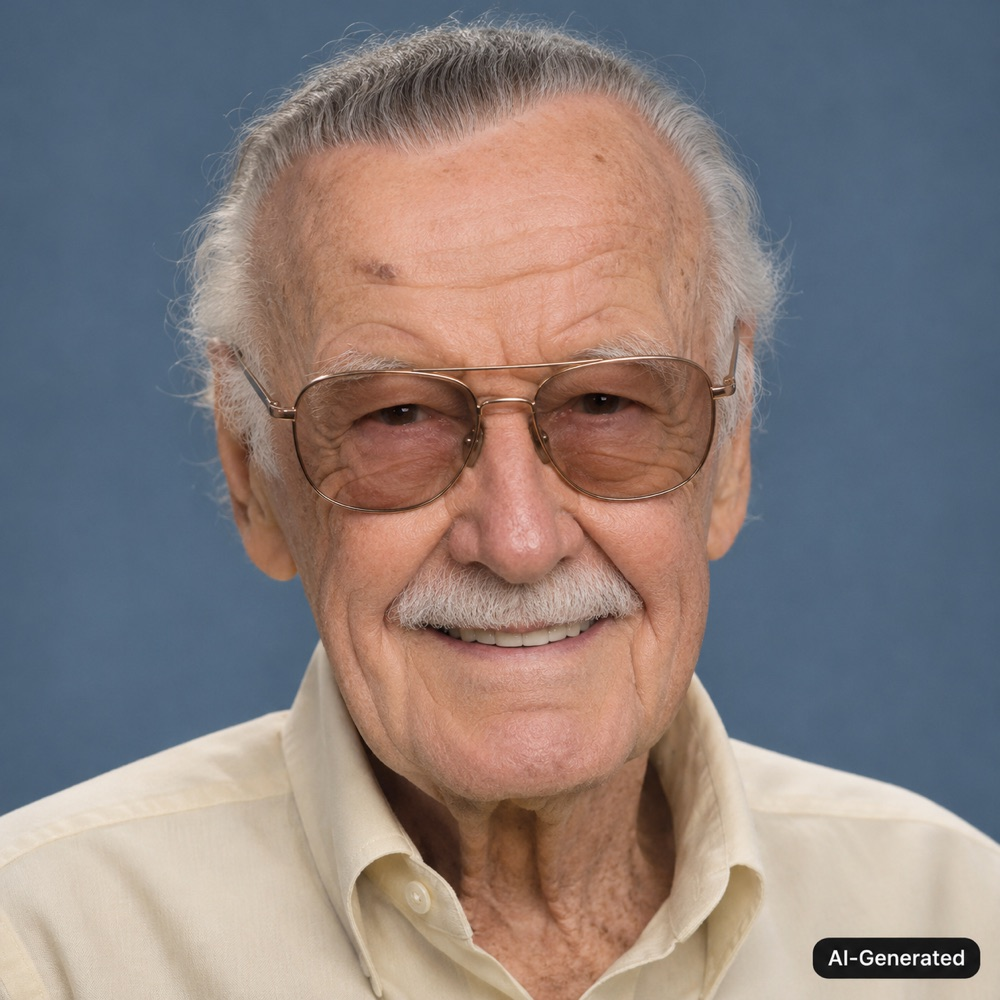
Stan Lee
A writer, editor, collaborator, and public voice who helped make extraordinary heroes feel like ordinary people.
- Lived
- December 28, 1922 – November 12, 2018[1]
- Birth name
- Stanley Martin Lieber[1]
- Comics start
- Joined the business in 1939[2]
- Key collaborators
- Jack Kirby, Steve Ditko, John Romita Sr., and Bill Everett[2]
The person behind the work
The name behind the familiar greeting
Stan Lee was born Stanley Martin Lieber in New York to Jewish immigrant parents. He entered the comics business as a teenager in 1939. The company that became Marvel gave him room to work as a writer and editor, but the history is a shared one. His best-known creations grew from collaboration with artists, not from a lone person inventing a universe without help.[1][2]
Jack Kirby helped shape the Fantastic Four, the Hulk, and the X-Men. Steve Ditko co-created Spider-Man and Doctor Strange with Lee. Bill Everett and John Romita Sr. also belong in the account of the era. Naming them matters because comic storytelling includes design, pacing, drawing, and plot as well as the words in a speech balloon.[3][2]
A career in range
Selected work, at a glance
1961
Fantastic Four
Co-creator and writer with Jack Kirby
A superhero team whose family tensions helped change the tone of comics.[3]
1962
The Incredible Hulk
Co-creator with Jack Kirby
A powerful character built around a frightening loss of control.[3]
1962
Spider-Man
Co-creator with Steve Ditko
Peter Parker’s ordinary troubles share space with his powers.[2][3]
The person behind the work
Heroes with problems, readers with a voice
The Fantastic Four argued like a family. Peter Parker worried about money, responsibility, and the people around him. The heroes’ difficulties made the extraordinary events easier to enter. Lee also spoke directly to readers through Stan’s Soapbox, a recurring column that could move from a joke to a serious statement about prejudice and respect.[3][1]
In a widely remembered 1968 column, he condemned racism and bigotry. That public position became part of his legacy alongside the characters and later film cameos. It is possible to appreciate the message while still keeping credit for the comics properly shared. Admiration does not require making an important life simpler than it was.[4][2]
A closer look
Three ways into the work
Fantastic Four
The family dynamic matters as much as the spectacle. It is an accessible example of Lee and Kirby bringing disagreement and vulnerability into a team of extraordinary people.[3]
Spider-Man
Peter Parker makes responsibility personal. Credit belongs to both Lee and Ditko, whose visual storytelling and character design are essential to the result.[2][3]
Stan’s Soapbox
The columns show Lee speaking as a public figure instead of through a character. The 1968 argument against bigotry remains one of their most remembered passages.[4]
A careful account of belief
Heritage, uncertainty, and a friend’s memory
Asked in a 2002 interview whether he believed in God, Lee said he did not know. In a 2018 remembrance, a longtime friend described him as believing in God and an afterlife while remaining skeptical of organized religion. These accounts are different kinds of evidence, from different moments. His Jewish upbringing is clear; a confident claim about every stage of his private belief would go beyond the record.[1][5]
Listen to the person
In their own words
2002 interview
“I really don’t know. I just don’t know.”
Famous Faith’s Christian perspective
Beyond the Spotlight
Lee helped tell stories in which power creates responsibility instead of removing it. His public rejection of bigotry also asks readers to look beyond a person’s group or appearance. A Christian response begins with that human dignity: every neighbor bears God’s image and deserves love. It should never become an excuse to mock a person’s Jewish background or uncertainty about faith.
The Bible’s moral standard reaches all of us. The Ten Commandments forbid murder, stealing, false witness, and coveting (Exodus 20). Jesus pressed beyond the outward act to the heart behind it. First John 3:4 calls sin the breaking of God’s law. Judgment and hell are serious parts of his teaching. We speak of them with concern because we also need forgiveness, not because we stand above the people whose lives we discuss.
Christianity’s central good news is Jesus Christ, the Son of God. He lived without sin, died on the cross for our sins, and rose bodily from the dead. God offers reconciliation, forgiveness, and eternal life through him. We receive salvation by grace through faith; it is not a reward for creativity, social influence, or having done more good than harm (John 3:16–18; Ephesians 2:8–9).
Repentance is a changed mind and heart that turns from sin and rebellion toward God. We lay down our resistance and begin trusting who he is, remembering that his love has been shown through Jesus Christ. It normally brings changes in behavior: more honesty, a desire to repair harm, and love that crosses the boundaries we once defended. Those are responses to mercy, not the price of it. The starting point is trusting Christ rather than writing a better heroic version of ourselves.
Readers can consider that invitation without pretending their questions are already settled. Read a Gospel, ask who Jesus is, and speak honestly to God about your need. Christians should offer room for careful thought and patient conversation. Our hope rests on the Savior’s grace, not on a verdict we make about the hidden life of a famous person.
Consider the Good Person Test and the hope of forgiveness →
This section shares Famous Faith’s Christian beliefs. It does not speak for Stan Lee.
People connected to the story
Follow the connections

Patrick Stewart
His Professor Xavier comes from the X-Men created by Lee and Kirby.[1]
Read the profile →
Robert Downey Jr.
His Tony Stark belongs to a comics history with several named writers and artists, including Lee.[1]
Read the profile →Sources and further reading
- Stan Lee: biographical reference and 2002 belief quotation
- Marvel: celebrating Stan Lee and his collaborators
- Marvel: Stan’s Silver Age Hits
- ComicBook.com: Lee’s 1968 column against racism, republished in 2017
- WIRED: a longtime friend remembers Stan Lee
Artwork: Original AI-generated portrait of Stan Lee, created for Famous Faith; not a photograph. The other AI-generated portraits shown here were also created for Famous Faith. No endorsement is implied.
Photograph: Tom Holland by Gage Skidmore from Peoria, AZ, United States of America, via Wikimedia Commons, CC BY-SA 2.0. Cropped to a square card for display.

Photograph: Patrick Stewart by Raph_PH, via Wikimedia Commons, CC BY 2.0. Cropped to a square card for display.

Photograph: Robert Downey Jr. by Gage Skidmore, via Wikimedia Commons, CC BY-SA 2.0. Cropped to a square card for display.

Film and book titles identify the works discussed. A career credit is not a recommendation that every reader watch or read that work.