The profile · Actor and director
John Slattery
John Slattery became widely known as Roger Sterling, but his work as a director grew through a quieter apprenticeship. He watched colleagues, learned a crew’s rhythms, and eventually brought a novel to the screen.
- Roots
- Boston, Massachusetts[1]
- Stage work
- Rabbit Hole and Betrayal[1]
- Feature directing debut
- God’s Pocket (2014)[2]
The person behind the work
A familiar character, with work beyond the suit
John Slattery’s Roger Sterling became one of Mad Men’s most recognizable figures. The Television Academy records four supporting-actor Emmy nominations for the role. Its biography also points to stage work in Rabbit Hole and Betrayal, alongside television and film appearances outside the advertising world.[1]
His film roles include Howard Stark in Iron Man 2 and Ben Bradlee Jr. in Spotlight. These are very different versions of authority. One belongs to a family history inside a fantasy series; the other is a real editor represented in a drama about investigative journalism.[3]
Spotlight won the Best Picture Oscar in 2016. Its ensemble includes Slattery and Mark Ruffalo, whose roles place them on different sides of the newsroom’s work.[4][3]
Slattery also directed episodes of Mad Men. In an Under the Radar interview, he recalled asking to follow directors and observing how the work was done. Being familiar with the cast, story, and crew made the first opportunity possible, but he still had to learn a new job.[2]
A career in range
Selected work, at a glance
Learning to lead a production
A novel he could see as a film
God’s Pocket grew from Pete Dexter’s novel. Slattery’s account describes an early attempt to obtain the rights, a period when the idea fell away, and a later chance to return to it. The finished film starred Philip Seymour Hoffman, John Turturro, Christina Hendricks, and Richard Jenkins.[2]
He chose not to act in the film himself. Having already combined acting and directing on television, he knew that doing both could divide his attention. That is a useful example of choosing the job a project needs instead of adding every possible credit to one person’s name.[2]
His later directing includes Maggie Moore(s), while his acting continued in other productions. Those parallel careers give viewers two routes through the work: the performance they can watch directly, and the choices that shape what everyone else on screen is doing.[3]
A closer look
Three ways into the work
Look past the one-liners in Mad Men
Roger’s humor can reveal a weakness as much as it hides one. Watch how a quick joke changes when another person refuses to accept it as an answer. The series includes sexual material and other adult themes.
Follow the group work in Spotlight
The editors and reporters do not all need the same kind of scene. Notice how an actor can help make a team’s judgment visible. The film discusses sexual abuse and institutional failure without offering a simple hero story.
Compare a performance with a directing choice
God’s Pocket allows a different question: what kind of story did Slattery want to make when he chose the material himself? The film contains violence, sexual content, and strong language.
Belief in context
A part of life left largely private
The interviews here give a more detailed account of Slattery’s creative work than his personal religion. They do not clearly describe his current religious practice. God’s Pocket is a place name and film title; it should not be treated as a statement of his beliefs.
Listen to the person
In their own words
2014
“I knew that it takes twice as long and it’s distracting.”
Famous Faith’s Christian perspective
Beyond the Spotlight
A story about investigation asks what happens when people stop accepting a convenient account and look again. That question reaches beyond journalism. We can also become skilled at keeping our own wrongs just outside the story we tell about ourselves.
The Bible calls sin the breaking of God’s law (1 John 3:4). The Ten Commandments name false witness, theft, adultery, and coveting, and call us to honor God. Jesus also addresses the anger and lust that can remain hidden behind respectable behavior. Discovering another person’s failure does not make us innocent. It gives us another reason to value truth and examine ourselves.
Jesus warned of judgment and hell. That warning is serious, but it should never become pleasure in someone else’s exposure. God has shown love in sending his Son, Jesus Christ, who lived without sin, died on the cross for sinners, and rose bodily from the dead. Forgiveness comes by grace through faith in him. It is not earned by being more observant or more respectable than the next person.
Repentance is a changed mind and heart that turns away from sin and our defiance of God. It leads us to trust the God who has shown his love for us in Jesus Christ. It normally changes the way we live: we confess the lie, abandon the betrayal, and seek to repair harm instead of managing appearances. Those actions follow mercy; they do not purchase salvation. We can trust Jesus, ask for forgiveness, and learn to become people who can hear the truth without running from it. The gospel gives us both a reason to take wrongdoing seriously and a reason not to give up on mercy.
Explore the Good Person Test and the promise of forgiveness →
This section shares Famous Faith’s Christian beliefs. It does not speak for John Slattery.
People connected to the story
Follow the connections
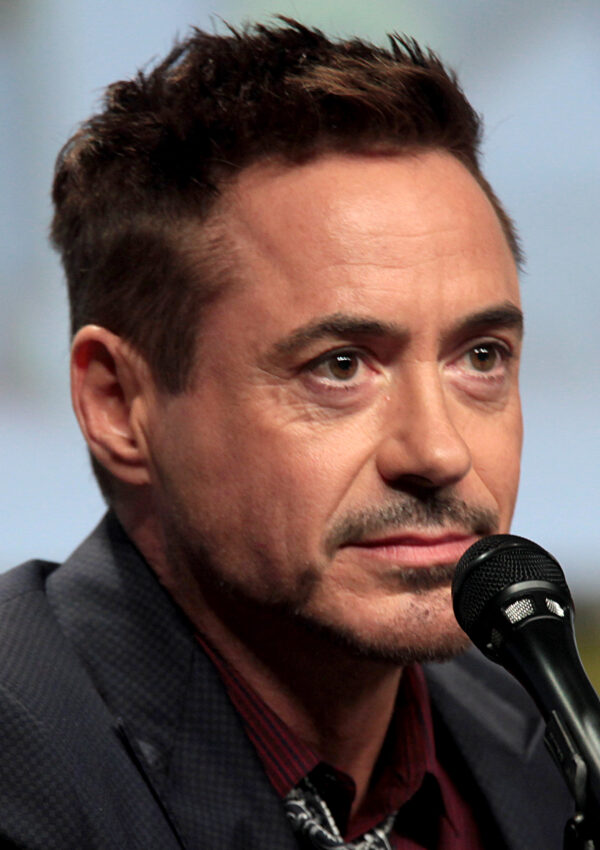
Robert Downey Jr.
Slattery plays Tony Stark’s father, Howard, across several Marvel films. Their connection is central to one later Endgame scene.
Read the profile →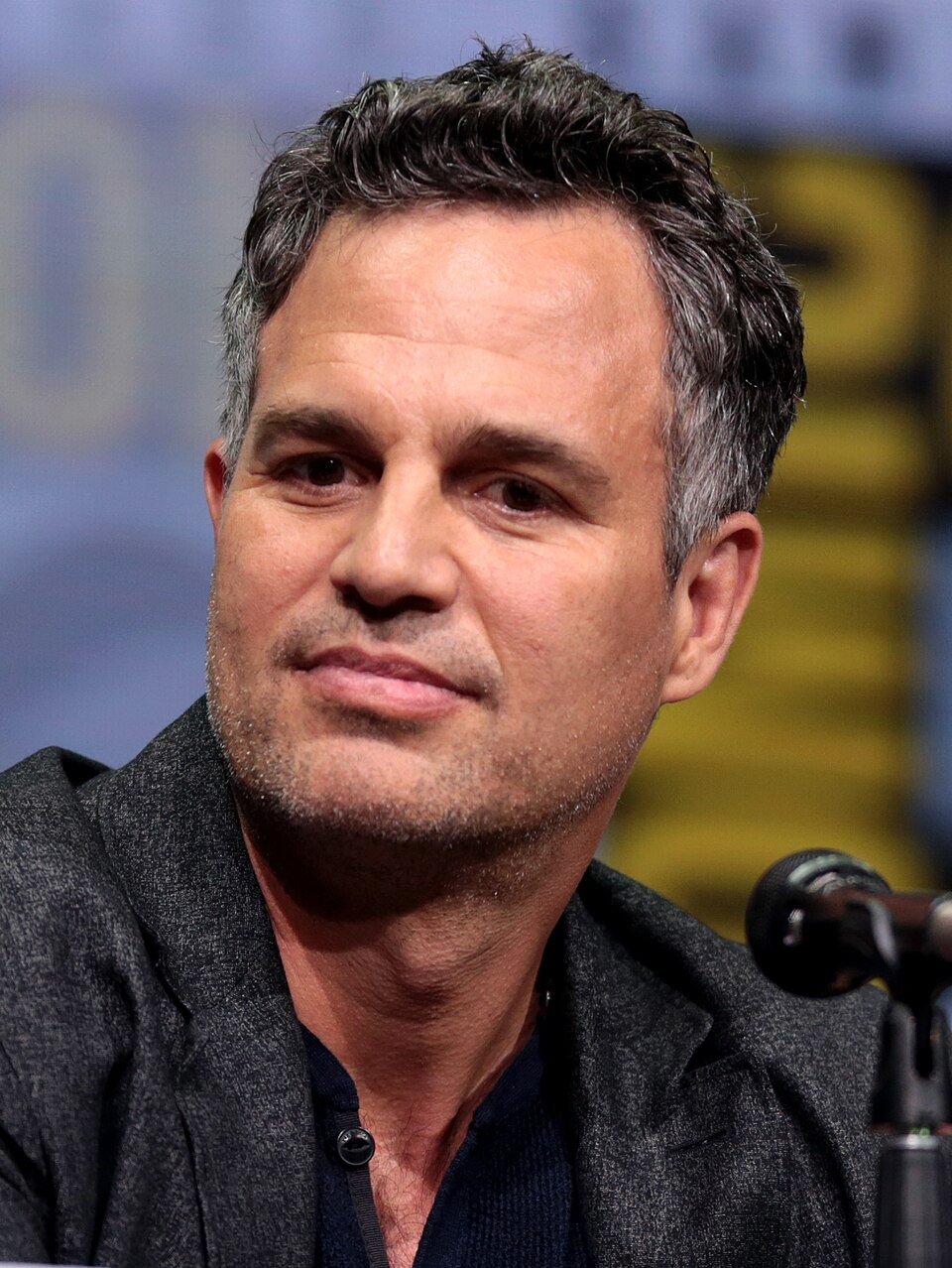
Mark Ruffalo
Both appear in Spotlight, a connection built around a reporting ensemble rather than the superhero films.
Read the profile →
Michael Douglas
They appear in Ant-Man, where Howard Stark belongs to the earlier history around Hank Pym.
Read the profile →Sources and further reading
- Television Academy — John Slattery
- Under the Radar — John Slattery directing interview
- John Slattery — Film and stage credits
- Academy — The 2016 Oscars
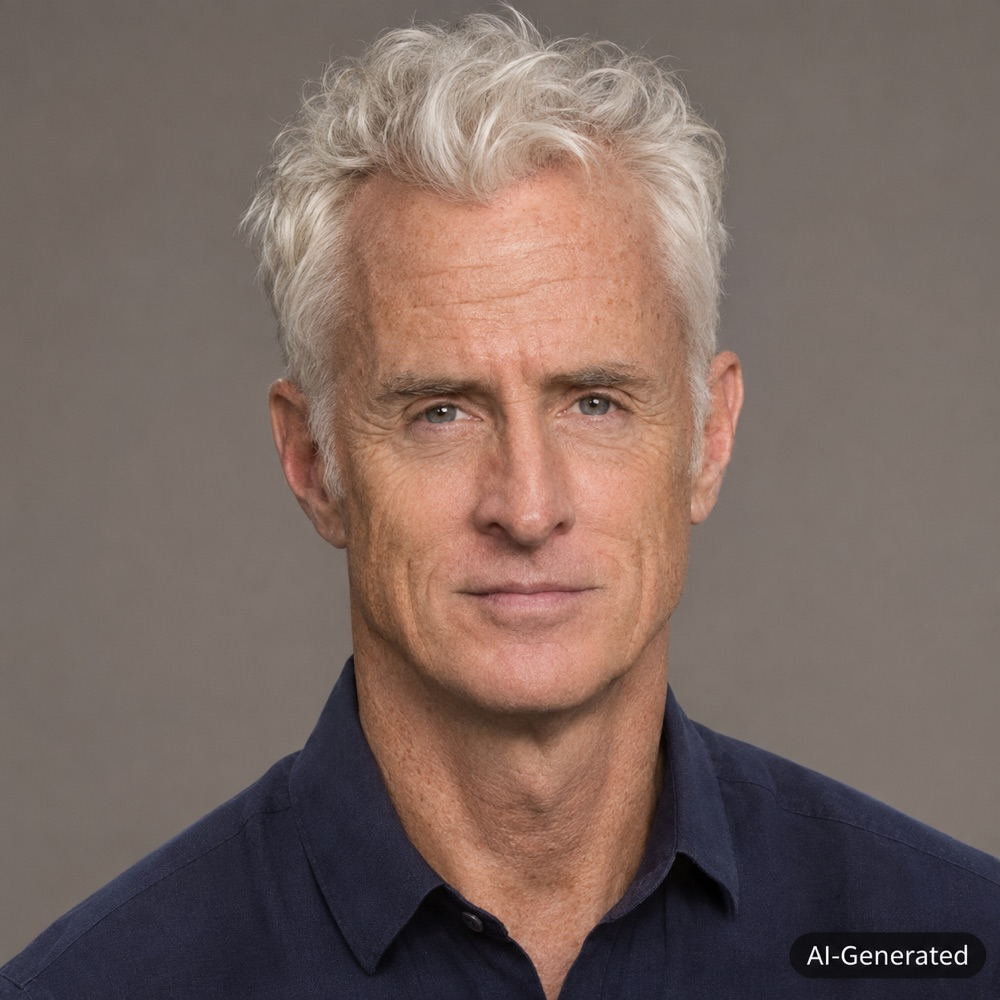
Artwork: Original AI-generated portrait of John Slattery, created for Famous Faith; not a photograph. The other AI-generated portraits shown here were also created for Famous Faith. No endorsement is implied.
Photograph: Robert Downey Jr. by Gage Skidmore, via Wikimedia Commons, CC BY-SA 2.0. Cropped to a square card for display.

Photograph: Mark Ruffalo by Gage Skidmore from Peoria, AZ, United States of America, via Wikimedia Commons, CC BY-SA 2.0. Cropped to a square card for display.

Film and book titles identify the works discussed. A career credit is not a recommendation that every reader watch or read that work.