The profile · Actor, producer, and United Nations Messenger of Peace
Michael Douglas
Michael Douglas’s career includes work behind the camera as well as the famous roles in front of it. His public life also includes nuclear-disarmament advocacy and a later, personal exploration of Jewish identity and belonging.
- Producing Oscar
- One Flew Over the Cuckoo’s Nest[1]
- Acting Oscar
- Wall Street[2]
- Public service
- UN Messenger of Peace since 1998[3]
- Faith and identity
- Genesis Prize honoree, 2015[4]
The person behind the work
A producer before a familiar screen figure
Michael Douglas shared the Best Picture Oscar as a producer of One Flew Over the Cuckoo’s Nest. The 1976 Academy record names him and Saul Zaentz. It is an important part of his career because a producer helps a film come into being, even when the audience never sees that person on screen.[1]
He later won the Leading Actor Oscar for Wall Street, playing Gordon Gekko. That award was presented in 1988 for a film released in 1987. The producing and acting honors recognize different jobs, rather than two prizes for versions of the same task.[2]
His other work includes The Streets of San Francisco, The Game, Wonder Boys, and The Kominsky Method. The Golden Globes biography also records his Hank Pym role in Ant-Man. Television, comedy, thrillers, and producing make a much wider career than Gekko’s confident speeches alone suggest.[5]
A career in range
Selected work, at a glance
1975
One Flew Over the Cuckoo’s Nest
Producer
A Best Picture-winning film made with fellow producer Saul Zaentz.[1]
Commitments beyond the screen
Peace, identity, and belonging
The United Nations appointed Douglas a Messenger of Peace in 1998. Its biography identifies nuclear disarmament and the spread of small arms among his concerns. It also traces his interest in public questions to a lecture by Buckminster Fuller when he was nineteen. That work developed alongside his film career rather than replacing it.[3]
The Genesis Prize named him its 2015 honoree. Its account connects his award with efforts to welcome intermarried families into Jewish life. Douglas’s own statement thanked his family for encouraging his exploration of Jewish faith. These are his public words about belonging, rather than a religion inferred from a surname.[4]
In a 2015 interview with JTA, he discussed having a Jewish father and a mother who was not Jewish, and the uncertainty he had felt about acceptance. The account gives context for his interest in inclusion. It should not be flattened into the claim that every Jewish community or family has the same experience.[6]
A closer look
Three ways into the work
Separate producing from performing
One Flew Over the Cuckoo’s Nest is a reminder to read the credits beyond the cast. Douglas’s contribution belongs to the work of making the film happen. The film contains strong language, violence, and other mature material.
Hear the attraction as well as the warning
Wall Street needs Gekko’s confidence to be persuasive enough for another character to follow. The performance lets a viewer examine how ambition can borrow the language of wisdom. A memorable speech is not the actor’s personal creed.
Make room for the tired teacher in Wonder Boys
Grady Tripp offers a change from the image of a man in command. The story gives delay, embarrassment, and failed plans a comic shape. It is an adult film, and its interest lies partly in the distance between apparent experience and good judgment.
Belief in his own words
The limits of a public account
Douglas has chosen to speak about Jewish heritage, faith, and family. Those statements support describing that identification. They do not give readers a complete account of his worship, theology, or private spiritual life. His characters’ ambition or skepticism should not be substituted for his own words.[4][6]
Listen to the person
In their own words
2015
“I share this award with my family”
Famous Faith’s Christian perspective
Beyond the Spotlight
Public efforts for peace can protect real people, and questions of belonging can be deeply personal. Those concerns deserve to be heard on their own terms. A Christian reflection adds another question, offered respectfully rather than as a judgment on Douglas’s private life: how can people find peace with God?
The Bible describes a broken relationship that reaches every nation and family. First John 3:4 calls sin the breaking of God’s law. The Ten Commandments forbid stealing, false witness, adultery, and coveting; they require love and honor toward God. Jesus also addresses the hatred and lust we may hide. Advocacy and achievement can do good in the world without erasing our own need for forgiveness.
Jesus spoke about judgment and hell. Christians should never use that warning to belittle someone’s heritage or treat another person as an argument to win. God’s love is shown in Jesus Christ, his Son. He lived without sin, died on the cross for our sins, and rose bodily from the dead. His promise is forgiveness by grace through faith, not salvation earned through status, ancestry, or a record of good causes.
To repent is to turn from sin and our rebellion against God with a changed mind and heart. We stop treating him as an enemy and learn to trust the love he has shown us in Jesus. It normally bears fruit in changed behavior: truthfulness, faithfulness, and love of neighbor begin replacing old excuses. These are responses to mercy, not an entrance fee. A reader can ask Christ for forgiveness and trust him honestly. The Christian invitation is to reconciliation with God through the Savior who gives himself for sinners, and to a life in which receiving that love helps us extend it to others.
Explore the Good Person Test and the promise of forgiveness →
This section shares Famous Faith’s Christian beliefs. It does not speak for Michael Douglas.
People connected to the story
Follow the connections
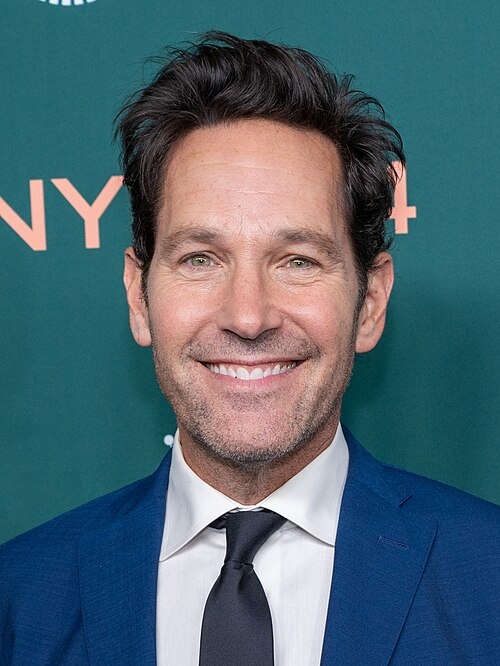
Paul Rudd
Douglas’s Hank Pym and Rudd’s Scott Lang work together in the Ant-Man films.[5]
Read the profile →
Michelle Pfeiffer
Pfeiffer plays Janet van Dyne opposite Douglas’s Hank Pym, giving the films an older family history as well as a new adventure.
Read the profile →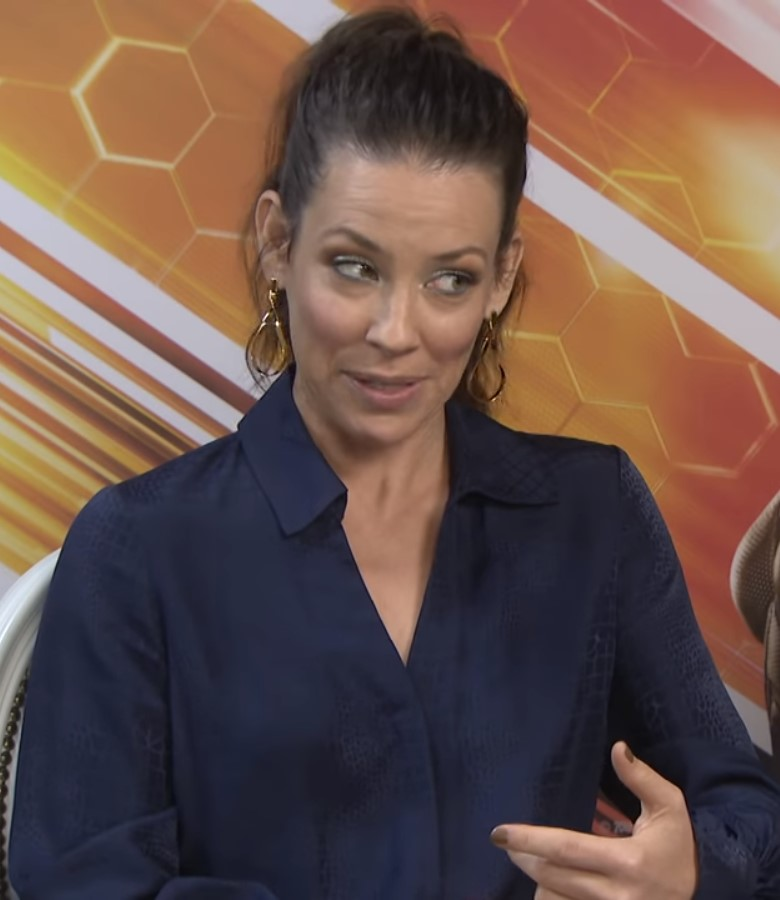
Evangeline Lilly
Lilly plays Hope van Dyne, the daughter of Hank and Janet, in the Ant-Man films.
Read the profile →Sources and further reading
- Academy — The 1976 Oscars
- Academy — The 1988 Oscars
- United Nations — Michael Douglas, Messenger of Peace
- Genesis Prize — Michael Douglas, 2015 honoree
- Golden Globes — Michael Douglas biography
- JTA — Michael Douglas interview (2015)
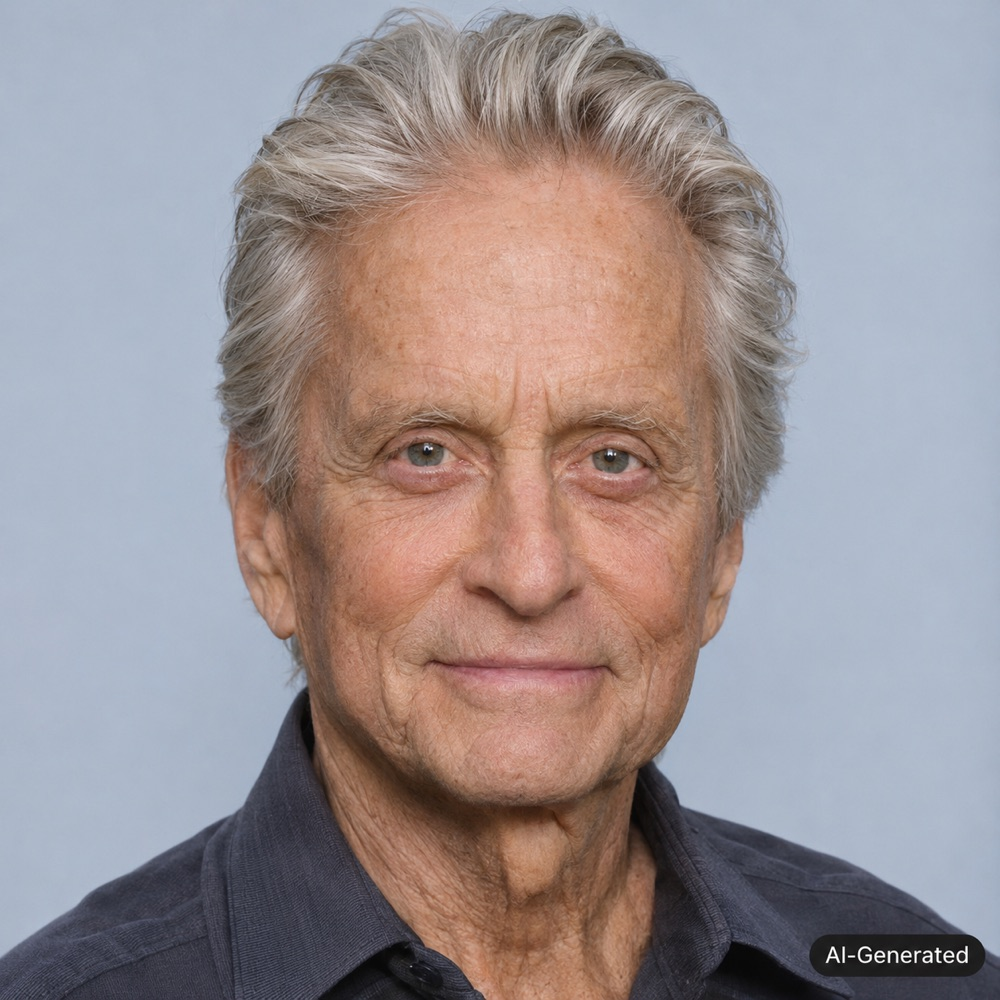
Artwork: Original AI-generated portrait of Michael Douglas, created for Famous Faith; not a photograph. The other AI-generated portraits shown here were also created for Famous Faith. No endorsement is implied.
Photograph: Paul Rudd by Bryan Berlin, via Wikimedia Commons, CC BY-SA 4.0. Cropped to a square card for display.

Photograph: Evangeline Lilly by MTV UK, via Wikimedia Commons, CC BY 3.0. Cropped to a square card for display.

Film and book titles identify the works discussed. A career credit is not a recommendation that every reader watch or read that work.