The profile · Actor
James Spader
James Spader’s characters often sound as though they have considered several answers before choosing one. His work also has a more ordinary beginning: a teacher’s household where books were read aloud and language mattered.

- Television character
- Alan Shore in The Practice and Boston Legal[1]
- Recognition
- Three acting Emmys[1]
- Long-running role
- Raymond Reddington in The Blacklist[2]
- Early influence
- A father who read literature aloud[2]
The person behind the work
The language before the signature voice
In the Television Academy’s 2014 profile, James Spader remembered the influence of his English-teacher father, who read aloud to the family. The article connects that childhood with a lasting love of literature. It is an ordinary detail that helps explain the care an audience can hear in his delivery.[2]
His film career includes Pretty in Pink, Stargate, and Lincoln. Television later gave him the same character, Alan Shore, in two series: The Practice and Boston Legal. His three Emmy wins span those two shows. Playing one person in a new setting can create continuity while changing the relationships around him.[3][1]
The Blacklist then gave him Raymond Reddington, a character whose ability to control a conversation became central to the series. A confident voice can invite trust while also making a listener wonder how much has been left unsaid. That tension is part of the role’s attraction.[2]
A career in range
Selected work, at a glance
2013–2023
The Blacklist
Raymond Reddington
A long performance in which information is a form of power.[2]
Attention and construction
The details are choices
Candice Bergen’s account of working on Boston Legal describes Spader as intensely focused on the details of a character. She remembered specific choices in clothes and manner. Her account is useful because it comes from a scene partner who watched the work develop rather than only seeing its finished result.[4]
The Television Academy profile also shows an observant person noticing the street outside an interview. It is a reminder that acting begins with attention. A performer needs to watch how people wait, hide impatience, protect themselves, and try to influence someone else.[2]
Spader’s performance as Ultron adds another tool: an actor’s vocal and physical choices can help define a digital character. It belongs to the same career as the legal arguments and guarded conversations, even when the audience sees a very different face.[3]
A closer look
Three ways into the work
Listen to the argument in Boston Legal
A legal speech is also an attempt to move a particular person. Notice when Alan Shore uses humor, when he presses, and when he changes pace. The series includes mature sexual and other adult themes.
Look at a different kind of specialist in Stargate
Daniel Jackson has knowledge that others need but do not fully understand. Watch how the performance shifts when a character moves from being dismissed to being listened to.
Compare the scale of the part in Lincoln
A supporting figure can bring another rhythm into a historical drama. Notice how a brief entrance changes the tone of the political work around him.
What is public
A life he does not fully explain in public
The sources used here say more about Spader’s craft and privacy than his personal religion. They do not clearly name a faith he practices. That leaves plenty to explore in the work without making an answer out of a character’s speeches.
Listen to the person
In their own words
2014
“We’ll see how it plays out.”
Famous Faith’s Christian perspective
Beyond the Spotlight
A persuasive speech can make a weak case sound stronger than it is. Spader’s work often makes that skill fascinating to watch. Away from a drama, however, the question of truth becomes personal. A convincing account of ourselves is not always an honest one.
God’s law cuts through that difference. The Ten Commandments forbid false witness, theft, adultery, and coveting, while calling us to honor God. First John 3:4 describes sin as lawlessness. Jesus also addresses anger and lust before they become outward acts. We cannot make a wrong right simply by presenting it well. This is a shared human problem, and Christians have no exemption from the need to confess it.
Jesus warned about judgment and hell. Those are serious realities to speak about with care, not a way to win an argument against another person. The gospel offers mercy: Jesus Christ, God’s Son, lived without sin, died on the cross for our sins, and rose bodily from the dead. Through faith in him, forgiveness is a gift of grace. It is not the result of a brilliant defense or of enough good behavior to offset the bad. God offers this mercy because he loves sinners, not because they have earned it.
Repentance brings a change of mind and heart that turns from sin and rebellion toward God. It calls us to trust his character and the love he has shown us through Jesus Christ. It usually changes behavior because we stop treating the truth as an enemy. We can admit a lie, abandon a betrayal, and seek to repair harm while trusting Christ rather than our own record. Growth is not instant perfection. It is the response of someone who has received mercy and is learning to extend that mercy to other people. We are invited to come honestly, without needing a polished speech.
Explore the Good Person Test and the promise of forgiveness →
This section shares Famous Faith’s Christian beliefs. It does not speak for James Spader.
People connected to the story
Follow the connections

Robert Downey Jr.
Spader played Ultron opposite Downey’s Tony Stark. They also appeared together much earlier in Less Than Zero.
Read the profile →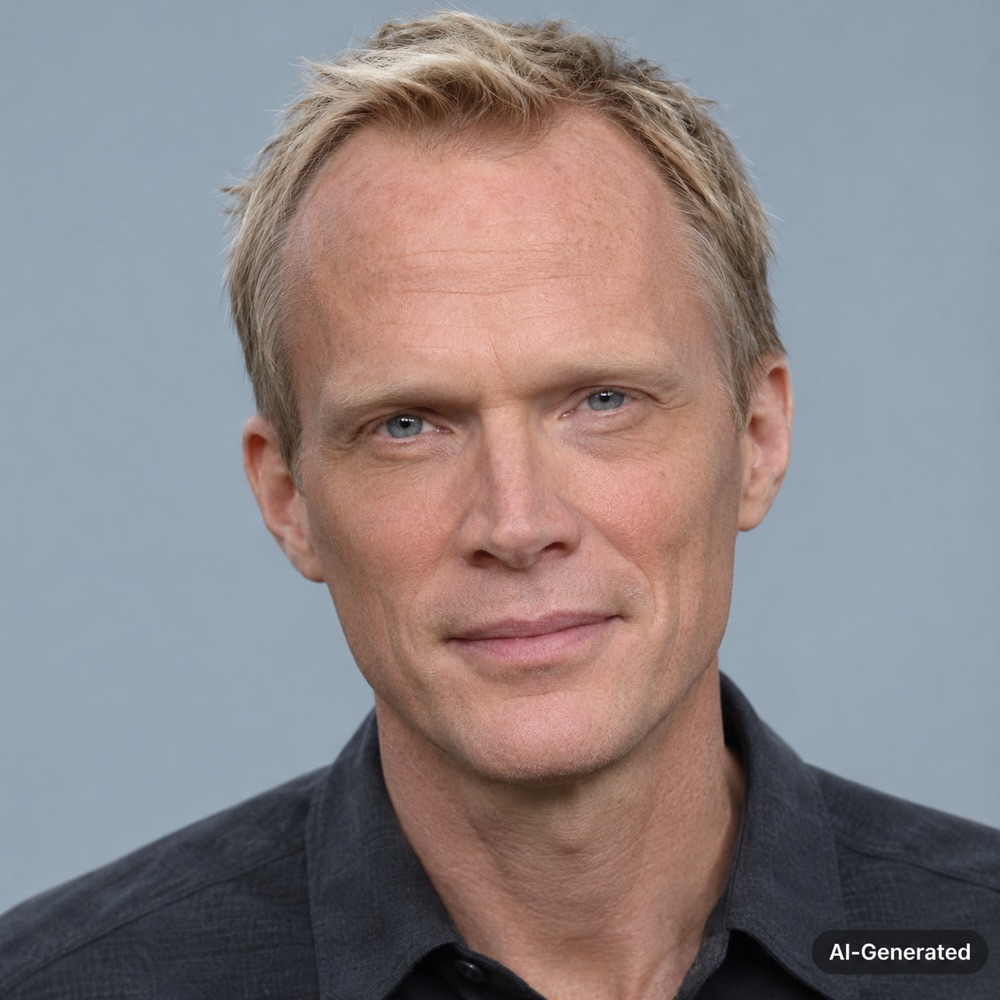
Paul Bettany
Their Ultron and Vision roles meet in Age of Ultron, joining two very distinctive voices.
Read the profile →
Elizabeth Olsen
Age of Ultron is a shared credit. Olsen’s smaller dramas offer another way to explore acting built around relationships and withheld feelings.
Read the profile →Sources and further reading
- Television Academy — James Spader awards
- Television Academy — Perfect Witness: James Spader
- James Spader — Film and television credits
- Television Academy — Candice Bergen on Boston Legal
Artwork: Original AI-generated portrait of James Spader, created for Famous Faith; not a photograph. The other AI-generated portraits shown here were also created for Famous Faith. No endorsement is implied.
Photograph: Robert Downey Jr. by Gage Skidmore, via Wikimedia Commons, CC BY-SA 2.0. Cropped to a square card for display.

Film and book titles identify the works discussed. A career credit is not a recommendation that every reader watch or read that work.