The profile · Actor and director; Dr. Stephen Maturin, J.A.R.V.I.S., and Vision
Paul Bettany
From a ship’s doctor to a grieving android, an actor drawn to people who think deeply and feel more than they show.
- Born
- May 27, 1971[1]
- From
- London, England[1]
- Television milestone
- WandaVision brought an Emmy nomination[2]
The person behind the work
An acting family, then his own route
Paul Bettany grew up around performance. His mother worked in singing and theater, and his father was an actor and dancer. His own screen career eventually placed him beside Russell Crowe in A Beautiful Mind and, two years later, Master and Commander: The Far Side of the World. Those films gave him very different uses for an attentive, thoughtful screen presence.[2][1]
In Master and Commander, his Stephen Maturin is both a surgeon and a naturalist. He is close to Crowe’s Captain Aubrey without simply agreeing with him. Their friendship gives a war story room for questions about duty, curiosity, and the human cost of command. Watching their quieter exchanges is a good way to see what Bettany contributes without an effects-heavy scene.[1][2]
A career in range
Selected work, at a glance
2003
Master and Commander
Dr. Stephen Maturin
A surgeon and naturalist provides a thoughtful counterweight to naval command.[1]
The person behind the work
A voice becomes a visible character
Bettany first entered the Marvel films as the voice of Tony Stark’s computer assistant, J.A.R.V.I.S. Vision arrived on screen in Avengers: Age of Ultron. They are related roles within the story, but they are not the same credit. WandaVision later gave Bettany and Elizabeth Olsen room to use sitcom timing alongside a story about grief.[2]
There is also work behind the camera. Bettany directed Jennifer Connelly and Anthony Mackie in Shelter. His other acting credits include the romantic comedy Wimbledon, the financial drama Margin Call, and Uncle Frank. That spread matters: a familiar franchise role can make an actor look more narrowly cast than the rest of the record supports.[1]
A closer look
Three ways into the work
Master and Commander
The friendship between a doctor and a captain gives the film more than battles. Bettany makes Maturin’s curiosity and resistance to easy answers worth following.[1]
Wimbledon
A good reminder that his work includes lightness. Physical comedy and romantic timing ask different things from an actor than a naval drama or a fantasy series.[1]
Shelter
To understand his career beyond acting, look at this directing credit. It also connects his work to two performers with substantial careers of their own.[1]
Public comments about belief
A frank statement of uncertainty
While discussing Creation and Legion in 2010, Bettany was quoted describing himself as an atheist. He said he wished he had faith but had not found God in his life. It is a direct statement to take seriously, rather than treating the angel he played in Legion as a clue to his own beliefs. The date matters too: this profile does not claim to know every later change in his thinking.[3]
Listen to the person
In their own words
Reported January 2010
“I just have not discovered God in my life”
Famous Faith’s Christian perspective
Beyond the Spotlight
Bettany’s wish for faith is a recognizable feeling. Some people want to believe but cannot make themselves certain. Christianity does not ask us to borrow an actor’s confidence or hide our questions. It asks us to consider Jesus, including the evidence and meaning of his life, death, and resurrection. Honest searching can include honest prayer.
Scripture also asks for honesty about our own lives. The Ten Commandments forbid false witness, stealing, coveting, and treating anything as greater than God (Exodus 20). Sin is breaking God’s law (1 John 3:4). It is more than making a mistake. Jesus warned that judgment and hell are real, so this is a serious question. That warning belongs beside his love, not beside contempt for people who doubt.
The Christian message is that God came toward us before we could make ourselves worthy. Jesus Christ, his Son, lived a sinless human life, died on the cross for our sins, and rose bodily from death. God offers forgiveness and eternal life through him. Salvation comes by grace through faith, not by collecting enough good deeds or manufacturing a religious feeling (Romans 5:8; Ephesians 2:8–9).
To repent is to turn our mind and heart from sin and rebellion toward God. We begin trusting him for who he is, taking seriously the love he has shown us through Jesus Christ. That change usually reaches our habits, words, and choices as we learn to live differently. It is a direction of trust, not a claim to instant perfection. We can ask forgiveness, begin making wrongs right, and keep seeking help when growth is slow.
If belief is difficult for you, begin with a Gospel and the person of Jesus. Ask your questions without shame. Christians should welcome that conversation with patience, remembering that faith is a gift and that everyone needs mercy. The hope offered here rests on Christ’s welcome, not on how quickly someone finds all the answers.
Consider the Good Person Test and the hope of forgiveness →
This section shares Famous Faith’s Christian beliefs. It does not speak for Paul Bettany.
People connected to the story
Follow the connections



Sources and further reading
- Golden Globes: Paul Bettany career
- Paul Bettany: biography and filmography
- The Philippine Star: The “Angelic” Side of Paul Bettany
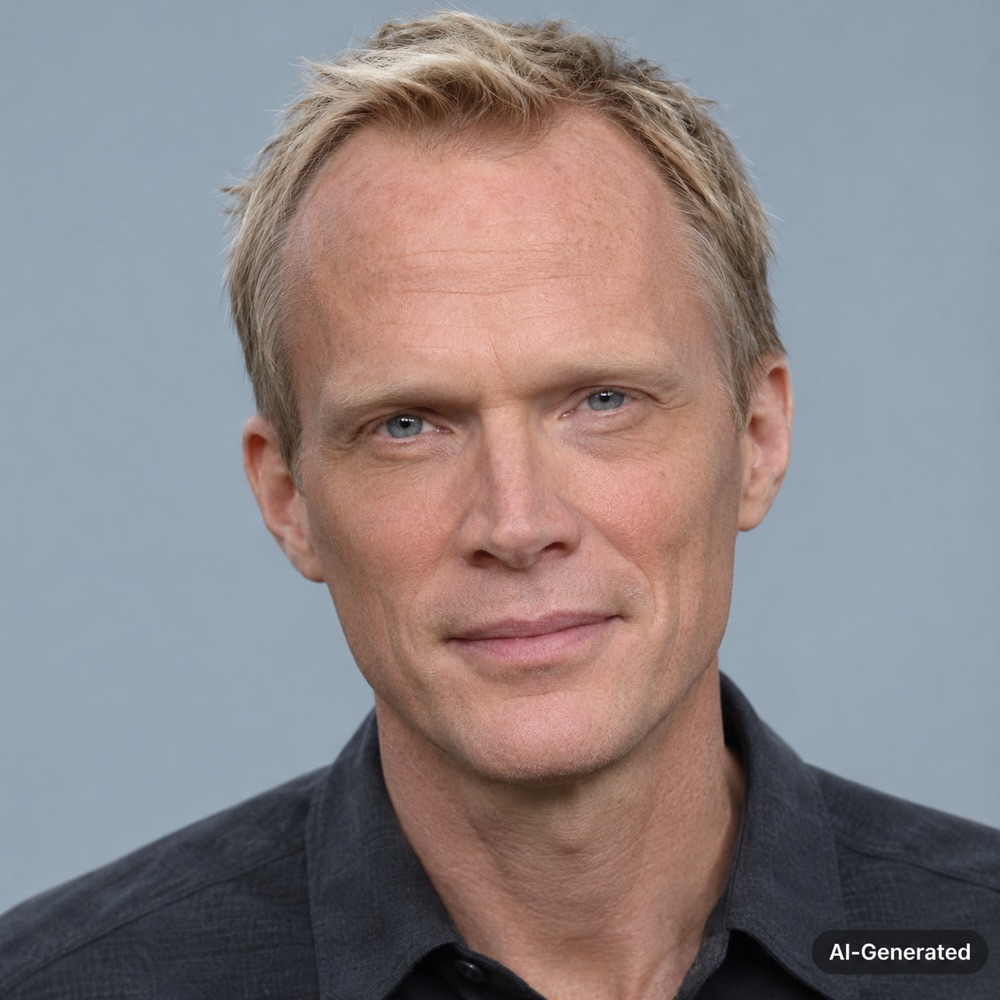
Artwork: Original AI-generated portrait of Paul Bettany, created for Famous Faith; not a photograph. The other AI-generated portraits shown here were also created for Famous Faith. No endorsement is implied.
Photograph: Robert Downey Jr. by Gage Skidmore, via Wikimedia Commons, CC BY-SA 2.0. Cropped to a square card for display.

Film and book titles identify the works discussed. A career credit is not a recommendation that every reader watch or read that work.