The profile · Actor, author, and host; the Emcee, Eli Gold, and The Traitors
Alan Cumming
A stage-trained performer, memoir writer, and host whose public playfulness sits beside a serious account of surviving harm.

- Born
- January 27, 1965[1]
- Training
- Royal Scottish Academy of Music and Drama, 1982–1985[2]
- Memoir
- Not My Father’s Son (2014)[3]
The person behind the work
An actor with more than one public voice
Alan Cumming trained at the Royal Scottish Academy of Music and Drama before building a career in theater, comedy, film, and television. His early comedy partnership with Forbes Masson was called Victor and Barry. Later audiences encountered him as Boris in GoldenEye, Fegan Floop in Spy Kids, or the Emcee in Cabaret, the role that won him a Tony in 1998.[2][1]
The Good Wife gave him years as Eli Gold, a character whose speed and control serve a world of political calculation. The Traitors then made his hosting a performance in its own right. The Television Academy awarded him its reality-competition hosting Emmy in 2024. Those are different jobs, but all make use of timing, voice, and the audience’s attention.[4][1]
A career in range
Selected work, at a glance
The person behind the work
A memoir that does not excuse the harm
In Not My Father’s Son, Cumming wrote about childhood abuse and the family questions reopened by the program Who Do You Think You Are? Speaking to NPR in 2014, he resisted the easy idea that a terrible childhood was somehow justified because he later became a successful actor. He could describe what he had made of his experience without calling the harm good.[5]
That distinction is one of the most useful parts of the public story. Success does not prove someone was unharmed, and finding a way forward does not make an abuser’s actions necessary. The memoir reached readers as a book and an audiobook, adding another kind of audience to a career already spread across stage and screen.[5][3]
A closer look
Three ways into the work
Cabaret
The Emcee is a defining stage role, not a footnote beside the films. It makes clear how strongly Cumming’s work depends on his relationship with a live audience.[2]
The Good Wife
Long-form television gives Eli Gold room to become more than one burst of quick dialogue. The character’s calculations build within relationships that continue over time.[1]
His own words
A direct answer about belief
When NPR’s Scott Simon asked about an afterlife in the 2014 conversation, Cumming answered that he was an atheist. It was a clear statement, not something a reader needs to infer from a role or a family story. A Christian response can disagree with that belief while respecting his honesty and taking his account of abuse seriously.[5]
Listen to the person
In their own words
October 11, 2014
“No, I’m a total atheist.”
Famous Faith’s Christian perspective
Beyond the Spotlight
Cumming’s refusal to justify childhood abuse deserves respect. Christians should never tell a person that success makes the harm done to them good. God’s care for the vulnerable calls us to tell the truth, protect people, and take wrongdoing seriously. Forgiveness is not a command to pretend the past did not happen or to give an unsafe person new access to a life.
The Ten Commandments forbid murder, adultery, stealing, and false witness, and require honor toward God (Exodus 20). First John 3:4 describes sin as breaking God’s law. That standard holds wrongdoers responsible and also asks every one of us to face our own failures. Jesus warned about judgment and hell. Christians should speak of this with love and humility, never as an explanation for someone’s suffering or a weapon against an atheist.
The gospel offers the mercy God has provided in Jesus Christ. His Son lived without sin, died on the cross for our sins, and rose bodily from the dead. Through him God offers forgiveness and eternal life. Salvation is received by grace through faith, not earned by surviving pain, doing good, or finding a religious identity that looks acceptable to others (Romans 5:8; Ephesians 2:8–9).
Repentance turns us from sin and our own resistance to God, bringing a change of mind and heart. It means learning to trust who he is and the love he has shown through Jesus. It normally changes behavior, including telling the truth, admitting harm, and seeking to put wrongs right. Those changes are a response to grace rather than a payment for it. Trust in Christ should make us more accountable for our actions and more caring toward people who carry wounds.
A reader can consider Jesus without hiding hard questions or calling painful experiences good. Read a Gospel, speak honestly to God, and seek patient, trustworthy people to talk with. The invitation is to receive forgiveness through Christ and learn his way of love. It is offered with concern for your dignity and with room to think carefully.
Consider the Good Person Test and the hope of forgiveness →
This section shares Famous Faith’s Christian beliefs. It does not speak for Alan Cumming.
People connected to the story
Follow the connections
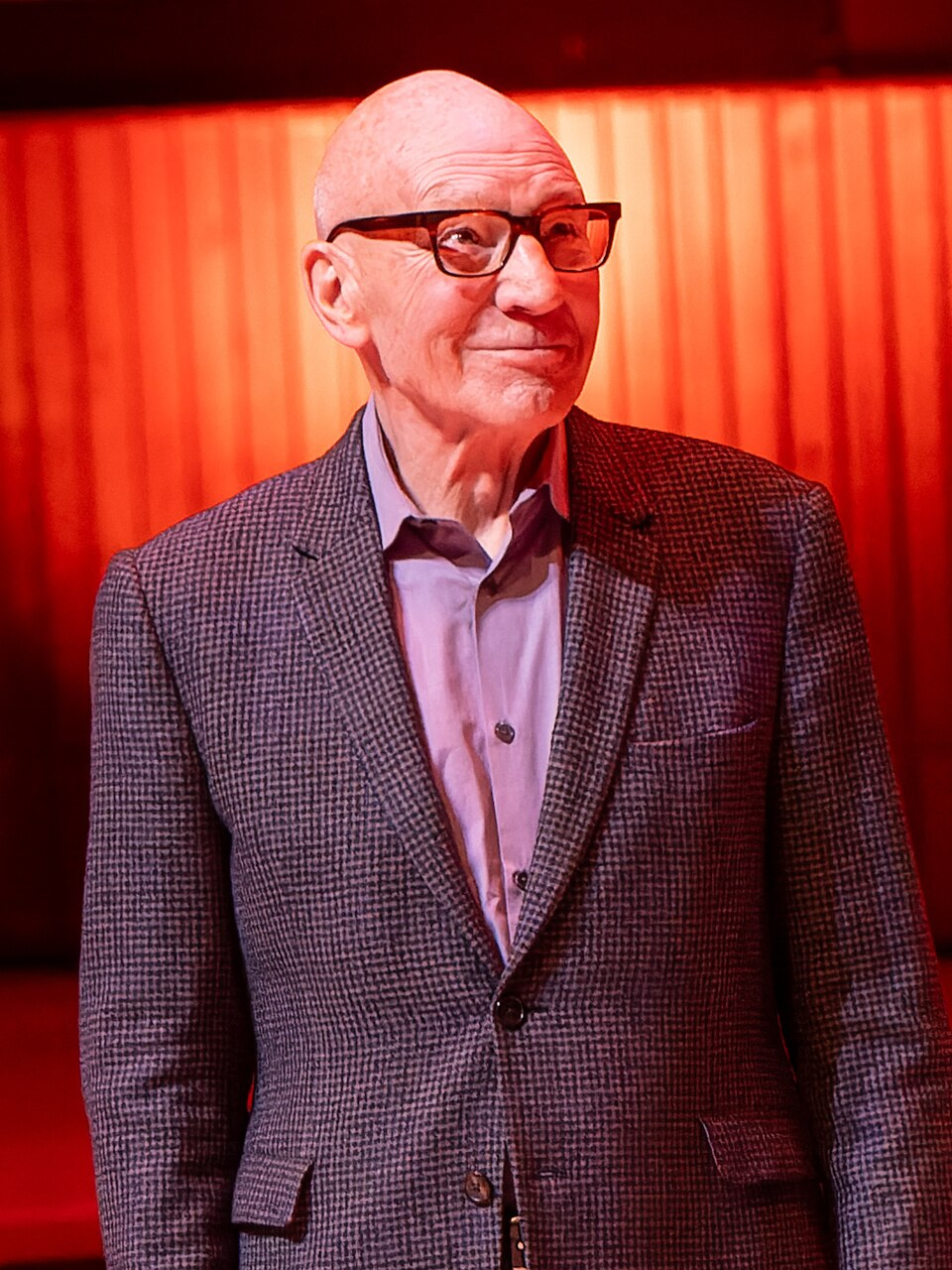
Patrick Stewart
They appear together in X2, as Nightcrawler and Professor Xavier.[1]
Read the profile →
From the directory
Hugh Jackman
His Wolverine shares the X2 story with Cumming’s Nightcrawler.[1]
Read the profile →Sources and further reading
- Alan Cumming: biographical and screen-credit reference
- Alan Cumming: official career biography
- Alan Cumming: 2014 memoir and career archive
- Television Academy: Alan Cumming awards
- NPR / NHPR: Cumming discusses Not My Father’s Son
Artwork: Original AI-generated portrait of Alan Cumming, created for Famous Faith; not a photograph. The other AI-generated portraits shown here were also created for Famous Faith. No endorsement is implied.
Photograph: Patrick Stewart by Raph_PH, via Wikimedia Commons, CC BY 2.0. Cropped to a square card for display.

Film and book titles identify the works discussed. A career credit is not a recommendation that every reader watch or read that work.