People · Beliefs
Keiko Asai
Keiko Asai, known in Taiwan as Chen Hui-zhu, went from winning swimming medals to acting in Taiwanese and Japanese movies. She played Madame Wang in Shachōgaku ABC and its sequel.
- Also known as
- Chen Hui-zhu (陳惠珠)
- From
- Taichung, Taiwan
- Known for
- Madame Wang in Shachōgaku ABC
- Died
- November 19, 2026, at age 92
- Religion
- Wrote about prayer and Buddhist practice. Formal affiliation uncertain.
From Taiwan’s “Mermaid” to the movies
Before Japanese movie audiences knew her as Keiko Asai, fans in Taiwan called Chen Hui-zhu the “Mermaid.” As a student in Taichung, she won five provincial titles in backstroke. She had started dance lessons when she was small and kept performing while her reputation as a swimmer grew. Taiwan’s Central News Agency preserves a 1958 photograph of her returning from Japan, after the swimmer had become a film actress.
Asai died on November 19, 2026, at 92. Her daughter, the actress and writer Hoshimi Asai, announced the death on the evening of November 26 in Japan, and Nikkan Sports and Taiwan’s Central News Agency reported it the next day. Her daughter recalled fans going to the airport to say goodbye when she left Taiwan. They wanted her to promise she would come back.
A career in two countries
Asai studied at Toho’s performing arts school in Japan. In an account preserved by Taiwanese film critic Huang Ren, she described training in dance, singing and drama. The dance classes included ballet, modern dance and tap. Acting classes covered everything from voice and facial expression to studying a script and preparing a character for the stage.
She became Toho’s first foreign actress and worked with Taiwan’s Central Motion Picture Corporation. Her Japanese film credits reach from Tokyo Holiday in 1958 to the last two entries in Toho’s company-president comedy series in 1970. In the 1962 film Daikichi Bonnō Kagami, she played Yang Lihua. In Shachōgaku ABC and its sequel, she appeared as Madame Wang. The National Film Archive of Japan counts 33 films in that series, starting in 1956. Taiwan’s National Cultural Memory Bank also lists her in the cast of the Taiwanese action film Tian Men Zhen.
Asai married karate teacher Tetsuhiko Asai. Her life then included helping organize and promote his teaching in Taiwan and abroad. As she recalled to Huang Ren, she wanted Taiwan to be their first stop in Asia because it was her home. He taught karate. She handled administration and helped overcome the language barrier. The martial arts magazine WEB Hiden also describes her work as a dance teacher and her experiments combining Chinese opera movement with martial arts and modern ballet.
What did Keiko Asai say about faith?
Asai wrote publicly about prayer and visits to Buddhist places of worship. In her January 20, 2016, diary entry, she described meeting the head of a Shingon Buddhist association in Tainan. After he showed her his worship hall, she wrote, “He kindly chanted the Heart Sutra in Japanese” (translated from Japanese). They also discussed plans for a pilgrimage to 33 sites devoted to Kannon, a figure associated with compassion in Buddhism.
Asai also referred to one of her uncles as a Christian pastor in her personal diary. The Presbyterian Church in Taiwan records his years of ministry. Her diary gives a firsthand account of encounters with Buddhism and of Christianity in her family. Her own formal religious affiliation and whether she identified as Christian remain unclear.
Beyond the Spotlight
Asai’s diary captured ordinary moments alongside her public work. Readers who wonder what it means to know God can bring their own lives, questions and failures to that conversation. The Bible begins with God’s love for people. It also says that every one of us has sinned, breaking God’s law in ways that hurt others and turn our hearts away from him. God’s judgment is just, and Jesus warned that sin leads to hell.
God loved us enough to send his Son. Jesus lived without sin, died on the cross for our sins and rose bodily from the dead. Through him, God offers forgiveness and eternal life to everyone who turns from sin and puts their trust in Jesus. Repentance means turning toward God with a changed heart, a change that begins to shape how we live. Ephesians 2:8–9 calls salvation a gift of grace received through faith. A lifetime of accomplishments could never buy it. If you’re wondering where you stand with God, you can openly ask him for mercy and begin reading about Jesus in the Gospel of John.
Sources and image credit
- Central News Agency · death report
- Nikkan Sports · family announcement and obituary
- AT Production · Hoshimi Asai’s official profile
- Central News Agency · historical profile and photographs
- WEB Hiden · acting, dance and karate
- Huang Ren · career history and interviews
- AllCinema · credited film roles
- National Film Archive of Japan · Toho comedy series
- MediaDogs · Japanese film credits
- National Cultural Memory Bank · Taiwanese film billing
- Keiko Asai’s diary · visit to Tainan
- Keiko Asai’s diary · family recollections
- Presbyterian Church in Taiwan · Zhongli church history
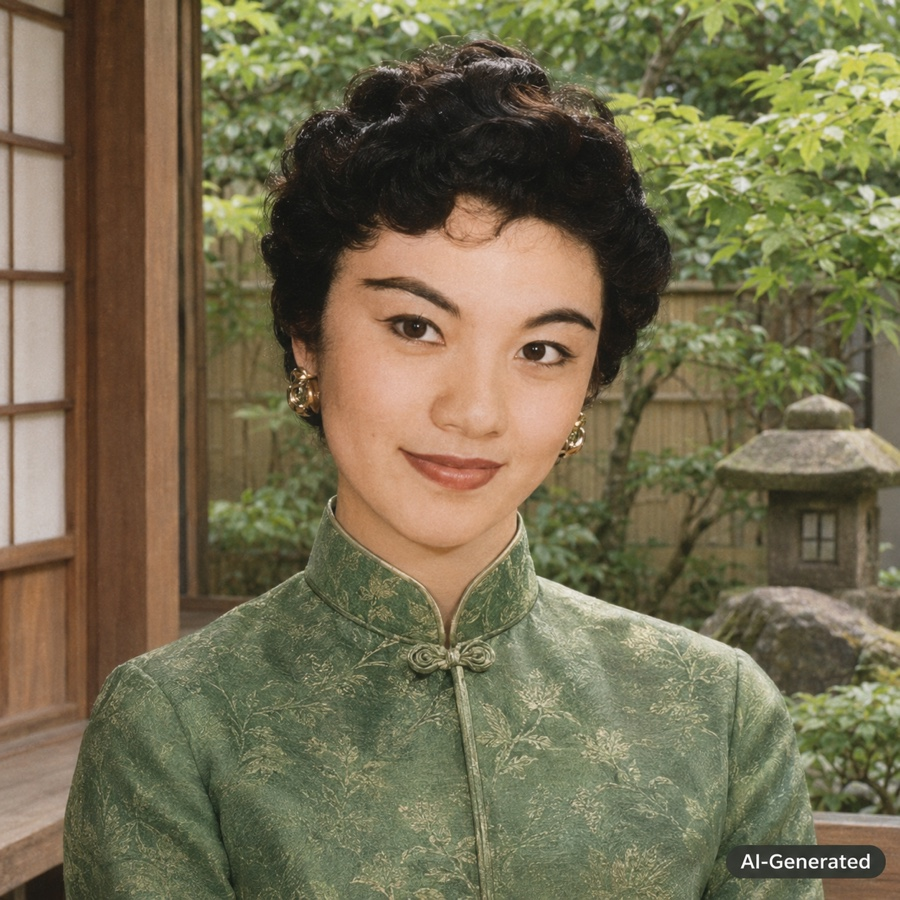
Artwork is an AI-generated illustration of Keiko Asai created for Famous Faith.