People · Beliefs
Danica McKellar
The actress behind Winnie Cooper became a mathematician, a children’s author, and a holiday movie regular. Danica McKellar’s later embrace of Christianity added another chapter—one she says changed the quiet moments between her visible accomplishments.
- Work
- Actress, author, and producer
- Early role
- Winnie Cooper, The Wonder Years
- Education
- Mathematics degree, UCLA
- Public faith
- Christian; publicly discussed since 2022
Danica McKellar could have remained known mainly as Winnie Cooper. Instead, she built a second identity around mathematics, helping young readers approach a subject that can feel intimidating. Alongside that work, she returned to acting and became a familiar presence in holiday movies.
Her Christian faith is a more recent part of her public story. She has described it in her own words as a change in how she handles worry, makes plans, and thinks about the stories she tells.
From Winnie Cooper to mathematics
Great American Family’s biography identifies McKellar’s work on The Wonder Years, The West Wing, and holiday films, as well as her mathematics degree from UCLA. Her books bring mathematical ideas into stories and situations younger readers can recognize.
In a 2012 NPR interview about Girls Get Curves, she explained that mathematics can be interesting rather than dry, and that teaching it through familiar subjects can help students engage. The project was about more than having a famous face on a cover. It offered another way for girls to see themselves as capable learners.
That combination makes her career unusual. The audience who grew up with Winnie may know little about her books, while a young math reader may encounter her as an encouraging teacher first. Neither part needs to erase the other. Her later film work adds writing and producing to that mix.
Her account of becoming a Christian
McKellar publicly began discussing her embrace of Christianity in 2022. In an October 2026 interview with The Christian Post, she reflected on the influence of friend Candace Cameron Bure and on the way faith had changed her approach to her career.
Earlier that year, in a March 4 interview, McKellar described discovering greater peace. She explained that trusting God did not mean refusing to plan or work hard. It meant trying to surrender her anxiety over the results.
She also connected her developing faith to the opportunities she had to write and perform uplifting stories. These are her own Christian claims, rather than an assumption drawn from a family television network. We can report them respectfully without claiming to measure her heart or turning every creative decision into proof of a doctrine.
Beyond the Spotlight
McKellar’s work with mathematics reminds us that a hard question is not always an enemy. Asking, listening, and learning can be part of growth. Famous Faith’s Christian perspective welcomes honest questions about God too. Trusting him does not require pretending that every struggle has already disappeared.
The Bible begins our need for hope with who God is. He is holy, perfectly good, and loving. His Ten Commandments show that sin is breaking his law, not simply failing to meet our own goals. A lie, a stolen thing, or an idol placed above God is a real moral wrong. Jesus also showed that our hearts need change. We all fall short, including Christians writing about the lives of others.
No amount of intelligence can work out a way to cancel that guilt. Neither success nor improved behavior can force God to overlook evil. Scripture warns that he will judge sin and that hell is a real consequence of separation from him. That warning calls for humility, never for mocking people whose beliefs differ from ours.
God’s answer is Jesus Christ, his sinless Son. Jesus died for sinners on the cross and rose bodily from the grave. The gospel summarized in 1 Corinthians 15:3–4 is about those saving events, not a promise that our schedules will become easy or our projects will always succeed.
Forgiveness and salvation are gifts of grace, received through faith rather than earned by works, as Ephesians 2:8–9 teaches. Repentance means turning from sin and rebellion toward God with a changed mind and heart. We learn to trust who he is and the love he has shown in Jesus. Obedience grows from that relationship; it is not a fee for being accepted.
These are Famous Faith’s biblical convictions, not a summary of every position McKellar holds. You do not need a perfect answer to every question before seeking Christ’s mercy. The Good Person Test can help you consider the gospel further.
Sources
- Great American Family: Danica McKellar biography
- NPR: Actress Danica McKellar Helps Girls Get Curves, August17,2012
- The Christian Post: McKellar on trusting God, March4,2026
- The Christian Post: McKellar and Candace Cameron Bure, October21,2026
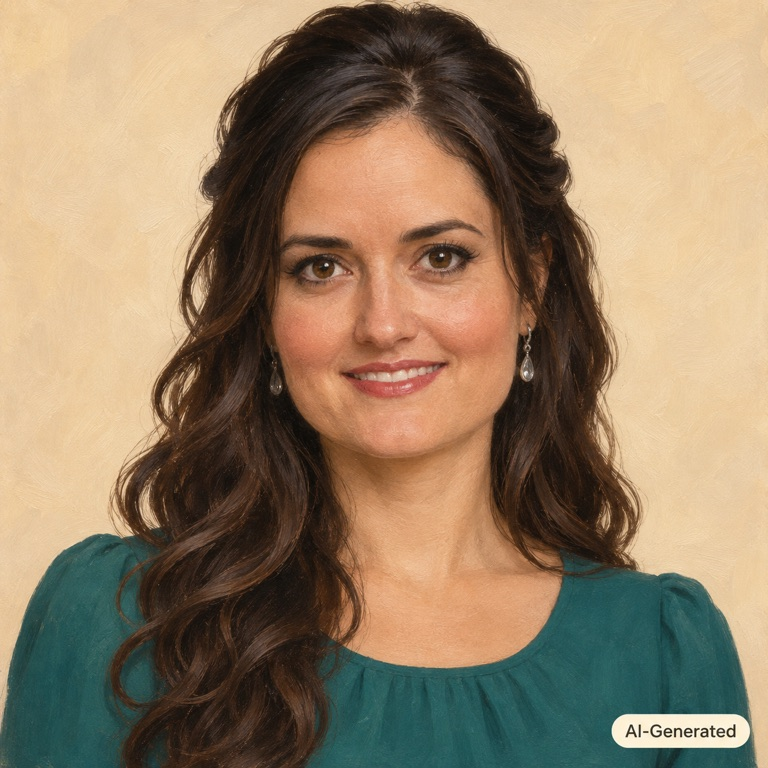
Artwork: Original AI-generated portrait created for Famous Faith; not a photograph. No endorsement is implied.