The profile · Actor and charity ambassador
Jenny Agutter
Jenny Agutter’s career connects a railway platform familiar to generations of viewers with the daily care of Call the Midwife. Her charity work also has a close family connection, making concern for others more than a screen theme.

- Early landmark
- The Railway Children (1970)[1]
- Long-running role
- Sister Julienne in Call the Midwife[3]
- Charity work
- Cystic Fibrosis Trust ambassador[4]
The person behind the work
A childhood role with a very long afterlife
Jenny Agutter began acting as a child, with The Railway Children becoming one of her most lasting early roles. The film’s continuing place in family viewing can make that young face seem fixed in time. Her later career, however, ranges through drama, science fiction, and television made for very different audiences.[1]
She won a BAFTA supporting-actress award for Equus and appeared in Logan’s Run and An American Werewolf in London. Those credits show how far her working life reached beyond the family-film image. Recognizing that range helps avoid treating a childhood success as the whole story.[2][1]
Call the Midwife brought another long relationship with viewers. As Sister Julienne, she plays someone whose steadiness has to survive changes in medicine, family life, and society. The role is not built mainly from grand speeches. Much of its authority comes from paying attention to someone else’s immediate need.[3]
A career in range
Selected work, at a glance
Care within and beyond the work
A cause close to her family
The Cystic Fibrosis Trust identifies Agutter as an ambassador and explains her family connection to the condition. Her advocacy includes raising awareness and supporting the charity’s work. The connection matters because it places a public role beside the experience of people she knows and loves.[4]
In a KLCS interview about Call the Midwife, she also discussed the value of people who commit themselves to caring for others. She described Sister Julienne as more patient than she is herself. That modest distinction makes the conversation more useful: understanding a character does not mean claiming to possess all of the character’s strengths.[5]
The series’ historical setting can also make modern viewers notice needs that remain familiar. People still need to be heard, treated with dignity, and helped through fear. An actor’s work can open that conversation without taking the place of the real people who provide care.
A closer look
Three ways into the work
Revisit the listening in The Railway Children
Bobbie’s story makes room for a child’s concern about things adults do not fully explain. The role is a useful reminder that a family film can take a young person’s feelings seriously.
Watch the steadiness in Call the Midwife
Sister Julienne’s authority often begins with listening. Notice how she responds when a person brings a problem that cannot be solved by a quick answer. Episodes may include distressing medical and mature social themes.
Compare the worlds in Logan’s Run
Science fiction changes the setting and the rules around the character. The contrast with Agutter’s period work makes the range clear. The film contains violence, nudity, and other adult material.
Belief in the story
Understanding a calling
Agutter’s KLCS conversation takes Sister Julienne’s calling seriously and also acknowledges the distance between performer and character. The interviews cited here do not lay out a clear account of Agutter’s own religious practice. The interesting detail is her effort to understand a person whose patience and commitments are not simply her own.[5]
Listen to the person
In their own words
2020
“I’m not as patient as she is.”
Famous Faith’s Christian perspective
Beyond the Spotlight
Care is often made from repeated small acts: listening again, arriving on time, and refusing to treat a frightened person as an inconvenience. Agutter’s work invites us to notice that patience. The Bible values such love while also asking us to be truthful about our failures to give it.
Sin is the breaking of God’s law (1 John 3:4). The Ten Commandments forbid lies, theft, adultery, and coveting; they also call us to honor God and our parents. Jesus goes deeper into the heart, naming anger and lust as serious wrongs. We may be kind in one setting and careless or dishonest in another. Good intentions do not erase the harm.
God’s judgment therefore matters. Jesus warned about hell, and Christians should speak about it with humility and sorrow rather than harshness. The good news is God’s love in Jesus Christ, his Son. Jesus lived without sin, died on the cross for sinners, and rose bodily from the dead. Forgiveness is offered through faith in him as a gift of grace. Neither caring work nor religious performance can earn it.
Repentance means turning from sin, including the wish to live without answering to God. Our mind and heart turn toward him, learning to trust his goodness and the love he has shown in Jesus. Changed behavior normally follows: we tell the truth, turn away from selfish desires, and learn to care for people more faithfully. Those are fruits of mercy, not a payment for salvation. We can confess our sin and trust Jesus without pretending that we have become endlessly patient or perfectly loving. Grace gives us a place to begin again, and a reason to extend care to people whose lives are difficult to understand.
Explore the Good Person Test and the promise of forgiveness →
This section shares Famous Faith’s Christian beliefs. It does not speak for Jenny Agutter.
People connected to the story
Follow the connections
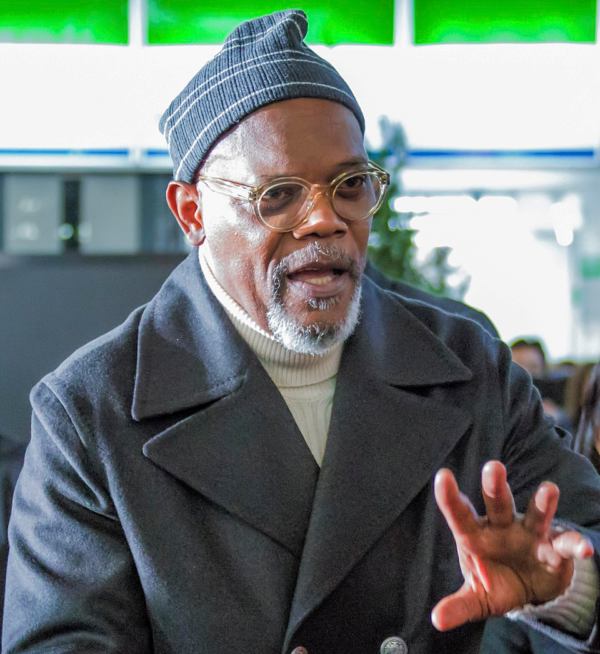
Samuel L. Jackson
They share The Avengers, in which Agutter plays a member of the World Security Council. The brief role contrasts with her long television work.
Read the profile →
Robert Redford
Both appear in Captain America: The Winter Soldier, linking two long careers through a later ensemble film.
Read the profile →
Scarlett Johansson
They share the Captain America film in which Agutter’s council member becomes part of a striking disguise sequence.
Read the profile →Sources and further reading
- Jenny Agutter — Biography and credits
- BAFTA — 1978 Film Awards
- PBS — Call the Midwife
- Cystic Fibrosis Trust — Ambassadors and supporters
- KLCS — Interview with Jenny Agutter
Artwork: Original AI-generated portrait of Jenny Agutter, created for Famous Faith; not a photograph. The other AI-generated portraits shown here were also created for Famous Faith. No endorsement is implied.
Photograph: Samuel L. Jackson by Dick Thomas Johnson, via Wikimedia Commons, CC BY 2.0. Cropped to a square card for display.

Photograph: Scarlett Johansson by GabboT, via Wikimedia Commons, CC BY-SA 2.0. Cropped to a square card for display.

Film and book titles identify the works discussed. A career credit is not a recommendation that every reader watch or read that work.