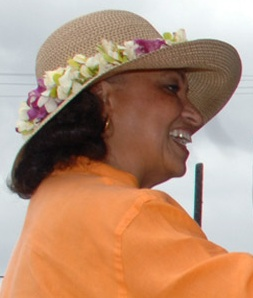
Daphne Maxwell Reid has spoken about God as the giver of her talents. Her public story also includes a church background and a creative life that reaches far beyond playing Aunt Vivian on The Fresh Prince of Bel-Air. Acting, photography, sewing, and design have all been parts of that life.
In her conversation with The Chris & Sandy Show, Reid described a responsibility to use the gifts God had given her. Rather than urging someone else to copy her career, she encouraged a more personal response to the abilities they had received. Her remarks connect creativity with gratitude and responsibility.
A church background and a varied creative life
The HistoryMakers’ oral-history guide includes Reid discussing attendance at Good Shepherd-Faith Presbyterian Church in New York. That is a specific piece of her religious background. It is more useful than assigning a denomination solely because of where she grew up or the roles she later played.
At the same time, a childhood church connection does not establish every detail of an adult’s current beliefs. Her comments about God-given talents support saying that belief in God is part of her public outlook. They do not, by themselves, provide a complete explanation of her theology.
In an interview with Adam Mendler, Reid described the welcome and respect she received when she joined Fresh Prince. She also identified passion, commitment, and a desire to learn as qualities that help people in entertainment. These practical themes fit her public interest in making good use of a creative life.
Is Daphne Maxwell Reid a Christian?
Reid has a documented Presbyterian church background and has publicly spoken of God as the source of her gifts. Those are meaningful facts. The sources reviewed here do not establish a detailed personal testimony about salvation or confirm a present church membership.
It is therefore best to describe what she has said rather than claim certainty about matters she has not fully explained. Her portrayal of a caring television mother does not add evidence about her religious identity. The real person and the character deserve to be distinguished.
For Christian readers, her language about gifts opens a helpful question: what does the Bible mean when it says our abilities and opportunities come from God, and how should that change the way we live?
God-given gifts and faithful stewardship
James 1:17 teaches that every good and perfect gift comes from above. That gives Christians a reason for gratitude rather than self-congratulation. An ability may involve years of practice, but the strength, opportunities, and people that helped us develop it were never entirely within our control.
First Peter 4:10 calls believers to serve one another with the gifts they have received. The purpose is bigger than being noticed. A gift becomes a way to bless a neighbor, encourage a child, create honest work, or meet a practical need.
This applies far beyond celebrities. Someone may be gifted at cooking, fixing a broken appliance, teaching, listening, organizing, or caring for a person who is tired. God’s view of useful service is not limited to the work that draws applause.
The Bible also joins stewardship with accountability. Jesus’ parables challenge people to use what has been entrusted to them. We should not waste opportunities through fear or selfishness. Yet faithful service should be shaped by God’s commands, rather than the assumption that any use of a talent must be good.
Hospitality and welcome
Reid’s description of being welcomed onto a television set offers another point of connection. Romans 12:13 encourages hospitality, and Hebrews 13:2 tells believers not to neglect it. A warm welcome can help someone enter an unfamiliar place with confidence.
Christian hospitality is more than good manners toward people who can advance our careers. Jesus repeatedly drew attention to those others overlooked. Following him means seeing people as neighbors, including when their needs interrupt our convenience or their background differs from ours.
Still, kindness cannot become a substitute for the gospel. We can be thankful for good gifts and do generous things while needing forgiveness ourselves. Scripture tells the truth about that deeper need.
Why we need more than talent and kindness
Romans 3:23 says that all have sinned and fall short of God’s glory. God’s commands expose lying, stealing, coveting, and placing other things ahead of him. Jesus also addressed anger and lust in the heart. Our outward successes cannot make those failures disappear.
Sin brings guilt and judgment before a holy God. Romans 6:23 describes death as its wages. We cannot purchase forgiveness by using our gifts well enough or by becoming more admired. A gift of mercy must come from God.
The gift of salvation through Jesus Christ
Jesus Christ, God’s Son, lived without sin. He willingly died on the cross for sinners, bearing the punishment we deserve. He was buried and rose bodily from the dead. First Corinthians 15:3–4 summarizes these events as the heart of the gospel.
Salvation is received by grace through faith in Jesus, as Ephesians 2:8–9 explains. God calls us to repent, turning from sin, and trust Christ as Lord and Savior. Good works then become an expression of gratitude, not a price paid for acceptance.
Reid’s public reflections encourage people to consider the gifts they have received. The Bible brings that question to its deepest point: have you received the forgiveness God offers through his Son? Christians can pray for Reid and her family while examining their own answer with humility.
Sources
- The HistoryMakers: biography and oral-history guide
- The Chris & Sandy Show: Reid on God-given talents
- Adam Mendler: interview with Reid
Portrait: U.S. Navy / Jay C. Pugh, Public domain in the United States, via Wikimedia Commons. Cropped or resized where needed.
