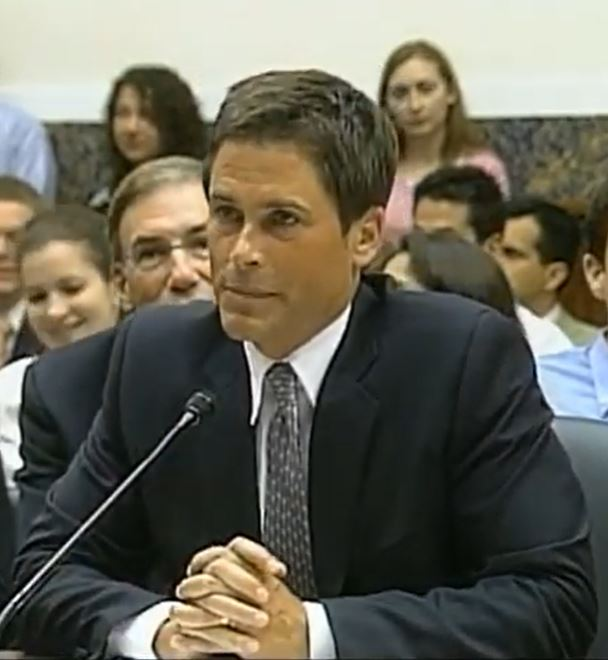
Rob Lowe has spoken publicly about prayer, a Methodist family background, and a spiritual life shaped by recovery. Those statements are meaningful, but they do not by themselves establish his present church membership or a specific Christian profession. The most careful answer is to describe what he has actually said and keep the remaining questions open.
What Rob Lowe has said about faith
In his August 10, 2020 conversation with Jay Shetty on On Purpose, Lowe said his family were Methodists and recalled attending church with his grandfather. He described being uncomfortable with God-language and prayer earlier in his life, then growing to value kneeling in prayer. By that interview, he said prayer had become an important part of his life. He connected this growth with humility and the recovery idea of a power greater than oneself.
That is a dated account, not a complete statement of theology. The sources reviewed here do not settle his current denomination or his understanding of every central Christian teaching. It would be too strong to turn a discussion of spirituality into a detailed conversion story he did not give.
Chris Traeger is a role, not a religious statement
On Parks and Recreation, Lowe plays Chris Traeger, a character associated with optimism and intense attention to health. Audiences can enjoy that performance without treating a scripted outlook as the actor’s personal creed. A fictional person’s confidence, fears, or habits are not evidence of the performer’s relationship with God.
The distinction matters in both directions. Playing someone admirable does not prove Christian faith. Playing someone whose choices trouble us does not prove a rejection of faith. Public interviews can supply evidence about an actor’s beliefs; a character’s lines cannot do that job.
What happens when self-sufficiency runs out?
Most of us like to think that we can handle life if we find the right plan. We will work harder, get organized, improve our habits, and keep our promises. These can be worthwhile goals. Yet sooner or later we meet a limit that effort alone does not remove.
The Christian response to that limit begins with honesty. We are creatures, not our own creators. We depend on gifts we did not manufacture: life, breath, other people, and a world we did not build. Recognizing dependence need not mean giving up responsibility. It can mean finally admitting the truth about our place in the world.
Still, the Bible goes beyond the general idea that something is bigger than us. It identifies the living God as the holy Creator who made us, knows us, and calls us to himself. Christian faith has a definite object. It rests on who God has revealed himself to be in Jesus Christ, not simply on the comfort of feeling connected.
Humility before a holy God
In Luke 18:9–14, Jesus tells of two men who go to pray. One lists the ways he differs from other people. The other asks God for mercy. The story challenges the religious reader first. We can turn even prayer into a way of congratulating ourselves.
God’s law takes away that hiding place. Have I told the truth when a lie would protect my image? Have I honored God in my thoughts and speech? Have I treated another person as someone to love, rather than someone to use? Have I desired what belongs to my neighbor? These are questions for the writer and reader, not accusations about Lowe’s private life.
Our answers reveal why we need more than encouragement. Romans 3:23 says that everyone has sinned. God is just, so guilt cannot be erased by pretending evil does not matter. Neither public success nor private progress can pay the debt of our wrongdoing. We need mercy that deals with sin truthfully.
The good news is centered on Jesus
Jesus Christ is God’s eternal Son who became truly human. He lived the sinless life we have failed to live, loving the Father and his neighbors perfectly. At the cross he willingly gave himself for sinners, bearing the judgment we deserve. This is the Christian meaning of a substitute: Jesus takes the place of guilty people who could not rescue themselves.
He was buried and rose bodily from the dead. The resurrection is not merely a picture of starting over. Christianity makes a claim about what happened to Jesus and why his victory matters. The risen Lord offers forgiveness and new life because of his completed work, not because we have made ourselves worthy.
Salvation is by grace through faith, not a wage for good behavior (Ephesians 2:8–9). We receive Christ by trusting him. Repentance involves a changed mind and a turn toward God, away from defending our sin. That change begins to bear fruit in everyday life: honesty, mercy, restitution where needed, and growing obedience. Those fruits are results of grace, not its purchase price.
Where the question leads us
Lowe’s public discussion can prompt a useful question about dependence. The Bible presses that question further: Will I entrust myself to the Savior God has provided? The answer cannot be borrowed from a celebrity, a family tradition, or an inspiring conversation.
If you want to explore it, read Luke’s Gospel and notice whom Jesus welcomes, what he teaches about sin, and why he goes to the cross. Christian hope allows us to stop pretending that we are enough. It directs us to the Lord whose mercy is greater than our ability to repair ourselves.
Sources and image credit
- Rob Lowe on On Purpose with Jay Shetty, August 10, 2020, especially the discussion of spirituality around 31–36 minutes.
- Transcript of the same conversation.
Image: HouseResourceOrg, 2011, via Wikimedia Commons, CC BY 3.0. Still from the credited source video. No endorsement by the subject or image creator is implied.
