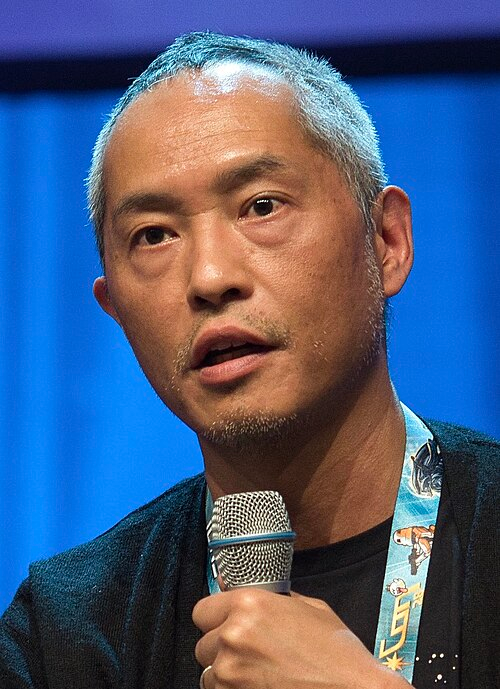
Ken Leung has used spiritual language when describing acting, but the sources reviewed here do not confirm a specific religious affiliation or a personal profession of Christian faith. In a 2024 Talk Easy interview, he described the space between the beginning and end of a filmed scene as sacred and connected with people across time. That tells us something about how he experiences his work. It does not, on its own, identify a religion.
The careful answer is therefore that Leung’s current religion is unconfirmed in these sources. He should not be labeled Christian, Buddhist, or atheist on the strength of his ancestry, a role, or a single spiritual expression.
What Leung has said about acting and meaning
Talk Easy’s published excerpt presents Leung’s sense that acting connects performers with those who came before, people working now, and future viewers. He also described acting as a way to express things that are harder to express in daily life. The conversation covered his upbringing, career, and work on Industry.
A January 2026 Story and Craft interview likewise discussed his path through stage, film, and television, including LOST and Industry. These career conversations show an interest in the human significance of performance. They are not a church biography or an explanation of what he believes about Jesus’ identity, the cross, or salvation.
His vocabulary deserves to be taken seriously without being made to say too much. People can use words such as “holy” and “spiritual” in different ways. We should ask what the speaker actually means rather than quietly replacing his meaning with our preferred religious definition.
Miles Straume is part of the story
On LOST, Leung played Miles Straume, whose unusual ability and guarded personality create memorable encounters with the other survivors. The fictional supernatural rules of Miles’s world do not show that Leung believes in those rules himself. Performing a scene about the dead is not evidence that an actor practices communication with spirits.
That distinction is particularly important when a drama mixes mystery, science fiction, and religious imagery. A viewer can discuss a character’s ability as part of a plot without turning it into a claim about the actor’s personal life. Leung’s work in Rush Hour, The Sopranos, and Industry further illustrates how widely a performer’s roles can differ.
The public person is more than any one character. Respectful religious writing should preserve that difference, even when a character offers an interesting starting point for a Christian discussion.
Why art can feel bigger than one person
A scene can move someone the actor will never meet. Stories may give words to grief, expose ambition, or make a lonely viewer feel understood. Christians can recognize the value of imagination and skilled work. Human creativity reflects the gifts of a Creator who made people in his image.
Yet Christianity does not make the emotional power of art the final test of truth about God. A scene can feel profound and still carry a mistaken idea. A modest conversation can be truthful without feeling dramatic. First John 4:1 calls believers to test spiritual claims rather than accepting everything that presents itself as spiritual.
This is a biblical response to the subject, not an assertion that Leung has made a particular supernatural claim beyond the comments reported. Christians can appreciate his seriousness about acting while keeping their own standard of spiritual truth clear.
Being seen is different from being forgiven
Good art may help us recognize something hidden in ourselves. Scripture takes that recognition further by exposing our moral need. The Ten Commandments forbid lying, stealing, adultery, coveting, and worshiping anything above God. Jesus teaches that anger and lust reveal sin within the heart. Every one of us has failed that standard.
Romans 3:23 says all have sinned. Our problem is not only that other people fail to understand us. We have done real wrong, and God is just. Feeling deeply, working creatively, or contributing to culture cannot erase our guilt before him.
That diagnosis is universal. It is not a claim to know Leung’s private failures or eternal standing. It includes the writer and reader. We need a Savior who can do more than make us feel represented; we need one who can reconcile us to God.
The Gospel points to a real event and a living person
Jesus Christ is God’s divine Son. He became man, lived a sinless life, and willingly died on the cross as the substitute for sinners. He bore the judgment our sins deserve. He was buried and rose bodily from the dead. Christian hope rests on his completed work, not on the lasting emotional effect of a performance.
Ephesians 2:8–9 teaches that salvation is God’s gift by grace through faith, not works. We are invited to acknowledge our sin and trust Jesus’ finished work for forgiveness and eternal life. Neither creative achievement nor religious effort can purchase what he gives freely.
Leung’s public comments describe a spiritual dimension to acting, while leaving his religious affiliation unconfirmed here. They can open a thoughtful conversation. The Christian answer to our deepest need remains Jesus Christ, who knows us fully and offers grace.
Sources
Talk Easy with Sam Fragoso: Ken Leung, September 2024.
Story and Craft: Ken Leung, January 2026.
Scripture: Genesis 1:27; 1 John 4:1; Exodus 20:1–17; Matthew 5:21–30; Romans 3:23; 1 Corinthians 15:3–4; Ephesians 2:8–9.
Photo: Crosa, cropped by StrangeloveFan101, via Wikimedia Commons, CC BY 2.0. Existing crop, resized.
