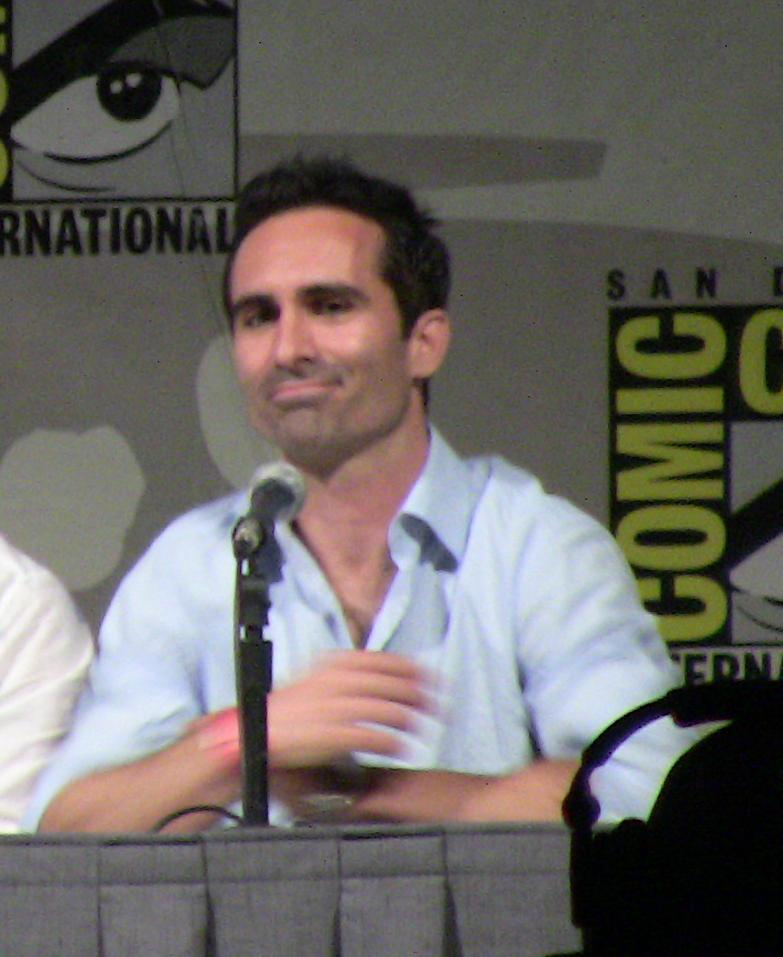
Néstor Carbonell has publicly described a Catholic upbringing and an ongoing reliance on faith. In a September 2025 ¡HOLA! interview, he said that faith and family remained constants as his family moved, and that he continued to depend on faith in daily life. His own account supports describing a Catholic Christian background with continuing personal faith, rather than treating religion as only a childhood association.
That is stronger evidence than the religious imagery surrounding Richard Alpert, his character on LOST. Still, a celebrity interview is not a full statement of doctrine. We can report Carbonell’s profession respectfully without claiming to know his heart, measuring the depth of his faith, or declaring his eternal destiny.
What Carbonell has said himself
Asked about faith in ¡HOLA!, Carbonell connected it with the way he and his siblings were raised. He explained that the family sought a church wherever they lived and emphasized that it meant more than attending a ritual. He associated faith with strength and giving back, and described it as a continuing source of support.
He also spoke appreciatively about his parents and wife, and about encouraging his children in their work. The important religious point is the combination of a named Catholic upbringing and present-tense dependence on faith. The interview does not supply a detailed explanation of how he understands every Catholic teaching or of his personal trust in Christ’s saving work.
That limit is worth keeping. A responsible profile should neither flatten his comments into a vague cultural label nor expand them into answers he did not give.
The actor behind Richard Alpert
Carbonell’s career includes Suddenly Susan, The Tick, the Dark Knight films, Bates Motel, Shōgun, and The Morning Show. LOST gave him the mysterious role of Richard, whose unusually long life and hidden history raised questions about loyalty, death, and purpose.
In a 2012 Assignment X interview, Carbonell explained that he did not know Richard’s eventual backstory when he began playing him. He had to work from the information in the scripts and create reasons for the character’s behavior. His early assumptions did not always match what the writers later revealed.
That account helps separate the actor’s faith from the character’s world. Richard’s experience was a developing fictional story, not Carbonell’s testimony. A scene involving guilt, a priest, or supernatural powers cannot be used as a direct summary of what the performer believes.
A faith that travels beyond a familiar place
Carbonell’s description of finding a church after family moves offers a practical point of reflection. Faith can be connected to home and culture without being limited to a single address. Christians can find encouragement in gathering with others, hearing Scripture, praying, and serving neighbors even when familiar surroundings change.
Hebrews 10:24–25 urges believers to encourage one another and continue meeting together. Christian community is more than a comforting memory. It can help people carry burdens, receive correction, and practice love in ordinary life. Those are biblical reasons to value the church, not proof that every gathering or tradition is automatically faithful to Christ.
The central question remains whom we trust. A building, a family history, or a religious identity cannot take the Savior’s place. Jesus himself is the foundation of Christian hope.
Giving back and the limits of good works
Helping others is good. Scripture calls believers to generosity and concern for people in need. Yet the Bible also explains why service cannot purchase forgiveness. Ephesians 2 places good works after salvation by grace: they are the life God prepares for his people, not the payment that makes them acceptable to him.
God’s law shows why we need that grace. The Ten Commandments forbid lying, stealing, adultery, coveting, and putting other things in God’s place. Jesus exposes anger and lust in the heart. All of us have failed to love God and our neighbors perfectly. Romans 3:23 says all have sinned.
God judges justly. A generous act cannot erase a dishonest one, and religious attendance cannot cancel guilt. This is a truth for every tradition and every reader. The purpose is not to speculate about Carbonell’s standing with God, but to explain the Gospel clearly.
Christ is the sure foundation
Jesus Christ is God’s divine Son. He became man, lived without sin, and willingly died on the cross as the substitute for sinners. He bore the judgment our sins deserve. He was buried and rose bodily from the dead. This is the saving work proclaimed in 1 Corinthians 15:3–4.
Salvation is God’s gift by grace through faith, not a reward for good deeds. We are invited to acknowledge our sin and trust Jesus’ finished work for forgiveness and eternal life. Our confidence belongs in his sufficient sacrifice and resurrection, rather than in the strength of our feelings or the quality of our record.
Carbonell’s own words describe faith as an enduring part of his life. Christians can welcome that public account while pointing every reader to the essential question: are we relying on Jesus Christ, the living Savior who has done what we could never do for ourselves?
Sources
¡HOLA!: Néstor Carbonell discusses family, career, and faith, September 2025.
Assignment X: Nestor Carbonell interview, January 2012.
Scripture: Hebrews 10:24–25; Exodus 20:1–17; Matthew 5:21–30; Romans 3:23–26; 1 Corinthians 15:3–4; Ephesians 2:8–10.
Photo: Kristin Dos Santos, via Wikimedia Commons, CC BY-SA 2.0. No changes.
