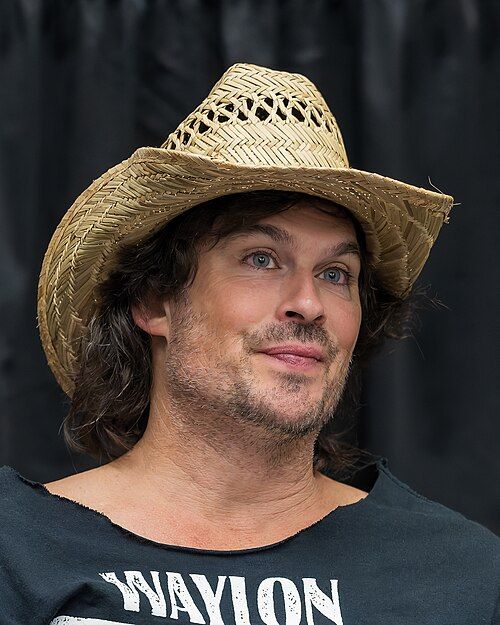
Ian Somerhalder was raised Catholic, according to a 2012 Philippine Star profile published alongside an interview with him. That is a statement about his upbringing. It does not, by itself, establish his current religious practice or show that he now personally professes Christian faith. The sources reviewed here support describing a Catholic background while leaving his present religious affiliation unconfirmed.
LOST viewers know him as Boone Carlyle. Other audiences know him as Damon Salvatore on The Vampire Diaries. Neither role answers the question of his religion. A supernatural drama is a fictional setting, not a declaration of what its actors believe about God or eternal life.
What is documented about his background?
The Philippine Star placed Somerhalder’s Catholic upbringing in its biographical introduction. The interview itself focused on his visit to the Philippines, acting, animals, environmental concerns, and compassion. It is helpful to preserve that distinction: the childhood religious label was reported by the publication, rather than presented as a new statement of current belief by Somerhalder.
Religious upbringing can influence vocabulary, memories, and moral questions for a lifetime. People can continue in that tradition, move away from it, or understand it differently as adults. A responsible profile should not decide which has happened without clear evidence from the person concerned.
The same care applies to family relationships. A spouse’s religious background does not automatically become the other spouse’s religion. Public people deserve the same accuracy we would want when someone describes our own convictions.
Compassion and responsibility in his interviews
In the 2012 conversation, Somerhalder discussed concern for mistreated animals and hopes to help young people learn compassion. He described environmental work as an opportunity to involve youth in caring about their future. Those comments explain a public interest he chose to discuss; they are not a Christian testimony.
A 2026 Chalkboard interview with Somerhalder and Nikki Reed described their family, farm, and business interests. Somerhalder spoke about accountability, the consequences of business decisions, intentional consumption, and time in nature. This profile does not evaluate the health products discussed there. The relevant point is that his public conversation included responsibility toward people and the environment, without providing a clear statement of religious affiliation.
These subjects give Christian readers worthwhile questions to consider. How should we care for what has been entrusted to us? What is compassion for? Can meaningful service answer our deepest spiritual need?
Caring for creation without confusing it with the Creator
Genesis 2:15 presents human beings as responsible workers and caretakers within God’s creation. Proverbs 12:10 recognizes care for animals as part of righteous conduct. Christians should not dismiss kindness to living creatures or thoughtful use of resources as trivial concerns.
At the same time, biblical faith distinguishes the Creator from creation. Romans 1 warns against exchanging worship of God for worship of created things. Enjoying a forest, caring for soil, or protecting animals can inspire gratitude. None of those experiences, by itself, tells us that our guilt before God has been removed.
There is also a limit to making personal worth depend on how useful or productive we are. A frail person who cannot maintain a farm or lead a campaign still has dignity. Scripture grounds human value in being made in God’s image, not in a lifestyle, an audience, or the size of a public contribution.
Why good causes do not settle the question of sin
Compassion is good, but God’s law examines more than our most admirable interests. The Ten Commandments forbid dishonesty, theft, adultery, coveting, and giving God’s place to something else. Jesus teaches that anger and lust expose sin within the heart. None of us has kept that law perfectly.
Romans 3:23 says all have sinned. A helpful project cannot undo a lie, and a generous act cannot make the past cease to exist. God is just and will hold us accountable. This is a shared human problem, not a reason to single out Somerhalder for condemnation.
The question is therefore not whether we have ever done good. It is how guilty people can be reconciled to a holy God. If we depend on our record, we always have something left to repair and something else we would rather hide.
Grace is a gift from the living Savior
Jesus Christ is God’s divine Son. He became man and lived a sinless life. He willingly died on the cross in the place of sinners, bearing the judgment we deserve. He was buried and rose bodily from the dead. The Gospel is news of what he accomplished, not a plan for earning our own forgiveness.
Ephesians 2:8–9 says salvation comes by grace through faith, not works. We are invited to acknowledge our sin and trust Jesus’ finished work. His sacrifice is sufficient; his resurrection gives a sure foundation for the promise of eternal life. Good works follow as a grateful response to that gift.
Somerhalder’s reported Catholic upbringing is a documented part of his story. His present profession remains unconfirmed in the sources reviewed. For every reader, the Christian hope is personal trust in Christ, whose saving work is greater than any cause we could undertake.
Sources
The Philippine Star: Interview with Ian Somerhalder, May 2012.
The Chalkboard: Living Well with Ian Somerhalder and Nikki Reed, March 2026.
Scripture: Genesis 1:27; 2:15; Proverbs 12:10; Exodus 20:1–17; Matthew 5:21–30; Romans 1:25; 3:23; 1 Corinthians 15:3–4; Ephesians 2:8–10.
Photo: John Manard / WikiPortraits, via Wikimedia Commons, CC BY-SA 4.0. Resized.
