The profile · Actor and performer; Orlando, Karen Crowder, and the White Witch
Tilda Swinton
An actor whose most lasting creative homes have often been groups of people, not a single kind of role.

- Born
- November 5, 1960[1]
- Early film collaborator
- Derek Jarman[2]
- Oscar-winning role
- Karen Crowder in Michael Clayton[2]
- Career honor
- BFI Fellowship, 2020[2]
The person behind the work
A creative home before the fame
Tilda Swinton’s early film life grew through collaboration with Derek Jarman. Caravaggio was her first film, and they went on to make seven features together. Later, Sally Potter’s Orlando brought her a title role that moves across centuries and changes the expectations attached to its central character. Neither beginning looks much like a plan to become a conventional movie star.[2][1]
Her later work includes Michael Clayton, We Need to Talk About Kevin, The Grand Budapest Hotel, and the Narnia films. She won the Academy Award for playing corporate lawyer Karen Crowder in Michael Clayton. The variety matters: a viewer who first meets her as the White Witch may be surprised by the strained, very human fear in that performance.[1][2]
A career in range
Selected work, at a glance
The person behind the work
Returning to people, not a formula
In a 2021 interview, Swinton spoke of creative families around directors such as Wes Anderson, Jim Jarmusch, Luca Guadagnino, and Lynne Ramsay. These repeated partnerships offer a way to understand her career. Rather than staying inside one screen image, she returns to people who make room for a new experiment.[3]
The British Film Institute recognized more than a list of performances when it awarded her a fellowship. Its account also emphasized her contribution to film culture. A performer can help cinema by making unusual work possible, supporting the people behind it, and drawing audiences toward films they might otherwise miss. That wider view fits the career better than treating every transformation as a costume trick.[2]
A closer look
Three ways into the work
Orlando
A central film for understanding Swinton’s willingness to move beyond ordinary casting expectations. Its scale stretches across time while keeping the same performer at the center.[1]
Michael Clayton
The role is an important counterweight to the fantastical images associated with her. Karen’s pressure and fear are recognizable even when her professional world feels remote.[2][1]
We Need to Talk About Kevin
This collaboration with Lynne Ramsay gives Swinton a sustained, painful family role. It belongs in any account that looks beyond fantasy and unusual appearances.[1]
What a childhood memory can tell us
A question remembered from childhood
A 2011 TIME profile recalled that, as a child, Swinton questioned why her family sat apart from less privileged people at church. The detail records a concern about class and belonging, not a complete statement of her present faith. Nor does playing the White Witch in a story by C. S. Lewis tell us whether she shares the author’s Christianity.[4][1]
Listen to the person
In their own words
2011 profile
“It’s a real comfort zone for me to feel alien”
Famous Faith’s Christian perspective
Beyond the Spotlight
Swinton’s remembered question about church seating is one a Christian community should take seriously. Does the way we treat people match what we say about their worth? The Bible gives no greater human value to wealth or social standing. Love of neighbor must reach the person who does not receive the best seat, the easiest welcome, or the benefit of the doubt.
That challenge reaches our own hearts as well as institutions. The Ten Commandments forbid coveting, stealing, and false witness, and call us to honor God (Exodus 20). First John 3:4 calls sin the breaking of God’s law. Respectable people can break it too. Jesus warned of judgment and hell. Christians should speak about that with care, knowing that we need mercy rather than a place above other people.
God’s mercy is offered in Jesus Christ, his Son. Jesus lived without sin, died on the cross for our sins, and rose bodily from death. He offers forgiveness and life with God to people who trust him. We are saved by grace through faith, not by class, creativity, a church background, or enough good actions to make our record look clean (Romans 5:8; Ephesians 2:8–9).
Repentance changes our mind and heart, turning us away from sin and rebellion toward God. We begin trusting him for who he is, with the love he has shown in Jesus as the ground for that trust. That turn normally changes behavior: how we tell the truth, use our advantages, and care for people who cannot repay us. We do those things because grace is changing us, not to buy forgiveness. Faith begins with receiving what Christ has done, then learning to walk in his way.
The invitation is open to a reader who feels out of place as well as one who has always felt at home. Bring your questions and failures honestly to Christ. Read a Gospel, ask for forgiveness, and seek a church whose welcome and teaching reflect his care. No polished image or social rank is needed to come.
Consider the Good Person Test and the hope of forgiveness →
This section shares Famous Faith’s Christian beliefs. It does not speak for Tilda Swinton.
People connected to the story
Follow the connections
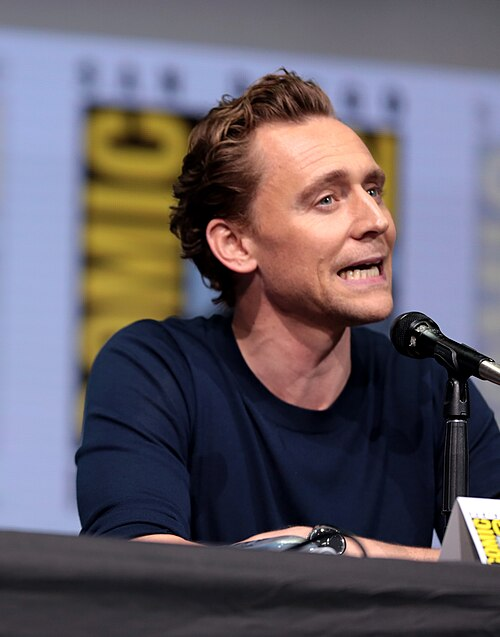
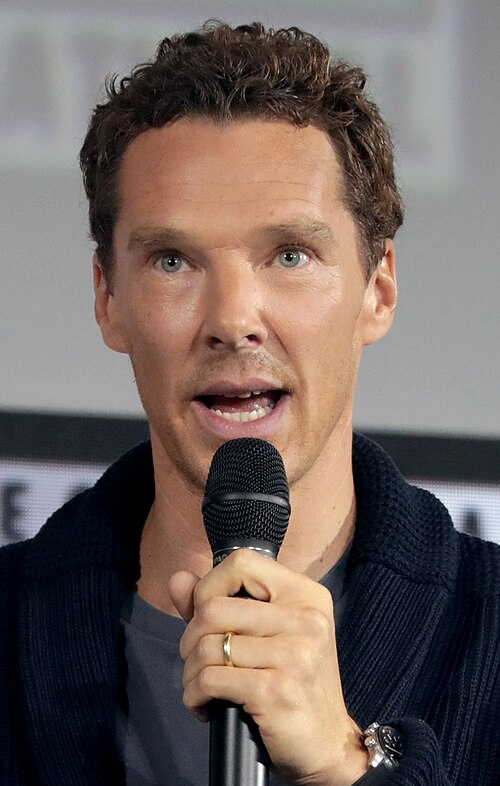
Benedict Cumberbatch
They share Doctor Strange, as the Ancient One and Stephen Strange.[1]
Read the profile →From the directory
Ralph Fiennes
Both are part of The Grand Budapest Hotel’s ensemble.[5]
Read the profile →Sources and further reading
- Golden Globes: Tilda Swinton filmography
- BFI: Tilda Swinton Fellowship and career
- British Vogue: Swinton on creative families
- TIME: A Dispatch from Planet Swinton
- Tilda Swinton: biographical reference
Artwork: Original AI-generated portrait of Tilda Swinton, created for Famous Faith; not a photograph. The other AI-generated portraits shown here were also created for Famous Faith. No endorsement is implied.
Photograph: Tom Hiddleston by Gage Skidmore from Peoria, AZ, United States of America, via Wikimedia Commons, CC BY-SA 2.0. Cropped to a square card for display.

Photograph: Benedict Cumberbatch by Gage Skidmore, via Wikimedia Commons, CC BY-SA 2.0. Cropped to a square card for display.

Film and book titles identify the works discussed. A career credit is not a recommendation that every reader watch or read that work.