The profile · Filmmaker, writer, actor, and comedian; Boy, Jojo Rabbit, and Korg
Taika Waititi
A filmmaker who lets humor and hurt share the same scene.
- Born
- August 16, 1975[1]
- Home country
- New Zealand[2]
- First feature
- Eagle vs Shark (2007)[2]
- Oscar
- Adapted screenplay for Jojo Rabbit, 2020[3]
The person behind the work
The place behind Boy
Taika Waititi’s film Boy returned him to the rural New Zealand community where he grew up. In a 2012 interview, he described involving relatives and local people in the production. The result had a personal setting without being a documentary of his own childhood. A filmmaker can draw on a place he knows while still creating a story and characters.[3]
His path included comedy, acting, visual art, and short films before Eagle vs Shark became his first feature in 2007. Boy followed, then What We Do in the Shadows and Hunt for the Wilderpeople. These smaller films explain much of his storytelling voice: people can be funny while they are lonely, disappointed, or trying to belong.[2][1]
A career in range
Selected work, at a glance
2007
Eagle vs Shark
Writer and director
His first feature follows two awkward people looking for connection.[2]
2010
Boy
Writer, director, and Alamein
A child’s imagined father meets the disappointing person who comes home.[2][3]
2014
What We Do in the Shadows
Co-writer, co-director, and Viago
A mock documentary brings everyday squabbles into a vampire household.[2]
2016
Hunt for the Wilderpeople
Writer and director
An unlikely pair on the run turns a large landscape into a personal story.[2]
2017
Thor: Ragnarok
Director and voice of Korg
His comic style enters a major action-fantasy production.[1]
2019
Jojo Rabbit
Writer, director, and imaginary Hitler
A child’s perspective becomes a way to expose hateful ideas.[4]
The person behind the work
Humor is not always an escape from pain
Waititi directed and played the imagined Hitler in Jojo Rabbit, a story about a child absorbing the hateful ideas around him. The film uses satire rather than asking viewers to admire its fantasy figure. The Directors Guild’s discussion of the production places it within Waititi’s work as a director, while his adapted screenplay earned the 2020 Academy Award.[4][3]
Thor: Ragnarok gave him a much larger canvas, and he also voiced Korg. It is one part of a career that already had its own comic rhythm. To understand that rhythm, begin with the disappointed father in Boy or the unlikely traveling pair in Hunt for the Wilderpeople. The joke often makes room for a feeling the characters cannot easily say aloud.[2][1]
A closer look
Three ways into the work
Boy
The setting and family involvement make it an important early work. Its humor never completely removes the child’s disappointment or need for a dependable adult.[3][2]
Hunt for the Wilderpeople
A good introduction to his mix of odd-couple comedy, grief, and belonging. Its scale makes room for both the landscape and two people who struggle to fit.[2]
Identity and stated belief
Heritage does not fit one simple box
Waititi has described both Māori and Jewish identity. Biographical accounts also record that Judaism was not practiced in his childhood home and that he has called himself an atheist with an interest in Indigenous beliefs. Those details should be kept together. Calling him simply a practicing Jewish filmmaker, or assuming a religion from his name, would give readers a misleading picture.[1][3]
Listen to the person
In their own words
2012 interview, republished 2020
“it felt like a communal effort to get this thing done”
Famous Faith’s Christian perspective
Beyond the Spotlight
Waititi’s films often leave space for the person who does not fit. Christians should recognize that concern. Jesus welcomed people others pushed away, while still telling the truth about their lives. Humor can help us notice someone’s loneliness; love asks what we will do after the scene ends. That begins with patient attention to real people, not a quick label for their beliefs.
The Bible also challenges the harm beneath the joke or the excuse. The Ten Commandments forbid false witness, stealing, murder, and coveting (Exodus 20). First John 3:4 describes sin as breaking God’s law. Hate and selfishness are not harmless just because a crowd accepts them. Jesus warned of judgment and hell, and Christians should speak of that with grief and humility, remembering our own need for mercy.
God’s love is shown in Jesus Christ, his Son. Jesus lived a sinless human life, died on the cross for our sins, and rose bodily from the dead. Forgiveness and eternal life are offered through him. Salvation comes by grace through faith, not by being creative, funny, culturally connected, or successful at following a set of religious rules (Romans 5:8; Ephesians 2:8–9).
To repent is to turn our mind and heart away from sin and rebellion toward God. We begin to trust him as he has revealed himself, receiving the love he has shown us through Jesus Christ. That turn usually changes behavior: we learn to tell the truth, repair harm where possible, and treat an outsider as a neighbor. We do not make ourselves perfect before receiving grace. We trust Christ, then grow in the new direction his mercy makes possible.
You can consider this invitation with your own questions and background intact. Read a Gospel and look closely at Jesus. Ask him for forgiveness and help, and seek people who will listen as well as teach. Christianity offers belonging through Christ, without requiring someone to borrow a celebrity’s story or pretend that every question is easy.
Consider the Good Person Test and the hope of forgiveness →
This section shares Famous Faith’s Christian beliefs. It does not speak for Taika Waititi.
People connected to the story
Follow the connections
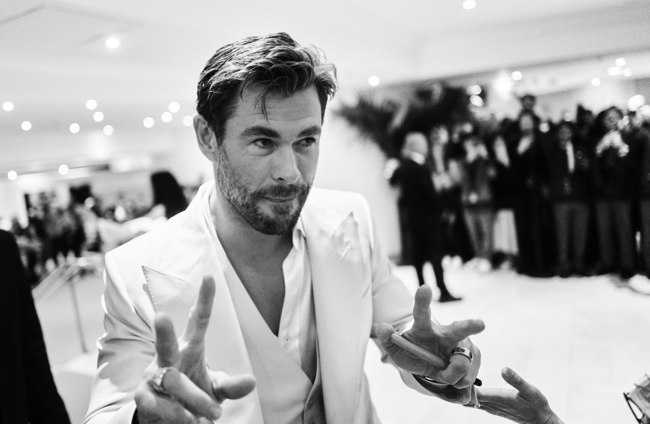
Chris Hemsworth
Waititi directed him in Thor: Ragnarok and Thor: Love and Thunder.[1]
Read the profile →
Sources and further reading
- Taika Waititi: biography, heritage, and filmography
- NZ On Screen: Taika Waititi career profile
- The Forward: Waititi on Boy, a 2012 interview republished in 2020
- Directors Guild: Waititi discusses Jojo Rabbit
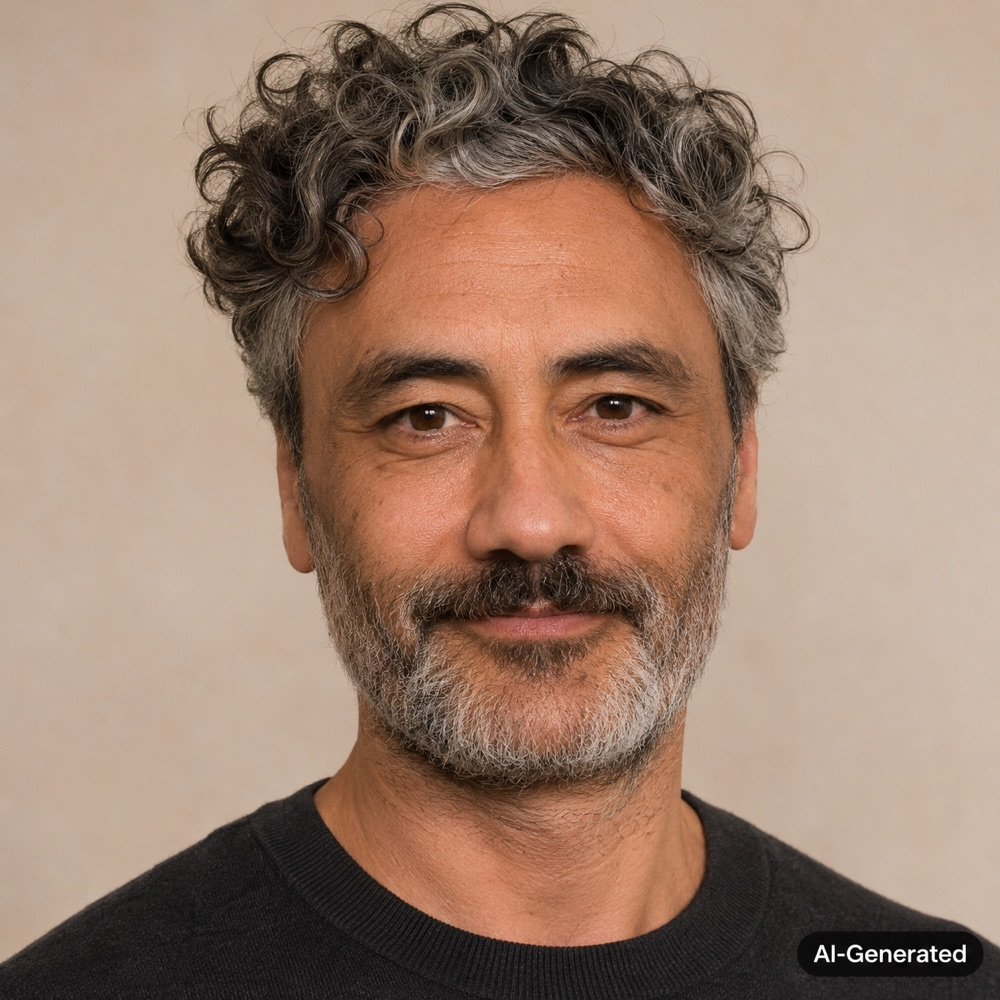
Artwork: Original AI-generated portrait of Taika Waititi, created for Famous Faith; not a photograph. The other AI-generated portraits shown here were also created for Famous Faith. No endorsement is implied.
Photograph: Chris Hemsworth by Frank Sun, via Wikimedia Commons, CC BY-SA 4.0. Cropped to a square card for display.

Photograph: Scarlett Johansson by GabboT, via Wikimedia Commons, CC BY-SA 2.0. Cropped to a square card for display.

Film and book titles identify the works discussed. A career credit is not a recommendation that every reader watch or read that work.