The profile · Actor and producer
Frank Grillo
Frank Grillo’s physical confidence came from years of wrestling, boxing, and training. His screen career took longer to find its shape, moving from a daily soap to supporting parts, leading roles, and producing his own projects.
- Early television
- Hart Jessup in Guiding Light[1]
- Breakthrough role
- Frank Campana in Warrior[1]
- Production work
- Co-founded WarParty with Joe Carnahan[2]
- Longstanding interest
- Boxing and wrestling[2]
The person behind the work
A breakthrough that arrived after years of work
Frank Grillo’s story does not follow the pattern of a young actor becoming famous overnight. He studied business, worked in commercials, and played Hart Jessup on Guiding Light before a run of film roles brought wider attention. In Backstage, he described the daily soap as a demanding place to learn discipline: there was another script to handle every day.[1]
Warrior became an important turning point. As trainer Frank Campana, he had a supporting role that grew through preparation and collaboration. Parts in The Grey and the Captain America films followed. His appearance can suggest an uncomplicated tough guy, but his comments about acting return to finding the emotional life underneath that outline.[1]
The long route matters. An audience may meet an actor at the moment a role works, while missing the earlier years of waiting, minor parts, and uncertainty. Grillo’s career is a useful reminder that being ready for an opportunity can take much longer than the scene in which people finally notice.
A career in range
Selected work, at a glance
Preparation and making opportunities
The habit came before the film role
Writing for Talkhouse, Grillo described wrestling as a child and taking up boxing at the YMCA. He also remembered watching fights with his father. Training was not simply a way to prepare for a particular movie; it had become part of how he organized his days and understood discipline.[2]
His production work gave him another way to shape the opportunities. Talkhouse’s biography documents WarParty, the company he started with Joe Carnahan, and projects including Wheelman, Fightworld, Point Blank, and Boss Level. Producing means helping a story get made, rather than only waiting to be offered a character.[2]
Wheelman is a particularly clear example. Netflix’s production notes identify Grillo as both the lead actor and a producer. The setup keeps a getaway driver under pressure after a robbery goes wrong. With much of the tension built around a car, calls, and decisions, the performance has to keep thinking visible in a small space.[3]
A closer look
Three ways into the work
Watch the supporting role that became a turning point
Warrior is a good place to look for preparation that reaches beyond the size of a part. Notice how a trainer can help define another character’s stakes without taking over the story.
Try a thriller built around a small space
Wheelman asks an actor to keep decisions visible with limited room to move. Watch the hands, the listening, and the shift from a plan to an improvised response. The film has strong language and violence.
Look beneath the hard exterior
The Grey uses a harsh setting to bring fear, grief, and conflict close to the surface. It is a mature and disturbing film. Its place here is about the performance challenge, not an invitation to copy every character’s response.
What he said himself
A direct answer about God
When Muscle & Fitness asked what kept him centered, Grillo answered with God and spoke about talking to him regularly. He described faith as a source of grounding alongside family, training, and curiosity. That gives readers a direct statement from an interview, without needing to guess from his background or the beliefs of a character.[4]
The same interview also included a more vulnerable side of his public message: he encouraged people struggling with their mental health to seek professional help when exercise was not enough. The point is worth keeping clear. Discipline can be valuable without being an answer to every problem.[4]
Listen to the person
In their own words
Muscle & Fitness interview
“I talk to God all the time”
Famous Faith’s Christian perspective
Beyond the Spotlight
Grillo speaks about training as a lifelong habit and about God as a source of grounding. The combination raises a useful question: where does discipline fit in a life of faith? The Bible values faithful action while placing forgiveness on a foundation stronger than anyone’s ability to keep improving.
God’s law shows why we need that forgiveness. The Ten Commandments forbid lying, stealing, adultery, and coveting, and tell us to honor God and our parents. Sin is breaking this law (1 John 3:4). None of us is made innocent by strength or self-control. Jesus warned about judgment and hell, a serious truth Christians should discuss with humility and concern for the listener.
The good news is that Jesus Christ, God’s Son, lived without sin, died on the cross for sinners, and rose bodily from the dead. Through faith in him, God gives forgiveness and new life by grace. We cannot earn salvation through training, good conduct, or religious effort (1 Corinthians 15:3–4; Ephesians 2:8–9).
Repentance means turning from sin and rebellion toward God in mind and heart. We stop treating his ways as something to resist and begin to trust the love he has shown through Jesus Christ. That new outlook normally changes behavior, with time to learn and help when we struggle. Readers can admit their need and trust Jesus as Lord and Savior. The good choices that follow are a response to mercy: learning truth, repairing harm where possible, and treating others with the patience we need ourselves.
This section shares Famous Faith’s Christian beliefs. It does not speak for Frank Grillo.
People connected to the story
Follow the connections

Anthony Mackie
Point Blank pairs them in another thriller outside their large shared ensemble films.[2]
Read the profile →
Don Cheadle
Their film credits meet in the Avengers series. Cheadle’s directing and producing work offers another view of an actor helping shape a project.
Read the profile →
Jeremy Renner
They share an Endgame credit. Renner’s profile follows a different path through action, drama, and life beyond the best-known character.
Read the profile →Watch in context
On boxing and a lifelong training habit
Published by Tony Jeffries. Watch on YouTube ↗
Sources and further reading
- Backstage — The long-delayed success of Frank Grillo
- Talkhouse — Three Great Things: Frank Grillo
- Netflix Media Center — Wheelman production notes
- Muscle & Fitness — Frank Grillo on training, health, and faith
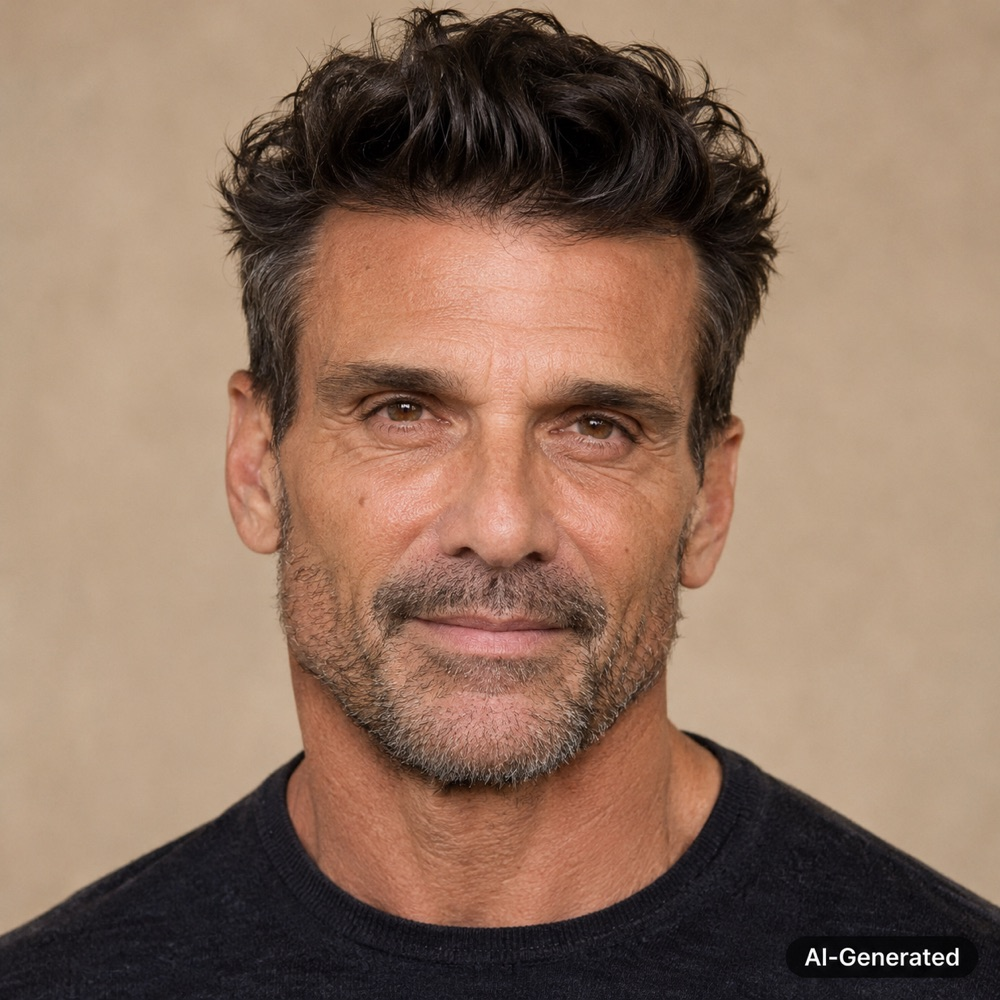
Artwork: Original AI-generated portrait of Frank Grillo, created for Famous Faith; not a photograph. The other AI-generated portraits shown here were also created for Famous Faith. No endorsement is implied.
Film and book titles identify the works discussed. A career credit is not a recommendation that every reader watch or read that work.