The profile · Actor, writer, and director
Chadwick Boseman
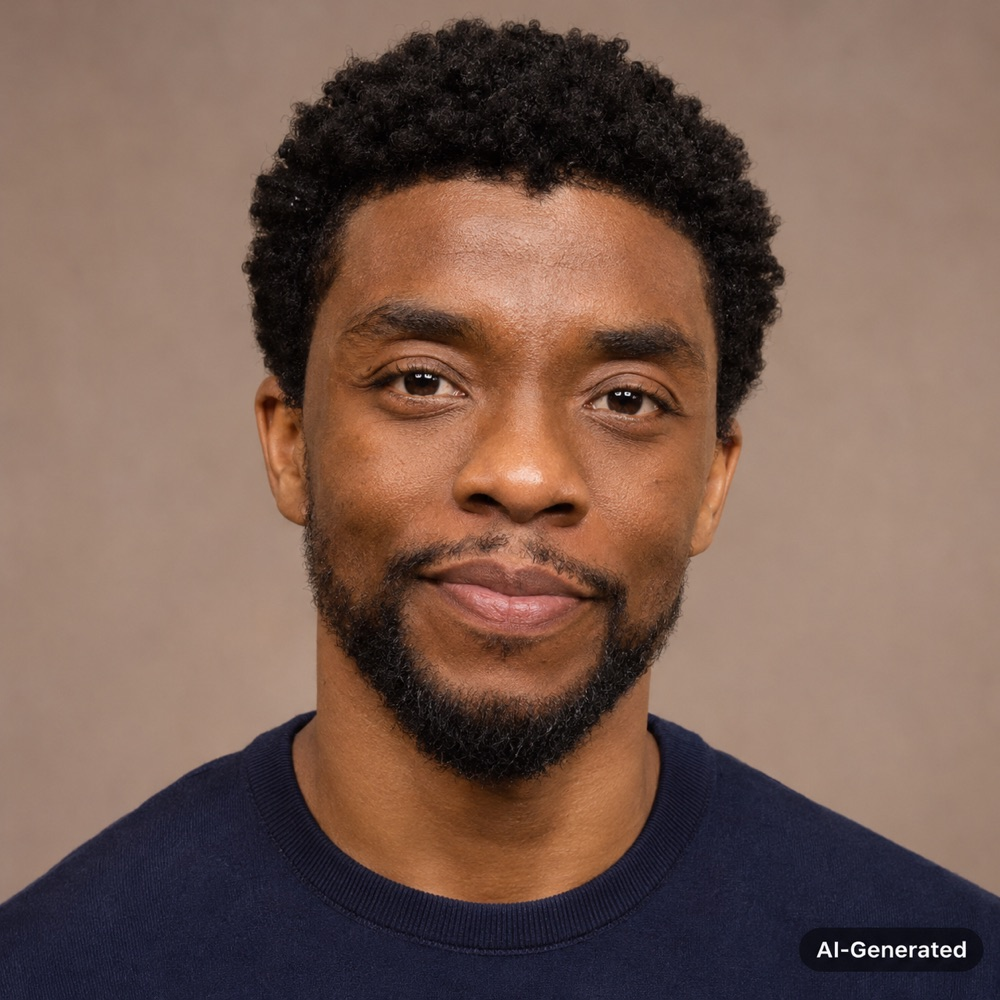
Chadwick Boseman wanted stories to make room for the full lives of Black people. Before the worldwide recognition, he studied directing, wrote for the stage, and learned from teachers who helped open doors for him.
- Education
- Howard University, BFA 2000[1]
- Training support
- Phylicia Rashad helped arrange his Oxford summer study[1]
- Final film role
- Levee in Ma Rainey’s Black Bottom[2]
- Legacy
- Howard’s College of Fine Arts bears his name[1]
The person behind the work
A storyteller before he became a leading man
Chadwick Boseman studied directing at Howard University and graduated in 2000. He had written a play while still in high school and served as president of the Howard Players. The university’s account of his life emphasizes a storyteller interested in how people were represented, not just an actor searching for a famous role.[1]
Phylicia Rashad was one of his teachers. When he was accepted for summer study at Oxford and could not afford it, she sought help from friends, including Denzel Washington. It is a meaningful detail in a career often described as individual success: someone taught him, someone noticed a barrier, and people helped remove it.[1]
His later roles carried different kinds of public memory. He played baseball pioneer Jackie Robinson in 42, musician James Brown in Get on Up, and lawyer Thurgood Marshall in Marshall. Each man had a history larger than one film. Boseman’s work invited viewers to approach those histories through a particular human life.[3]
A career in range
Selected work, at a glance
2014
Get on Up
James Brown
Music, movement, and a complicated public life demanded another kind of preparation.[3]
2017
Marshall
Thurgood Marshall
A courtroom story follows the lawyer before his Supreme Court years.[3]
2018
Black Panther
T’Challa
A worldwide leading role centered on kingship, inheritance, and responsibility.[2]
2020
Da 5 Bloods
Stormin’ Norman
A supporting role within a story of war, memory, and unfinished grief.[4]
The story beyond the screen
Purpose, standards, and the doors others open
At Howard’s 2018 commencement, Boseman spoke about purpose and the challenges he had faced. He recalled questioning a television role whose portrayal of a young Black man seemed thin and stereotyped. He described the cost of speaking up and the different path that followed. His address is especially useful because it lets readers hear his priorities in his own voice.[6]
Howard’s later tribute connects that outlook with his choice of roles and his wish to expand what audiences saw. After his death, the university named its College of Fine Arts for him. A scholarship created with his wife, Simone Ledward-Boseman, and an initial gift from Netflix carried that concern for future artists into practical support.[1][2]
Boseman died in 2020 at 43. His final film performance, as Levee in Ma Rainey’s Black Bottom, received a posthumous Oscar nomination. A nomination should not be confused with a win. More broadly, his legacy is not limited to awards: it includes teachers, classmates, younger artists, and viewers who found a larger sense of possibility in the work.[5][2]
A closer look
Three ways into the work
Begin with the person inside a public symbol
42 offers a clear entry point into Boseman’s historical work. Notice how the performance handles pressure and restraint. A film is a starting point for learning history, not a replacement for it.
Watch how movement carries a story
Get on Up changes the rhythm. A musician’s physical life is part of the role, and the performance asks viewers to follow energy, command, and vulnerability together.
Give the final performance room
Ma Rainey’s Black Bottom is a demanding ensemble drama with strong language and painful racial and sexual themes. Listen to the distance between Levee’s ambition and his hurt. His confidence does not tell the whole story.
A public expression of faith
God and purpose in his own words
Boseman’s 2018 Howard address included direct references to God and a passage from Jeremiah. He spoke about purpose through obstacles rather than promising an easy life. The speech makes faith a clear part of that public message. It is best heard in full, with its setting, humor, memories, and encouragement intact.[6]
Remembering a person with affection does not require claiming to know every part of their inner life. We can honor the words Boseman chose to share and the work he left, while treating grief and questions about eternity with care.
Listen to the person
In their own words
May 2018
“Purpose crosses disciplines.”
Famous Faith’s Christian perspective
Beyond the Spotlight
Boseman’s words about purpose still encourage people who face obstacles or wonder what their lives might become. Remembering him also brings grief close for many readers. Christianity offers hope in Jesus while making room for sorrow. It does not ask us to turn a tribute into a judgment about another person’s eternal destiny.
The Bible directs its moral questions toward all of us. Sin means breaking God’s law (1 John 3:4). The Ten Commandments name lying, stealing, adultery, and coveting, and call us to honor God and our parents. We need forgiveness as well as purpose. Jesus warned about judgment and hell, and those warnings should be spoken with care for people, never used to make claims about someone we have lost.
Christian hope rests on Jesus Christ, God’s Son, who lived without sin, died on the cross for our sins, and rose bodily from the dead. God offers forgiveness and life with him by grace through faith in Christ. Achievement, public affection, and good works cannot earn that gift (John 3:16–17; Ephesians 2:8–9).
Repentance turns the mind and heart from sin and our resistance to God toward a new trust in him. His love, shown in Jesus Christ, gives us reason to come to him honestly. A new direction normally changes the way we live, though growth takes time. For a reader considering these questions, the invitation is personal and gentle: come honestly to Christ, trust his mercy, and receive forgiveness. Grace gives us a reason to love and to use the life before us with care.
This section shares Famous Faith’s Christian beliefs. It does not speak for Chadwick Boseman.
People connected to the story
Follow the connections
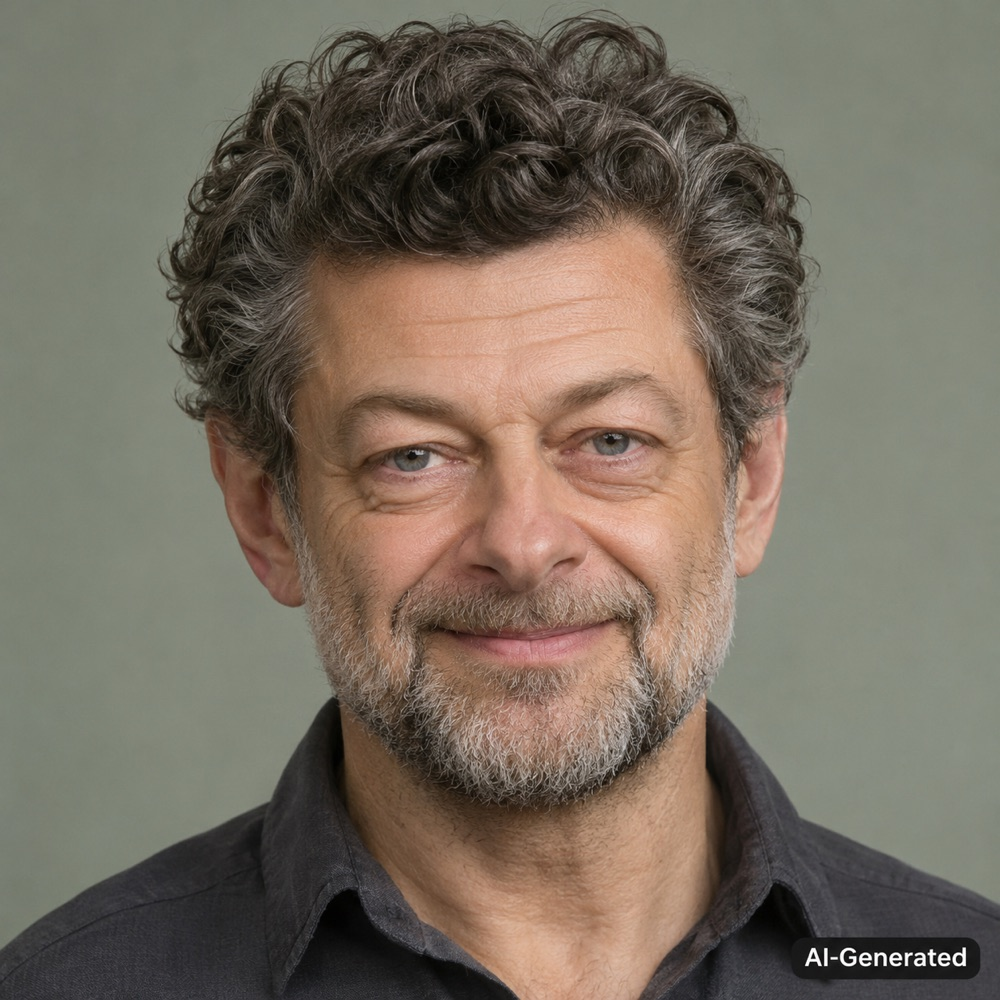
Andy Serkis
Serkis played Ulysses Klaue in Black Panther, opposite Boseman’s T’Challa. Their profiles follow different paths into the same film.[7]
Read the profile →
Anthony Mackie
They share the later Avengers ensemble films. Mackie’s profile also follows training, opportunity, and work beyond a famous screen role.[8]
Read the profile →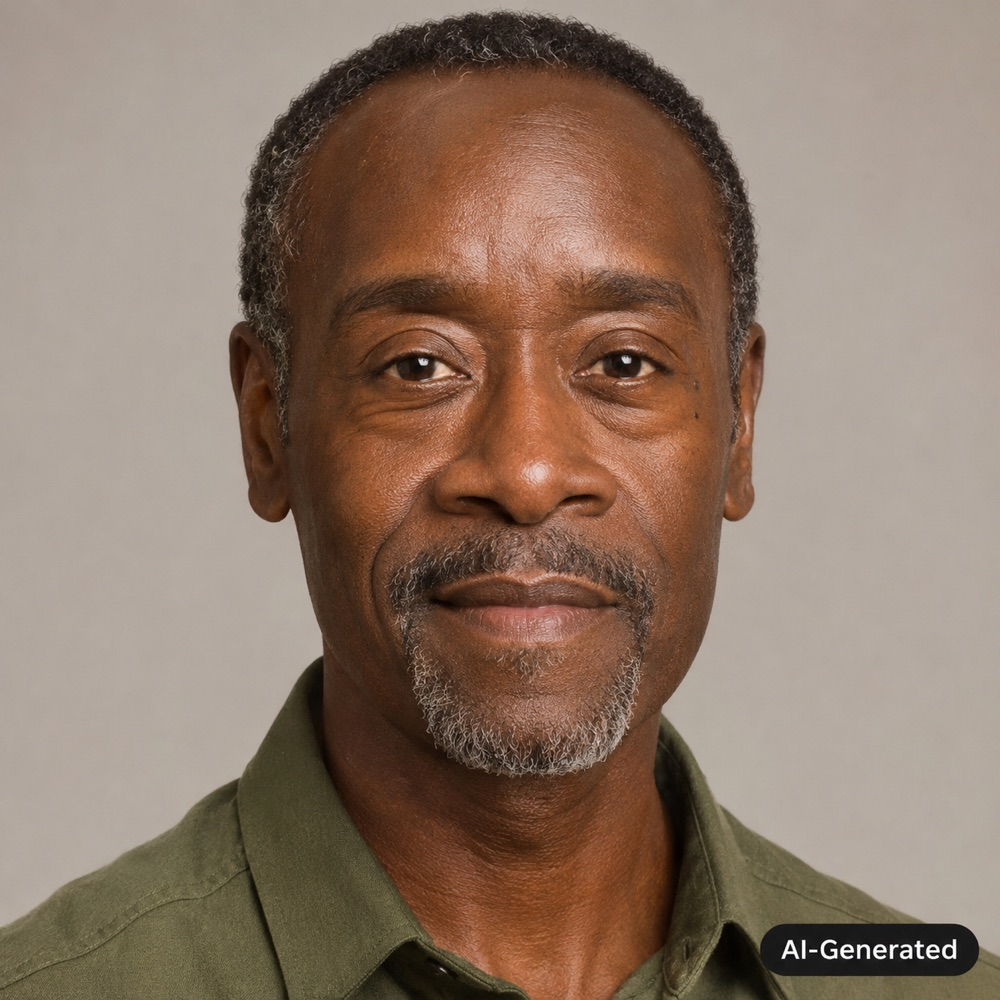
Don Cheadle
Their shared film work is one connection; their profiles also offer distinct examples of artists discussing the responsibilities of public attention.[8]
Read the profile →Watch in context
The 2018 Howard commencement address
Published by Howard University. Watch on YouTube ↗
Sources and further reading
- Howard University — Chadwick Boseman and the College of Fine Arts
- Howard Magazine — Howard Forever
- Academy — Boseman’s film credits in the 2018 presenters announcement
- Netflix — Da 5 Bloods
- Academy — The 2021 Oscars
- Howard University — Full commencement address (2018)
- Marvel — Black Panther
- Marvel — Avengers: Endgame
Artwork: Original AI-generated portrait of Chadwick Boseman, created for Famous Faith; not a photograph. The other AI-generated portraits shown here were also created for Famous Faith. No endorsement is implied.
Film and book titles identify the works discussed. A career credit is not a recommendation that every reader watch or read that work.